IoT Based System for Hydroponic Farming
Description
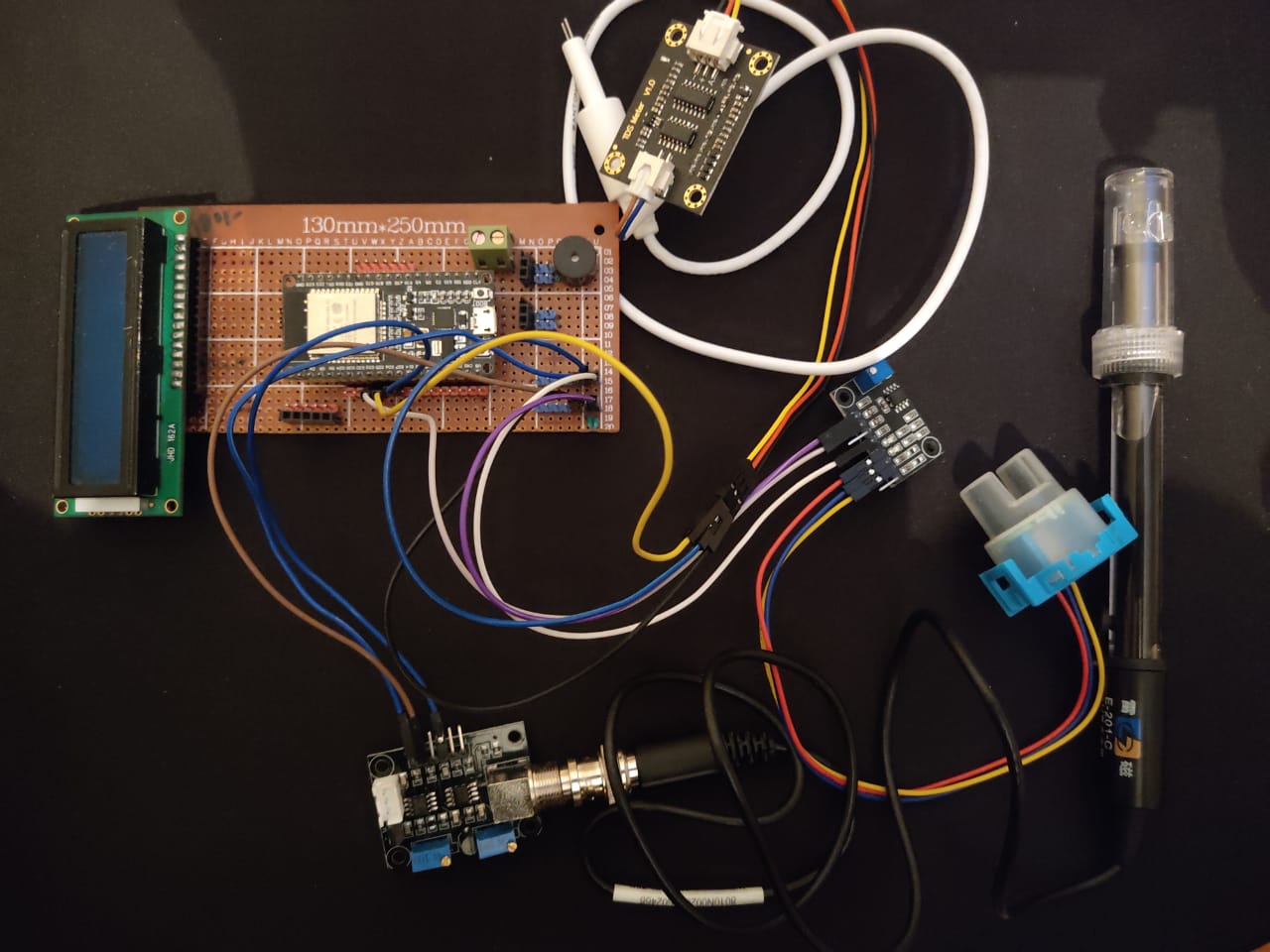
Hydroponic System is a system in which farmers cultivate different plants without utilizing thesoil. The authors have proposed IOT system that monitors and controls all parameters ofhydroponic system like water level, pH, humidity and temperature through mobile application. Inproposed system, the authors have used an ESP32 micro-controller that is controlled pump. Thepump will draw water from a reservoir which is connected to a regular water line. If the water levelof the reservoir falls down to a certain level, the system will send an SMS to the Farmer. Thefarmer can control the water line and make the reservoir full by mobile application. An LDR andDHT11 humidity sensor is used to control the light and temperature of the farm. In system, wealso used pH sensor where pH sensor is a scientific instrument that measures the hydrogen-ionactivity in water-based solutions and indicating its acidity or alkalinity expressed as PH.
Objectives
To design and develop an IOT based smart vertical hydroponic farm to solve the challenges of modern farming and to develop agriculture with minimum resource utilization.
Socio-economic benefit
Implementing an IoT-based system for hydroponic farming can bring several socio-economic benefits. Here are some potential benefits: Increased food production: Hydroponic farming facilitated by an IoT system can produce higher yields compared to traditional farming methods. This increased productivity helps meet the growing demand for food in a sustainable manner, potentially reducing food shortages and improving food security. Resource efficiency: IoT systems optimize the use of resources such as water, nutrients, and energy in hydroponic farming. By precisely monitoring and controlling these inputs, the system reduces wastage and promotes resource efficiency. This can lead to cost savings for farmers and contribute to sustainable resource management. Reduced environmental impact: Hydroponic farming itself is considered an environmentally friendly agricultural practice due to its efficient use of water and land. When combined with IoT technologies, the system becomes even more sustainable. By monitoring and adjusting environmental parameters, the system minimizes the use of chemical inputs, reduces water usage, and lowers the carbon footprint associated with food production.
Methodologies
Design your hydroponic farm and select the appropriate hydroponic system. Install IoT sensors to monitor temperature, humidity, pH level, nutrient levels, and light intensity. Collect and transmit sensor data to a central server or cloud platform. Analyze and visualize the data to gain insights into the farm's environmental conditions. Automate processes using actuators and controllers based on sensor data. Enable remote monitoring and receive alerts for critical events. Make data-driven decisions for crop management and resource optimization. Maintain and upgrade the IoT system regularly. Remember that this simplified version may not cover all the intricacies of IoT-based hydroponic farming, but it provides a concise overview of the key steps involved.
Outcome
The project outcome for an IoT-based system for hydroponic farming would typically involve the successful implementation and integration of various IoT technologies to enhance and automate the hydroponic farming process. Here are some potential outcomes and benefits of such a project: Remote monitoring and control: The IoT system allows farmers to remotely monitor and control the hydroponic farm from anywhere. They can access real-time data about environmental conditions such as temperature, humidity, pH levels, nutrient levels, and water levels. This enables farmers to make data-driven decisions and adjust the growing conditions accordingly. Automation and optimization: With IoT sensors and actuators, the system can automate various tasks such as nutrient dosing, water supply, and climate control. By collecting data from multiple sensors, the system can optimize the growing conditions to ensure the best possible crop growth and yield. Efficient resource management: The IoT system helps in efficient resource management by optimizing water and nutrient usage. Sensors can monitor water levels and nutrient concentrations, ensuring that the plants receive the right amount of resources at the right time. This reduces waste and conserves resources, making the hydroponic farming process more sustainable.
Gallery


More from Electrical & Computer Engineering
Dry Hand Wash Machine Using Fog Disinfection
The project aims to develop a dry hand washing machine that utilizes fog disinfection technology. This innovat…
Supervisor: Dr. Sadiq Ahmad

IOT Based-Smart Security System
An IoT-based smart security system is a network of interconnected devices that leverage the Internet of Things…
Supervisor: Dr Umer Javed

Smart Eye For Visually Impaired Community
Smart Eye for Visually Impaired Community is a Computer Vision and Artificial Intelligence incorporated projec…
Supervisor: Dr. Khalid Ibrahim

Portable Charging Station Using Renewable Resources
"Portable charging station using renewable resources" (solar and wind) intends to create a portable charging s…
Supervisor: Dr. Maliha Amjad