Pakistan Agricultural Research Center Portal
Description
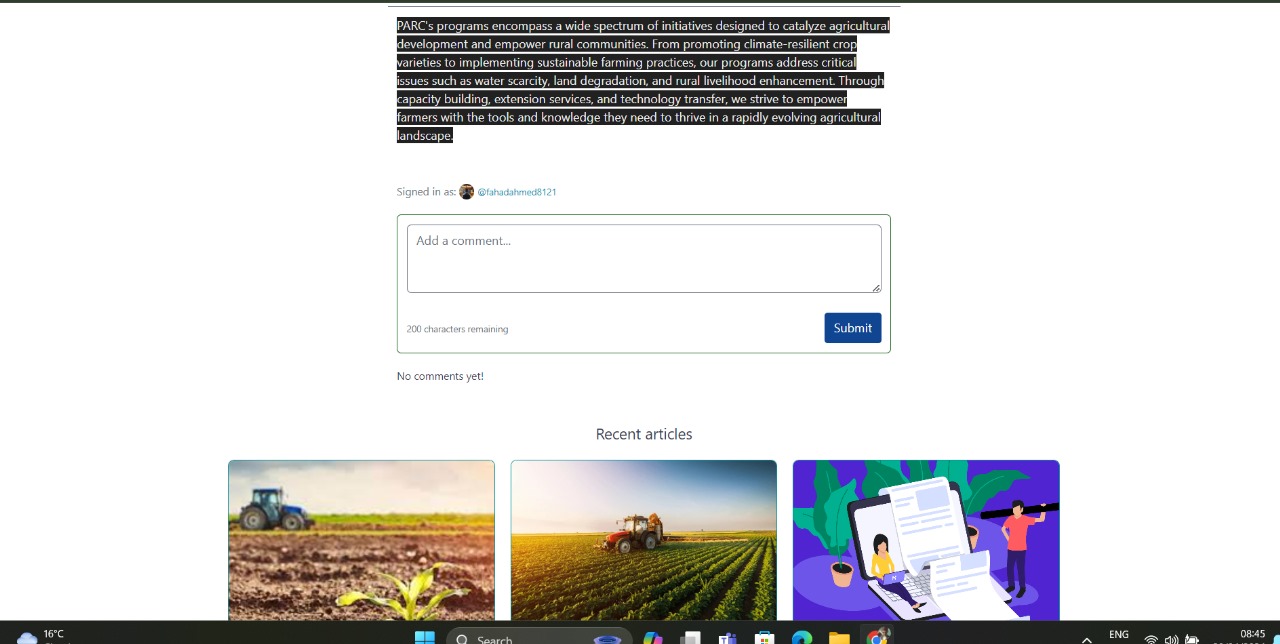
Creating a web-based CMS for PARC using the MERN stack will streamline data management across departments. With streamlined navigation and intuitive interfaces, staff can easily access and update information. Features include categorized sections for research, job postings, tenders, and news. The CMS will have a user-friendly dashboard and advanced search capabilities. Using the MERN stack ensures scalability and flexibility for future growth. This CMS will centralize information, foster collaboration, and support PARC's mission of advancing agricultural research in Pakistan.
Objectives
Streamlined Data Management: The primary objective of the CMS is to streamline data management across all departments of PARC. By providing a centralized platform, the CMS aims to simplify the process of accessing, updating, and sharing information related to research, projects, job opportunities, tenders, and news. Efficient Communication: Another key objective is to facilitate efficient communication within PARC by providing staff members with easy access to relevant information. With streamlined navigation and intuitive interfaces, the CMS will enable seamless communication and collaboration across different departments and teams. User-Friendly Interface: The CMS aims to provide a user-friendly interface that is intuitive and easy to navigate. Staff members from all departments, regardless of their technical expertise, should be able to use the system effectively to access and update information relevant to their roles and responsibilities. Categorized Information: The CMS will categorize information into different sections based on departmental needs, such as research findings, project updates, job postings, tenders, and news articles. This categorization will ensure that users can easily locate the information they need without having to sift through irrelevant content. Advanced Search and Filtering: To further enhance usability, the CMS will incorporate advanced search and filtering capabilities. Users will be able to search for specific information using keywords or filter results based on criteria such as department, date, or content type. This feature will help users quickly find relevant information and improve overall productivity. Centralized Administration: The CMS will feature a centralized administration panel that allows administrators to manage user permissions, monitor content updates, and analyze website traffic and engagement metrics. This centralized administration will ensure consistency, security, and accountability across the platform. Scalability and Flexibility: Leveraging the MERN stack, the CMS aims to be scalable and flexible to accommodate PARC's evolving needs. Whether it's adding new departments, integrating additional features, or expanding the platform's capabilities, the CMS will provide a solid foundation for future growth and development. Enhanced Collaboration: By centralizing information and facilitating efficient communication, the CMS will enhance collaboration among PARC staff members. Teams working on different projects or initiatives will be able to share information, exchange ideas, and collaborate more effectively, ultimately leading to increased productivity and innovation. Support for PARC's Mission: Ultimately, the objective of the CMS is to support PARC's mission of advancing agricultural research, innovation, and development in Pakistan. By providing a robust platform for managing and sharing information, the CMS will empower PARC to achieve its goals more effectively and make a meaningful impact
Socio-economic benefit
"Project Socio-economic Benefits aims to help people live better lives. It wants to make things like jobs, education, and news easier to find and use. The project will put all this information in one place called a CMS. This CMS will be like a big library where everyone can go to find what they need. It will have easy-to-use buttons and menus so that anyone can use it, even if they're not good with computers. One important thing the project will do is organize all the information. It will put things like research, jobs, and news into different sections. This way, people can find what they're looking for without getting lost in a sea of information. The project will also make it easy to search for things. If someone wants to find a job or learn about a project, they can just type it into the search bar and the CMS will find it for them. Another important part of the project is making sure everyone can use it. This means making the CMS simple and easy to understand. It will have big buttons and clear labels so that anyone can figure out how to use it. The project will also teach people how to use the CMS so that everyone can benefit from it. The project will help people in many ways. It will make it easier for them to find jobs, learn new skills, and stay informed about what's happening in their community. By bringing all this information together in one place, the project will make life better for everyone.
Methodologies
The project methodologies for implementing the web-based CMS for PARC will involve a systematic approach to ensure its successful development, deployment, and maintenance. Here's a simplified outline of the methodologies: 1.Requirement Gathering: The first step is to gather requirements by consulting with stakeholders from PARC to understand their needs, goals, and expectations for the CMS. This involves conducting interviews, surveys, and workshops to capture all necessary information. 2. Planning and Analysis: Based on the gathered requirements, a detailed project plan is created outlining the scope, timeline, budget, and resources required for the CMS development. Analysis of the technical feasibility and potential risks is also conducted at this stage. 3. Design: The design phase involves creating wireframes and mockups to visualize the layout, structure, and user interface of the CMS. Design decisions are made based on usability principles, accessibility standards, and user feedback to ensure an intuitive and user-friendly experience. 4. Development: The actual development of the CMS begins, utilizing the MERN stack (MongoDB, Express.js, React.js, Node.js) for its flexibility, scalability, and performance. Developers work on building the backend infrastructure, frontend interfaces, and integrating necessary features and functionalities. 5.Testing: Throughout the development process, rigorous testing is conducted to identify and address any bugs, errors, or usability issues. This includes unit testing, integration testing, and user acceptance testing to ensure that the CMS meets quality standards and user requirements. 6. Deployment: Once the CMS development is complete and thoroughly tested, it is deployed to a staging environment for final validation and user acceptance. Any last-minute adjustments or optimizations are made before the CMS is deployed to the production environment for public access. 7.Training and Documentation: Training sessions are conducted to familiarize PARC staff with the CMS, its features, and functionalities. Comprehensive documentation is also provided to guide users on how to use the CMS effectively and troubleshoot common issues. 8. Maintenance and Support: Post-deployment, ongoing maintenance and support are provided to ensure the CMS remains secure, up-to-date, and optimized for performance. Regular updates, bug fixes, and enhancements are implemented based on user feedback and evolving requirements. 9. Monitoring and Evaluation: Continuous monitoring and evaluation of the CMS usage, performance, and user feedback are conducted to identify areas for improvement and optimization. This feedback loop helps in refining the CMS over time to better serve the needs of PARC and its stakeholders.
Outcome
The project outcome for implementing the web-based CMS for PARC aims to deliver a user-friendly, efficient, and centralized platform that facilitates streamlined data management, communication, and collaboration across all departments. Here are the key expected outcomes: 1. Streamlined Data Management: The CMS will provide a centralized platform for storing, accessing, and updating information related to research, projects, job opportunities, tenders, and news. By organizing data in a structured manner and categorizing it into different sections, the CMS will simplify the process of managing and retrieving information. 2.Efficient Communication: Staff members from different departments will have easy access to relevant information through the CMS, fostering efficient communication and collaboration. With streamlined navigation and intuitive interfaces, users can seamlessly share updates, insights, and resources, enhancing productivity and teamwork within PARC. 3.mproved Accessibility: The user-friendly interface of the CMS will ensure that staff members, regardless of their technical expertise, can easily navigate and utilize the platform. With clear labels, intuitive menus, and accessible design elements, the CMS will promote inclusivity and accessibility for all users. 4.Enhanced Search and Filtering: The CMS will incorporate advanced search and filtering capabilities, allowing users to quickly find relevant information using keywords or criteria such as department, date, or content type. This feature will save time and effort for users, improving overall efficiency and productivity. 5.Centralized Administration: Administrators will have access to a centralized panel for managing user permissions, monitoring content updates, and analyzing website traffic and engagement metrics. This centralized administration will ensure consistency, security, and accountability across the platform. 6.Scalability and Flexibility: Leveraging the MERN stack, the CMS will be scalable and flexible to accommodate PARC's evolving needs. Whether it's adding new departments, integrating additional features, or expanding the platform's capabilities, the CMS will provide a solid foundation for future growth and development. 7. Enhanced Collaboration: By centralizing information and facilitating efficient communication, the CMS will enhance collaboration among PARC staff members. Teams working on different projects or initiatives will be able to share information, exchange ideas, and collaborate more effectively, ultimately leading to increased productivity and innovation. 8. Support for PARC's Mission: Ultimately, the CMS will support PARC's mission of advancing agricultural research, innovation, and development in Pakistan. By providing a robust platform for managing and sharing information, the CMS will empower PARC to achieve its goals more effectively and make a meaningful impact on the agricultural sector in the country.
Gallery
More from Computer Science
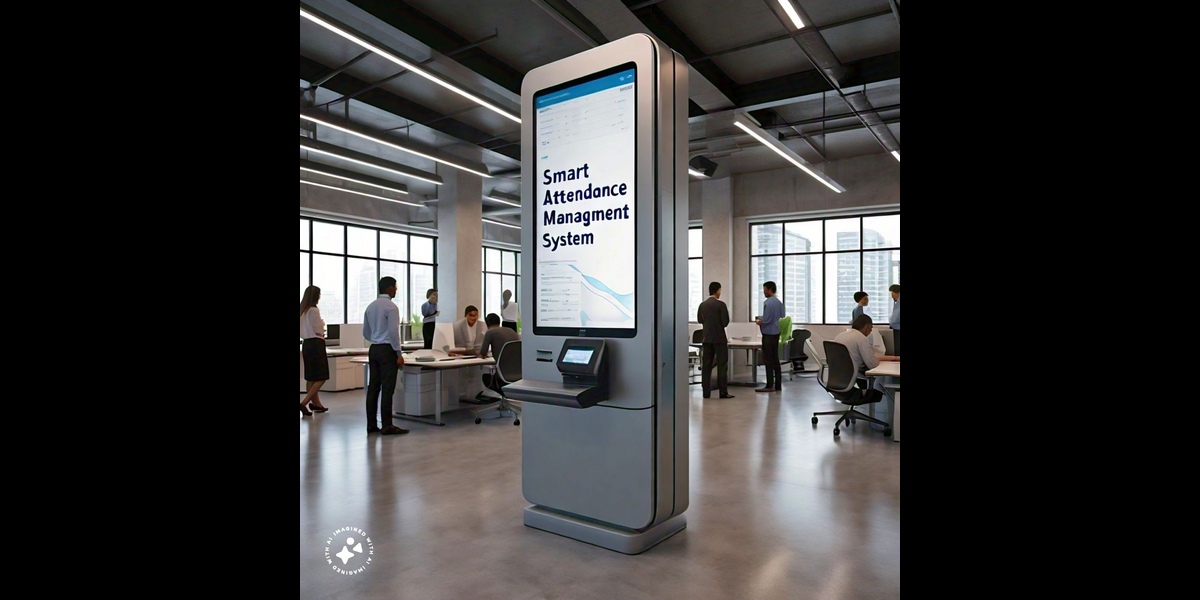
Smart Attendance Management System with Fake Attendance Detection.
The Smart Attendance Management System with Fake Attendance Detection is a cutting-edge solution integrating R…
Supervisor: Sabeeh Ahmed Saeed
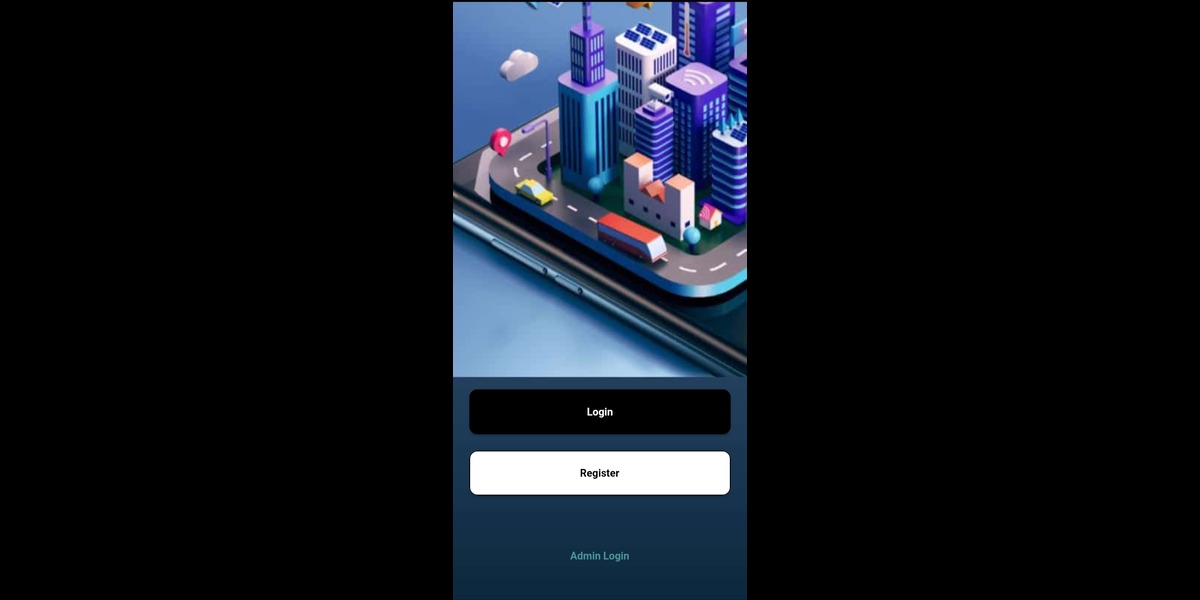
CityFolio
Introducing the Cityfolio app! It's a helpful tool designed to make exploring cities easier and more fun for e…
Supervisor: Dr.Samia Riaz

ZOO TYCOON
Zoo Tycoon" is an immersive mobile game where players take on the role of zoo managers, tasked with creating a…
Supervisor: Mr Muhammad Nadeem

Mental Disease Prediction Using Machine Learning
This product is used to predict the mental diseases of the user based on their symptoms which are predicted by…
Supervisor: Riaz Ahmed Bhatti