GardenGenius
Description
GardenGenius stands as a self-contained mobile application, offering a fresh perspective on urban gardening. Unlike existing solutions that may cater to large gardens or lack user-friendliness, GardenGenius focuses on empowering individuals with limited space and gardening experience.
Objectives
The main Objectives of Developing this System are: 1. Make homegrown produce accessible to anyone, regardless of experience or limited space. 2. Utilize image recognition to accurately identify seeds and plants. 3. Offer tailored advice on watering, fertilization, pest control, and more based on plant analysis. 4. Guide users through every stage of the gardening process, maximizing their chances of growing healthy plants.
Socio-economic benefit
1. Promoting Healthier Lifestyles Access to Fresh Produce: By enabling users to grow their food, the app encourages healthier dietary choices. Reduced Dependency on Processed Foods: Users can grow fresh vegetables and fruits, which can lower reliance on processed or store-bought items, promoting better nutrition. 2. Financial Savings Lower Grocery Bills: Growing produce at home can save money, especially in urban areas where fresh produce can be expensive. Reduced Gardening Costs: The app's tailored advice helps optimize gardening efforts, reducing unnecessary spending on fertilizers, pest control, and other resources. 3. Environmental Sustainability Reduced Carbon Footprint: Urban gardening reduces the need for transportation of food from farms to cities, lowering emissions. Waste Reduction: Encouraging composting and reuse of organic waste promotes sustainability. 4. Empowering Communities Knowledge Sharing: The app's community forum fosters collaboration among urban gardeners, allowing for knowledge sharing and collective problem-solving. Plant Exchange: Facilitates the exchange of plants and seeds, reducing costs and building stronger community ties. 5. Economic Opportunities Local Employment: Encourages small-scale urban agriculture, which can lead to local job creation in gardening-related services and products. Platform Growth: The app itself can create job opportunities for developers, marketers, and support staff. 6. Stress Reduction and Mental Health Benefits Therapeutic Impact of Gardening: Gardening is known to reduce stress, anxiety, and depression, which can lead to improved overall well-being. Sense of Accomplishment: Watching plants grow and thrive provides users with a sense of achievement. 7. Education and Skill Development Gardening Skills: The app educates users on effective gardening practices, enhancing their self-sufficiency. Technology Use: By leveraging image recognition and AI, users gain familiarity with modern technology. 8. Increased Urban Green Spaces Environmental Improvement: Encourages the greening of urban areas, improving air quality and aesthetics. Heat Island Mitigation: Urban gardens help reduce the urban heat island effect, making cities more livable.
Methodologies
1.. Agile Development Process Iterative Development: The project follows an iterative process where features are developed, tested, and refined in multiple cycles. User Feedback Integration: Regular feedback from target users ensures that the app meets the needs of gardeners. 2. Modular Design Approach The app is divided into distinct functional modules for scalability and maintainability: Seed Identification: Utilizes image recognition to identify seeds and seedlings. Plant Care Recommendations: Provides tailored advice based on plant types and user environment. Seasonal Planting Guide: Suggests planting schedules based on location and climate data. Pest and Disease Identification: Uses photo diagnosis to identify plant issues. Community Forum: Enables knowledge sharing and user interaction. Progress Tracker: Allows users to monitor plant growth and milestones. Plant Exchange: Facilitates a platform for exchanging plants and seeds. 3. Technology Stack Frontend: Developed using React Backend: Cloud-based storage for data management. APIs for data fetching and updates. Machine Learning: Image recognition for seed and pest identification using pre-trained models. AI algorithms for personalized recommendations. 4. Research and Data Collection User Research: Surveys and interviews with gardeners to understand challenges and requirements. Plant Data Compilation: Gathering data on various plants, their care needs, and seasonal requirements. Environmental Data Integration: Incorporating location-specific climate data to provide accurate planting advice. 5. User-Centric Design Simplified Interface: Designed to be intuitive, even for users with limited technical knowledge. Gamification Elements: Encourages engagement by tracking progress and milestones. 6. Testing Methodologies Unit Testing: Each module is tested independently to ensure functionality. Integration Testing: Ensures that all modules work seamlessly together. User Acceptance Testing (UAT): End-users test the app to validate usability and relevance.
Outcome
1.A Comprehensive Gardening Assistant Developed an intuitive, feature-rich application that serves as a complete gardening assistant for urban and kitchen gardeners. Integrated functionalities like seed identification, plant care recommendations, seasonal planting guides, and pest/disease management into a single platform. 2. Enhanced Gardening Accessibility Simplified gardening for users with limited knowledge by providing step-by-step guidance and real-time problem-solving tools. Improved accessibility for urban dwellers to grow their own food, even with limited space. 3. Community Engagement and Collaboration Created a Community Forum module that fosters interaction and knowledge sharing among gardeners. Facilitated a system for the exchange of plants and seeds, encouraging resource sharing and community building. 4. Improved Plant Health and Yields Utilized image recognition technology to identify seeds, pests, and diseases, enabling gardeners to take timely actions. Provided personalized care recommendations, leading to healthier plants and improved yields. 5. Educational Impact Empowered users with better gardening skills through tailored recommendations, seasonal guides, and progress tracking features. Increased awareness about organic gardening practices and sustainable living. 6. Environmental Contribution Encouraged urban gardening, contributing to greener urban spaces and reduced carbon footprints. Promoted composting and waste recycling practices as part of the app's gardening recommendations. 7. Financial Savings for Users Enabled users to grow their own vegetables and fruits, reducing dependency on store-bought produce and cutting grocery expenses. 8. Technology Adoption in Gardening Introduced modern technology like AI-powered recommendations and image recognition to traditional gardening practices. Familiarized users with the benefits of combining tech with sustainable living. 9. Scalable Platform for Future Growth Developed a modular app structure, allowing for easy addition of new features or scaling to larger audiences. Created a platform that can evolve with new gardening trends, user needs, and technological advancements.
Gallery


More from Computer Science

Career Bridge: Connect students and alumni for guidance and boosting their careers.
Career Bridge bridges the collaboration gap between university students/freelancers and alumni. Through our pl…
Supervisor: Beenish Noor
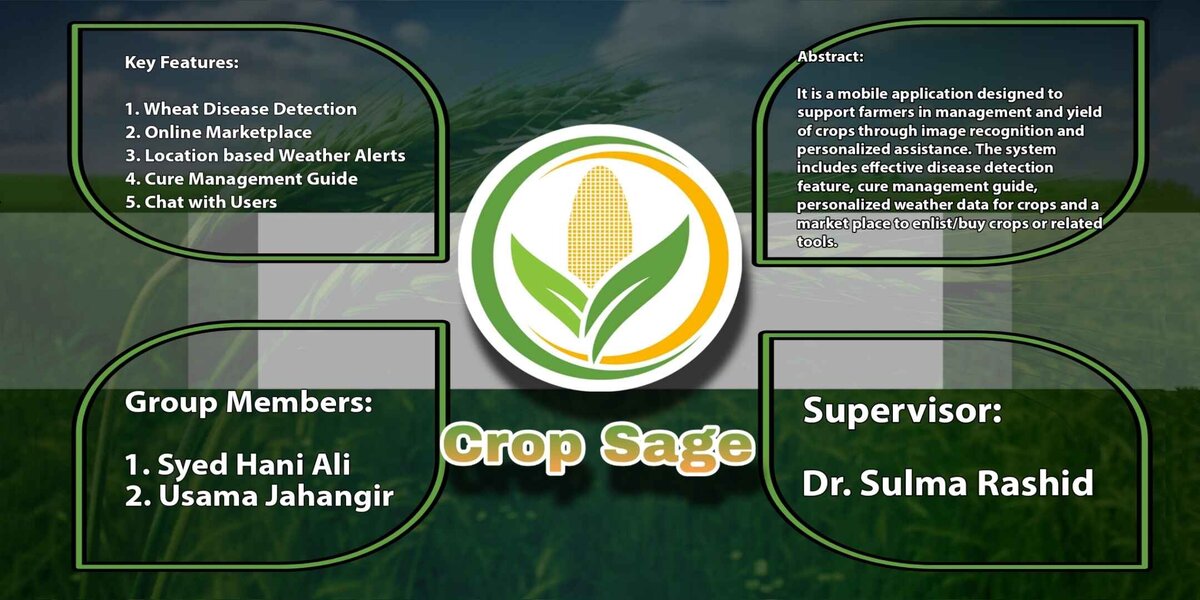
CropSage - Smart Wheat Management Mobile App
The CropSage System is an innovative mobile application designed to support wheat farmers by offering a compre…
Supervisor: Dr. Sulma Rashid

Zaplead Sales Copilot
Zaplead’s AI-powered assistant revolutionizes the way you approach sales. By streamlining time-consuming proce…
Supervisor: Dr. Faisal Shafique Butt

MediChaos
MediChaos is a modern Hospital Management System built with the MERN stack to streamline healthcare operations…
Supervisor: Dr. Sheraz Anjum