Smart-Eye: AI Powered Traffic Sentinel
Description
Smart-Eye: AI-Powered Traffic Sentinel is an advanced traffic surveillance system designed to enhance road safety and enforce traffic regulations using computer vision and AI. The system integrates real-time video feeds from strategically placed cameras to detect vehicles. It identifies violations such as red light breaches, and improper stopping on the red signal, while also detecting accidents and recognizing vehicle number plates. By providing real-time alerts to authorities, Smart-Eye ensures timely interventions, promotes compliance with traffic laws, and enhances the effectiveness of traffic management systems.
Objectives
Enhance road safety through proactive monitoring and intervention. • Detect and recognize various traffic elements, including vehicles, pedestrians, and cyclists, in real-time video feeds. • Identify and classify traffic violations, such as vehicles stopping beyond zebra crossing on red lights and red light violations. • Detect and analyze accidents. • Provide real-time alerts and notifications to relevant authorities for prompt action. • Implement number plate recognition for vehicle identification and tracking. • Ensure compliance with traffic regulations and enforcement measures. • Enhance the effectiveness of existing traffic surveillance infrastructure and systems.
Socio-economic benefit
Socio-Economic Benefits of the Smart-Eye: AI-Powered Traffic Sentinel Project Improved Road Safety: Reduces traffic accidents by identifying and addressing violations promptly. Enhances the safety of pedestrians, cyclists, and drivers by ensuring compliance with traffic laws. Efficient Law Enforcement: Automates violation detection, reducing the need for extensive manual monitoring. Enables authorities to allocate resources more effectively, focusing on critical areas. Reduction in Traffic Violations: Promotes adherence to traffic rules through consistent monitoring and penalties for violations. Discourages risky behaviors such as signal jumping leading to safer driving habits. Cost Savings: Reduces healthcare and emergency response costs by preventing accidents. Minimizes damage to infrastructure caused by accidents, lowering repair expenses. Economic Productivity: Decreases traffic congestion caused by accidents, improving commute times and productivity. Supports smoother transportation of goods, benefiting businesses and supply chains. Enhanced Urban Planning: Provides actionable data for traffic pattern analysis, aiding in better urban infrastructure design. Facilitates informed decision-making for future transportation projects. Social Equity: Promotes fair enforcement of traffic laws, ensuring accountability regardless of socioeconomic status. Improves access to safer roads for all communities, especially vulnerable road users like pedestrians and cyclists. By leveraging AI and automation, the project delivers tangible benefits that contribute to the well-being of society and the overall economy.
Methodologies
Data Collection and Preprocessing Collect real-time video feeds from traffic cameras. Perform preprocessing, including frame extraction, noise reduction, and resizing, to prepare data for analysis. Computer Vision Algorithms Utilize deep learning models (e.g., YOLO, OpenCV) for object detection and classification of vehicles, pedestrians, and cyclists. Implement Optical Character Recognition (OCR) for number plate detection and recognition. AI-Based Violation Detection Design algorithms to detect violations such as red light running, and improper stopping at zebra crossings. Integrate real-time tracking to monitor vehicle behavior across multiple frames. Accident Detection Use machine learning models trained on accident scenarios to improve detection accuracy. Alerting and Notification System Ensure compatibility with existing databases and surveillance systems. Use APIs for seamless communication between traffic cameras, the detection module, and the alert system.
Outcome
Enhanced Road Safety Significant reduction in road accidents through real-time monitoring and quick response mechanisms. Safer environments for pedestrians, cyclists, and motorists by ensuring adherence to traffic rules. Automated Traffic Law Enforcement Streamlined enforcement of traffic regulations, reducing manual effort and human error. Improved compliance with rules such as stopping at red lights, and proper stopping at red lights. Accurate Incident Detection Real-time identification and reporting of traffic violations and accidents. Faster response times by authorities to address accidents or violations, minimizing their impact. Seamless Integration with Existing Systems Effective utilization of current traffic surveillance infrastructure, enhancing its capabilities without significant additional investment. Compatibility with databases for tracking violations and offender records. Data-Driven Urban Planning Collection of actionable data on traffic patterns, violation hotspots, and accident-prone areas. Insights to support better road design, traffic management, and policymaking. Increased Public Awareness and Compliance Greater adherence to traffic laws due to consistent monitoring and automated penalty systems. Enhanced public awareness of traffic rules and safety measures through visible enforcement. Operational Efficiency for Authorities Reduced workload for traffic law enforcement officers. Efficient allocation of resources to critical areas based on real-time system analytics. Economic and Environmental Benefits Lower economic costs associated with accidents, including healthcare and emergency services. Reduced traffic congestion and emissions due to better traffic management. In summary, the Smart-Eye system aims to deliver a safer, more efficient, and sustainable traffic management ecosystem while fostering compliance and proactive enforcement of traffic regulations.
Gallery


More from Computer Science

Career Bridge: Connect students and alumni for guidance and boosting their careers.
Career Bridge bridges the collaboration gap between university students/freelancers and alumni. Through our pl…
Supervisor: Beenish Noor
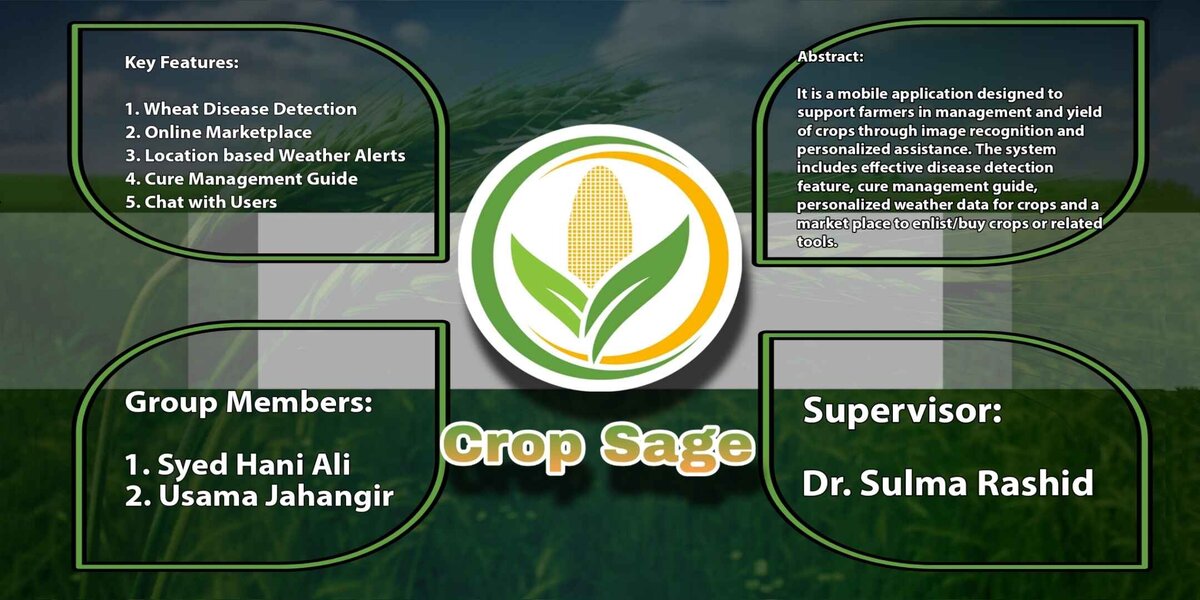
CropSage - Smart Wheat Management Mobile App
The CropSage System is an innovative mobile application designed to support wheat farmers by offering a compre…
Supervisor: Dr. Sulma Rashid

Zaplead Sales Copilot
Zaplead’s AI-powered assistant revolutionizes the way you approach sales. By streamlining time-consuming proce…
Supervisor: Dr. Faisal Shafique Butt
MediChaos
MediChaos is a modern Hospital Management System built with the MERN stack to streamline healthcare operations…
Supervisor: Dr. Sheraz Anjum