Disease Vaccination System
Description
The Disease Vaccination System is a web-based platform that simplifies managing vaccination campaigns. Developed using Django, it features a user-friendly interface for scheduling, resource allocation, and personnel management. The system enhances efficiency by optimizing resource utilization and labor allocation, ensuring smooth execution of vaccination drives. It is designed to improve campaign coordination and streamline operations, making it an effective solution for managing large-scale health initiatives.
Objectives
The primary objectives of our Disease Vaccination System are to develop a user-friendly, GUI-based platform that simplifies the management of vaccination campaigns. By focusing on efficiency and usability, the system aims to provide robust tools for handling resources and personnel, ensuring seamless coordination in vaccination efforts. One of its core functions is to streamline scheduling and execution processes, reducing delays and enhancing the overall organization of campaigns. The system is designed to maximize resource utilization, ensuring that materials and personnel are allocated efficiently, minimizing waste, and optimizing operations. Labor allocation is another critical aspect, with the system offering tools to assign tasks effectively, thereby improving workforce productivity during vaccination drives. These features collectively contribute to enhancing the efficiency and effectiveness of vaccination campaigns, ultimately supporting better health outcomes.
Socio-economic benefit
The Disease Vaccination System offers significant socio-economic benefits by improving the efficiency and effectiveness of vaccination campaigns. By streamlining scheduling, resource allocation, and personnel management, the system minimizes wastage of resources, reducing overall campaign costs. This optimization ensures that vaccines are distributed and administered efficiently, lowering the financial burden on healthcare providers and governments. The system also enhances workforce productivity by facilitating better labor allocation, reducing the workload on healthcare workers, and enabling them to focus on critical tasks. This, in turn, promotes job satisfaction and better outcomes in vaccination drives. Additionally, by improving campaign management, the system helps prevent the spread of infectious diseases, reducing the economic impact of disease outbreaks on communities, such as healthcare costs, lost productivity, and disruptions in daily life. At the community level, the system ensures equitable access to vaccines by enabling better planning and coverage, particularly in underserved areas. By enhancing the reach and effectiveness of vaccination campaigns, it contributes to improved public health outcomes, reduced mortality, and a healthier workforce, driving economic growth and social stability.
Methodologies
The Disease Vaccination System follows a structured methodology to develop an efficient, user-friendly platform for managing vaccination campaigns. The project adopts an iterative approach, combining Agile software development practices with robust system design and data management techniques to ensure an effective solution. The first phase involves system analysis and requirements gathering. Stakeholders and healthcare professionals are consulted to identify challenges in vaccination campaign management. This phase defines key system requirements, including scheduling, resource allocation, and personnel management, ensuring the system addresses real-world needs. The system design phase follows, using Django for its scalability and ease of use. The design focuses on creating an intuitive user interface for administrators and healthcare workers, supported by a secure back-end capable of processing and storing large datasets. Authentication mechanisms are integrated to protect sensitive data and ensure system security. During the development phase, the system is implemented based on the design specifications. Django is used to build the front-end and back-end, integrating essential modules such as Available Vaccines, Available Campaigns, Campaign Management, Resource Tracking, and Personnel Management. These modules streamline operations by providing tools for organizing and managing vaccination efforts efficiently. The back-end handles data processing, while the front-end offers an accessible interface for users. Testing is carried out in several stages. Unit testing ensures the functionality of individual modules, such as vaccine tracking and campaign scheduling. Integration testing validates seamless interaction between system components. User Acceptance Testing (UAT) involves end-users to verify the system’s performance in practical scenarios. Identified issues are resolved to enhance system reliability. After testing, the system is deployed on a secure server, including server configuration, database setup, and user access management. Detailed user manuals are provided to facilitate smooth adoption. Training sessions guide end-users on system operations, including data entry and task management. A support system is established to resolve technical challenges and ensure uninterrupted operations. Post-deployment, regular maintenance is conducted to monitor performance and apply updates as needed. Security patches and optimizations are implemented to keep the system efficient and secure.
Outcome
The Disease Vaccination System aims to optimize vaccination campaign management by streamlining processes such as scheduling, resource allocation, and personnel management. One of its primary outcomes is the efficient use of resources. The system centralizes the management of vaccines, medical supplies, and staff, ensuring they are allocated based on real-time data, reducing wastage and ensuring resources are available when and where needed. This contributes to better cost management and resource utilization in large-scale vaccination efforts. Another key outcome is improved scheduling and campaign execution. The system simplifies the scheduling process, making it easy to plan and update vaccination appointments. Administrators can adjust the schedule based on vaccine availability or staffing changes, ensuring that vaccination campaigns stay on track. This flexibility improves the responsiveness of the vaccination drive, minimizing delays and maximizing coverage.
Gallery


More from Computer Science

Career Bridge: Connect students and alumni for guidance and boosting their careers.
Career Bridge bridges the collaboration gap between university students/freelancers and alumni. Through our pl…
Supervisor: Beenish Noor
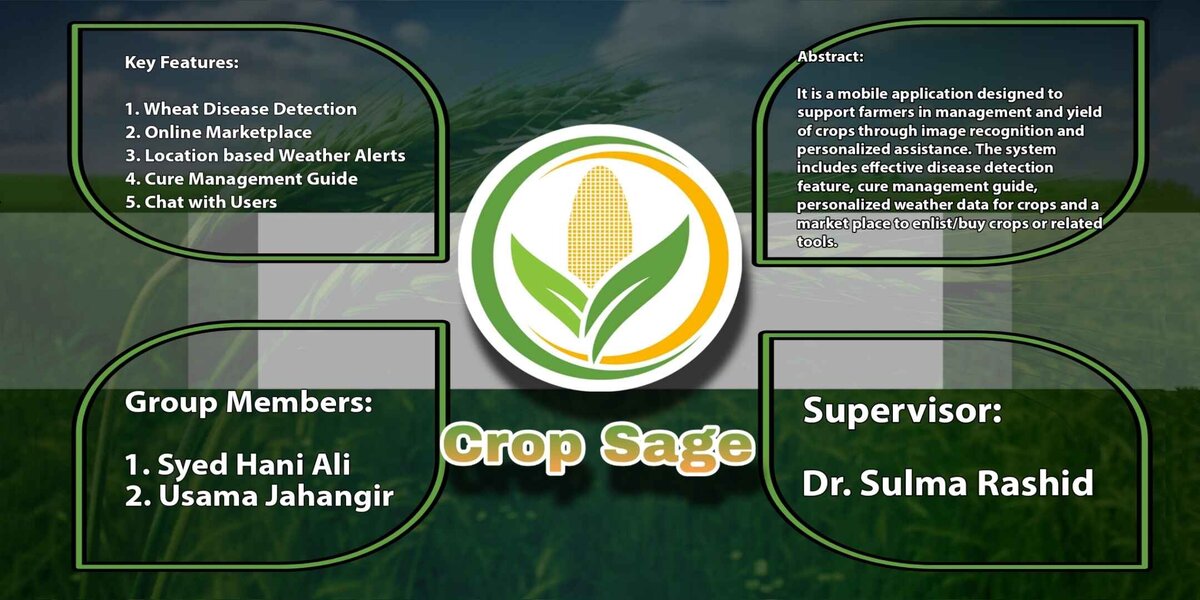
CropSage - Smart Wheat Management Mobile App
The CropSage System is an innovative mobile application designed to support wheat farmers by offering a compre…
Supervisor: Dr. Sulma Rashid

Zaplead Sales Copilot
Zaplead’s AI-powered assistant revolutionizes the way you approach sales. By streamlining time-consuming proce…
Supervisor: Dr. Faisal Shafique Butt
MediChaos
MediChaos is a modern Hospital Management System built with the MERN stack to streamline healthcare operations…
Supervisor: Dr. Sheraz Anjum