Air flow analysis through lungs using CFD
Description
Lung infections such as pneumonia, asthma, COPD, and COVID-19 significantly contribute to global transmissible deaths. Inhalation therapy, offering a less invasive alternative to oral or injectable routes, can potentially enhance the efficacy of antibiotics for treating these conditions, with the deposition and distribution of inhaled aerosols being crucial, depending on the breathing patterns, particle characteristics, and airway structure. However, despite the potential benefits, few inhaled antibiotic products are approved for regular use due to challenges in delivering drugs effectively to the lungs. Techniques like Particle Image Velocimetry help study the behavior of these particles within the respiratory system, which is critical for optimizing delivery and minimizing medication wastage and side effects.
Objectives
• To develop realistic simulation models of pulmonary system by converting DICOM (Digital Imaging and Communications in Medicine) files into STL stereolithography files to calculate steady-state and transient airflow structure. • The flow distribution and particle deposition will be measured under various flow rates and breathing modes. • To calculate the number of inhaled particles at different locations of pulmonary system.
Socio-economic benefit
• Optimized drug delivery through inhalation. • Cost saving by avoiding overdosing of Medicine. • Reduced side effects by inhalation of medicine in exact quantity. • Deposition fraction of medicine at different parts of lungs for proper prescription by doctors.
Methodologies
Describe how the research plan will be accomplished over the three years of funding available for the proposed project and identify appropriate milestones and anticipated deliverables. Part( A) CFD simulation: Original respiratory tract data of patients of different age group, sex and build, will be obtained using a computed tomography (CT) scanner or MRI. The images will be stored as standard Digital Imaging and Communications in Medicine (DICOM) data, a format commonly used for the transfer and storage of medical images. The original set of CT images will be converted into a file format compatible with any 3D imaging software to generates and modify 3D surface models from medical images. ANSYS preprocessing software packages will be used to modify the surface mesh and then create a volume mesh of the model, respectively. Surface geometries of respiratory tract will be exported as STL format. Using the STL data, a three-dimensional respiratory tract model was created with a 3D printer. CFD simulations will be performed to calculate airflow profiles under different breathing conditions. Flow fields will be analyzed using different turbulence models including k epsilon, k omega and Large Eddy Simulation. Part (B) Experimental Setup: PIV is a technique that measures the instantaneous velocity field within an illuminated plane of the fluid field using light scattered from tracer particles in the fluid. The particle locations will be determined by capturing the scattered light from the individual particles with a digital camera. The particle displacement in the region of interest will be calculated by comparing consecutive images. A two-dimensional map of the two-component velocity vectors will then be derived by dividing the displacement distance by the known time delay between the images. The analysis of the PIV images will be conducted by dividing the image into a grid of smaller sub-areas called interrogation areas [10]. A displacement vector for the tracer particles will then be detected in each interrogation area by using the cross correlation statistical method. The respiratory tract model was created with a transparent acrylic material. An artificial lung will be used for producing an air flow rate similar to different breathing conditions of patients and healthy persons. Another option is to produce a 3 D printed model and to be tested upon in a lab in Iran. Mr. Mortazavy’s lab is already working on the flow analysis of covid-19 droplets through human airway.
Outcome
Among the leading causes of communicable diseases globally are lung infections, which include COVID-19, pneumonia, asthma, and chronic obstructive pulmonary disease (COPD). When compared to oral tablets or intravenous injections, the inhalation route—which involves less discomfort and harm—is a more effective means of administering antibiotics for the treatment of lung disorders. Investigating the deposition area of these inhaled aerosols is crucial, as it is primarily influenced by breathing patterns, particle size and shape, and airway geometry. Lung infections are often treated with intravenous or oral antibiotics, depending on their severity. A more effective way to treat the illness would be to inhale antibiotics, but almost any drugs have been approved for regular usage.
Gallery


More from Mechanical Engineering
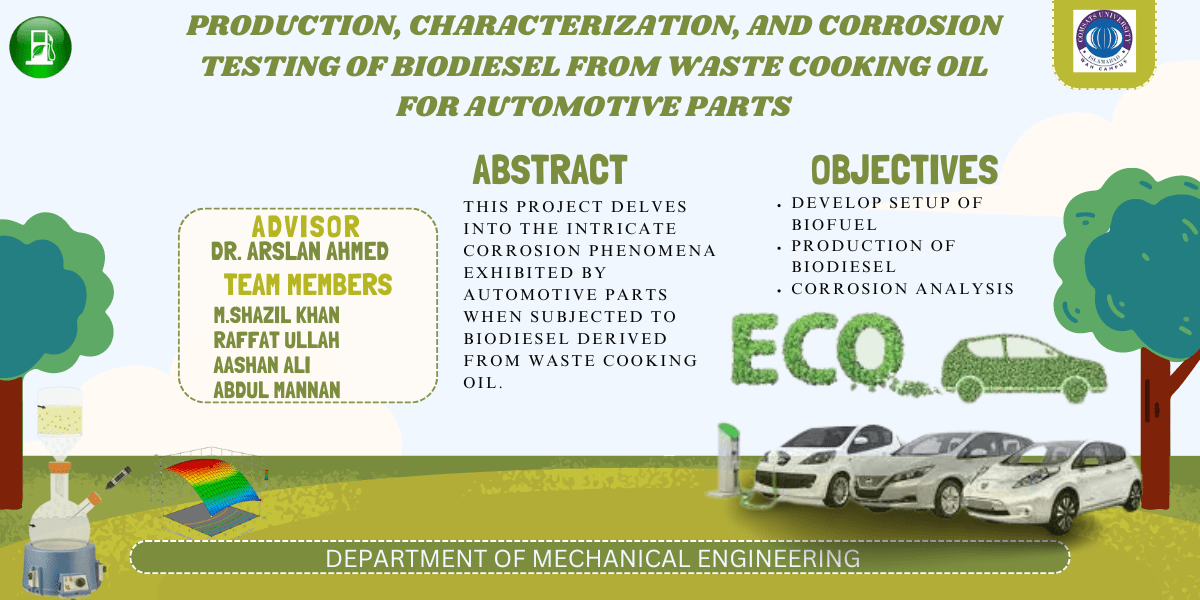
PRODUCTION, CHARACTERIZATION, AND CORROSION TESTING OF BIODIESEL FROM WASTE COOKING OIL FO…
With the growing population and escalating energy demands, the traditional reliance on fossil fuels poses sign…
Supervisor: Dr. Arslan Ahmed

Energy Saving In Building Envelope Using Passive Measures
In this era, the world is heading towards energy saving as it is the need of the hour due to its increasing hi…
Supervisor: Engr. Sir Samad Ali Taj
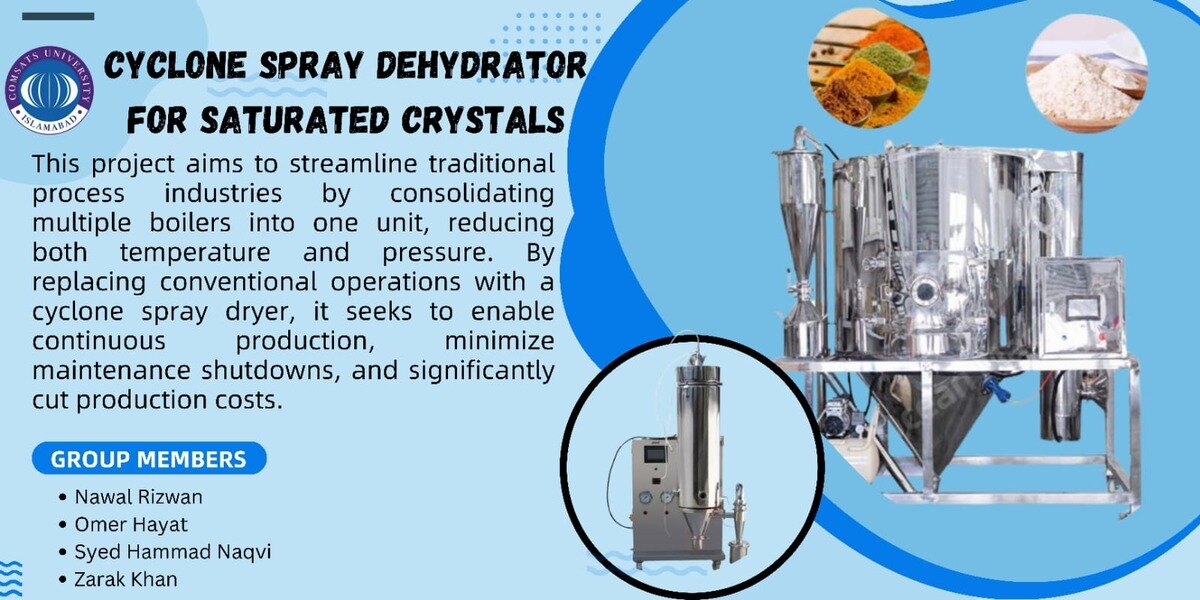
Cyclone Spray Dehydrator for Saturated Crystals
A transformative project for the sugar industry proposes consolidating boilers, reducing temperature and press…
Supervisor: Dr. Shoaib Naseem

Design And Fabrication Of Air Breathing Ionic Thruster
Our mission is to craft an air-breathing ion thruster that outshines traditional wings in power efficiency. We…
Supervisor: Dr. Shoaib Nasseem