Project Title Design and development of high efficiency heat sink for improved thermal management.
Description
Heat dissipation is still the major problem of enhancing the thermal performance of the heat sink. High heat flux and non-uniform temperature distributions are observed in the commercially available heat sinks which leads to the reduction of life and reliability of electronic devices. This study focuses on the design and development of high efficiency of heat sink to enhance thermal operation in electronic devices. The aim of the project is to investigate thermal issues by designing a heat sink that optimizes heat dissipation. The heat distribution process and heat flux will be investigated by using CFD simulation by applying boundary conditions. The model with enhanced thermal efficiency will be selected for the final fabrication process. CFD simulation results will be compared with experimental results thereby improving the overall performance and reliability of electronic systems.
Objectives
1. To design Heat sink models by using SolidWorks. 2. To investigate the heat distribution process and heat flux for uniform thermal distribution by using CFD analysis. 3. To fabricate the heat sink based on the improved thermal efficiency after comparing the CFD results on the design models. 4. To compare simulation and experimental results.
Socio-economic benefit
1. Improved thermal performance: The primary benefit of designing and developing a high-efficiency heat sink is to enhance thermal management. By efficiently dissipating heat away from electronic components or other heat-generating devices, the heat sink helps maintain lower operating temperatures, which can improve overall system performance, reliability, and longevity. 2. Energy efficiency: An efficient heat sink design can contribute to energy savings by reducing the need for active cooling systems such as fans or air conditioning units. This can result in lower power consumption and operating costs for devices or systems utilizing the heat sink. 3. Compact form factor: High-efficiency heat sinks can often achieve better thermal performance while occupying less physical space compared to conventional heat sinks. This compact form factor is particularly advantageous in applications where space is limited or where smaller devices are desired. 4. Extended component lifespan: By effectively dissipating heat, a high-efficiency heat sink can help extend the lifespan of sensitive electronic components. Lower operating temperatures can reduce the risk of thermal degradation and failure, leading to improved reliability and durability of the overall system. 5. Enhanced performance in high-power applications: In environments where devices or systems are subjected to high levels of power dissipation, such as high-performance computing, power electronics, or LED lighting, a high-efficiency heat sink can be crucial for maintaining optimal operating conditions and preventing thermal throttling or performance degradation.
Methodologies
1. Literature review: First, we examined several research articles on the sustainable design of heat sinks, focusing on important components that may affect and improve heat sink efficiency. 2. Creating SolidWorks Heat sink Models: We have concluded with three types of prototype models of heatsink which is based on the best thermal management. A novel 3D model using SolidWorks will be developed that will maximize heat dissipation through optimized geometry. To maximize surface area and airflow, this includes designing the fins, base, and overall geometry. SolidWorks offers accurate modeling tools that facilitate the development of effective heat sink designs. 3. Using CFD Analysis to Examine Heat Flux and Distribution: Heat flux and heat dispersion inside the proposed heat sink will be simulated using computational fluid dynamics (CFD) analysis. Understanding how heat moves through the sink and how well it dissipates is made easier with the help of this analysis. we can optimize the design for uniform thermal distribution and visualize temperature distributions via CFD. 4. Fabrication of Heat sink Using Higher Thermal Efficiency as a Guide: The proposed heat sink will be fabricated utilizing materials and manufacturing techniques that increase Thermal efficiency after the CFD data have been analyzed. Choosing materials with high heat conductivity and improving the design for improved airflow may be necessary to achieve this. The fins and the proposed area between the fins along with all the detailed geometry will be interfaced with 3D CNC or wire cutting machine. 5. Experimental Setup: An experimental setup for measurement of free and forced convection is present in our university. The prototype model will be put in the experimental setup for investigating heat flow through conduction and forced convection processes. Thermocouples will be mounted at various positions of the heat sink model for getting the temperature difference though heatsink at different velocities of the air. Thermocouples on the other hand will relate to data acquisition cards (DAC) and the result will be taken from the source computer. The velocities of the air at inlet and outlet will be measured through an anemometer. 6. Experimental and Simulation Outcomes: The simulation results will be compared with the experimental results obtained after repeating each experiment three times for validation. This guarantees that the manufactured heat sink operates as anticipated and aids in the validation of the CFD analysis. The prototype design can be further improved by utilizing any differences between the findings of the simulation and the experiments. The final prototype model will be chosen on best thermal management throughout the geometry after comparing the simulation results with the experimental results.
Outcome
1. Enhanced Cooling Efficiency: The project aims to develop a heat sink design that improves the dissipation of heat from electronic devices, leading to lower operating temperatures and reduced risk of overheating. 2. Increased Performance and Reliability: By effectively managing thermal issues, the developed heat sink can help electronic components operate at optimal temperatures, enhancing their performance and prolonging their lifespan. 3. Energy Savings: The implementation of the high-efficiency heat sink can potentially reduce the need for energy-intensive cooling solutions, resulting in energy savings and lower operational costs for electronic systems. 4. Technological Innovation: Through the project, innovative design approaches and materials for heat sink construction may be discovered, contributing to advancements in thermal management technology with broader applications across industries. 5. Validation and Testing Data: The project outcome may include comprehensive validation and testing data, showcasing the performance and reliability of the developed heat sink under various conditions. This data proved that by enhancing the contact area in design of heat sink which can effectively work and the efficiency of heat sink increases.
Gallery


More from Mechanical Engineering
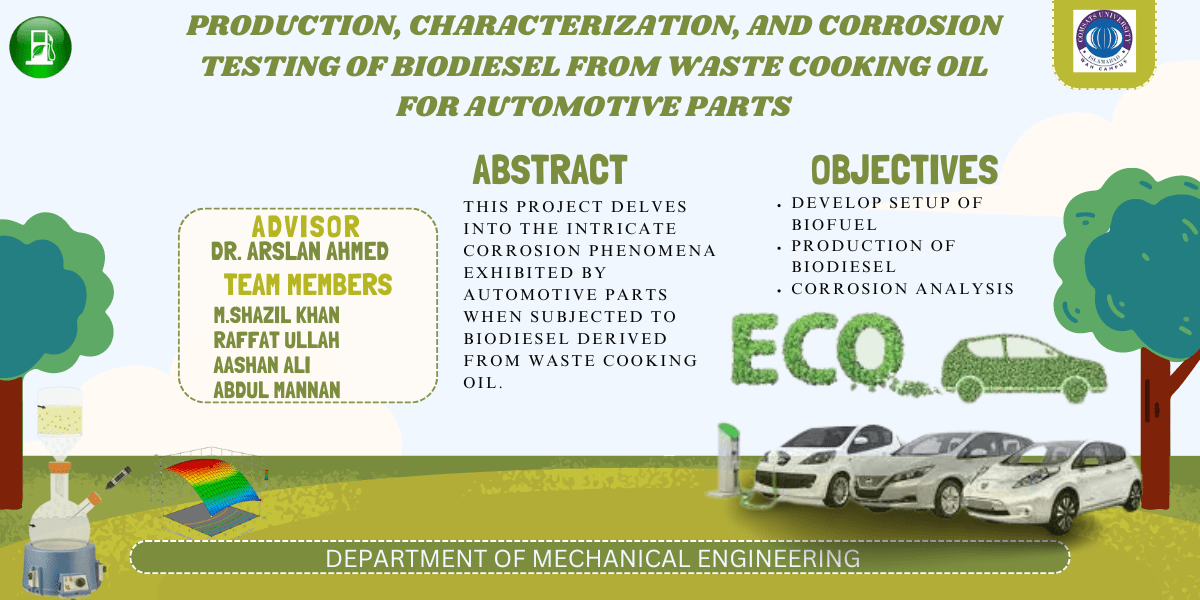
PRODUCTION, CHARACTERIZATION, AND CORROSION TESTING OF BIODIESEL FROM WASTE COOKING OIL FO…
With the growing population and escalating energy demands, the traditional reliance on fossil fuels poses sign…
Supervisor: Dr. Arslan Ahmed
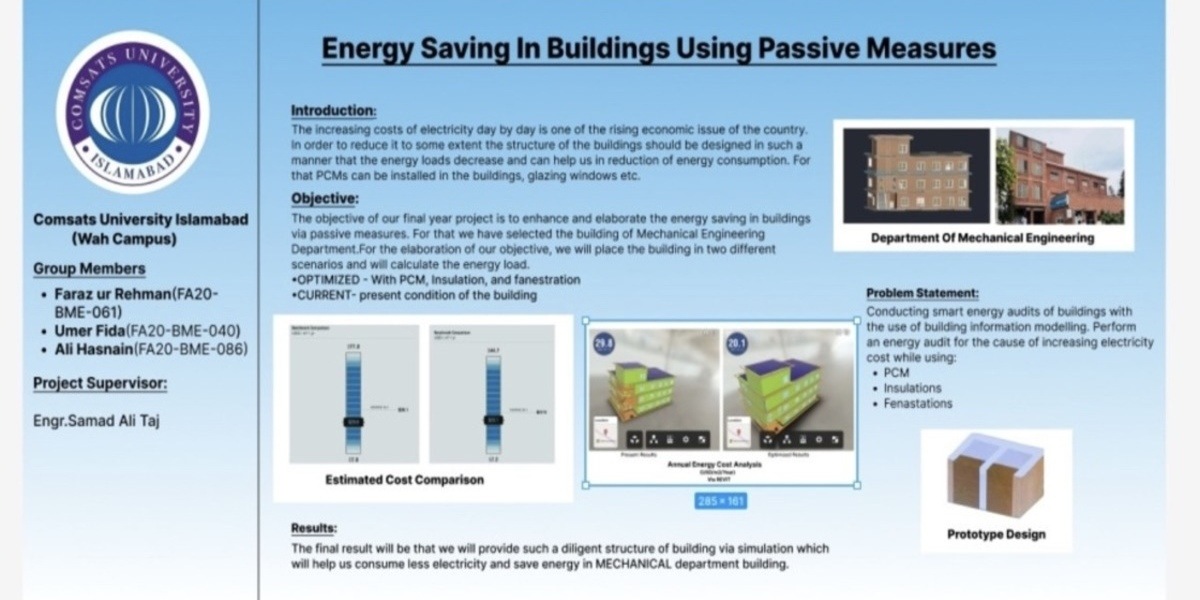
Energy Saving In Building Envelope Using Passive Measures
In this era, the world is heading towards energy saving as it is the need of the hour due to its increasing hi…
Supervisor: Engr. Sir Samad Ali Taj
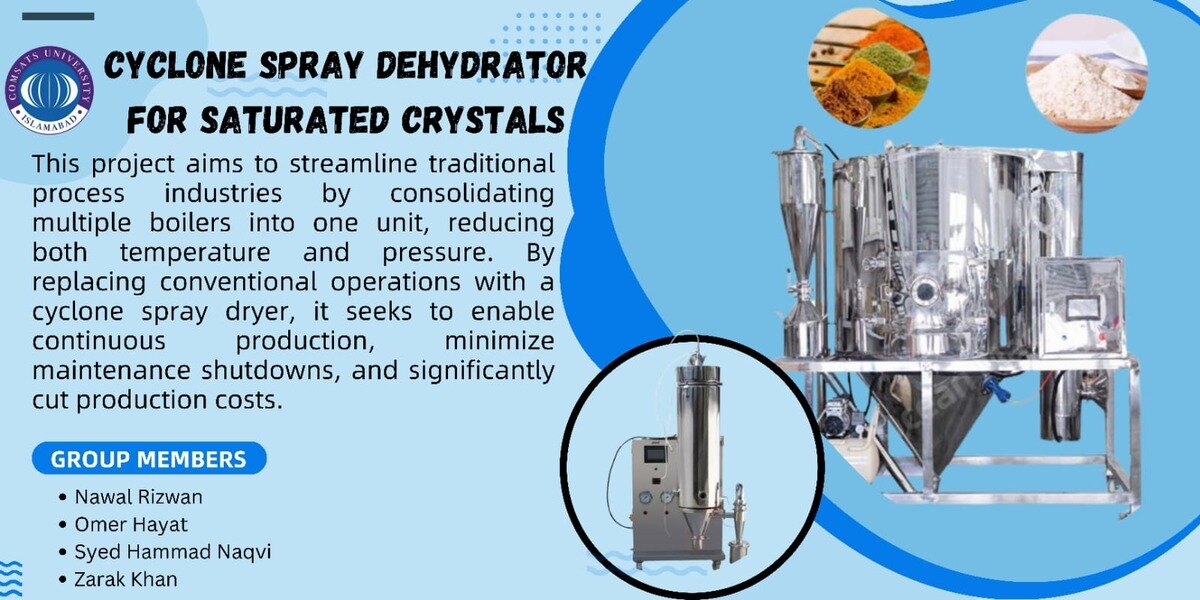
Cyclone Spray Dehydrator for Saturated Crystals
A transformative project for the sugar industry proposes consolidating boilers, reducing temperature and press…
Supervisor: Dr. Shoaib Naseem

Design And Fabrication Of Air Breathing Ionic Thruster
Our mission is to craft an air-breathing ion thruster that outshines traditional wings in power efficiency. We…
Supervisor: Dr. Shoaib Nasseem