Experimental performance analysis of an evacuated tube parabolic trough solar collector.
Description
This project experimentally analyzes the performance of an evacuated tube parabolic trough solar collector in harnessing solar energy to heat water mixed with nanoparticles. The goal is to determine the collector's efficiency and potential applications in solar thermal systems, contributing to the development of sustainable and efficient renewable energy technologies.
Objectives
1. To design and develop an evacuated tube parabolic trough solar collector system with a nanoparticle-enhanced fluid. 2. To investigate the thermal performance of the solar collector system under varying operating conditions, including solar irradiance, fluid flow rate, and temperature. 3. To analyze the effect of nanoparticles on the thermal conductivity and heat transfer characteristics of the fluid. 4. To measure and evaluate the temperature increase and energy gain of the fluid as it passes through the solar collector. 5. To determine the efficiency of the solar collector system in terms of energy conversion and temperature increase. 6. To compare the performance of the nanoparticle-enhanced fluid with traditional fluids (water or air) in the solar collector system. 7. To identify the optimal operating conditions for the solar collector system to achieve maximum efficiency and temperature increase. 8. To assess the potential applications of the nanoparticle-enhanced solar collector system in various fields, such as water heating, space heating, and power generation. 9. To provide recommendations for future improvements and scaling up of the solar collector system.
Socio-economic benefit
1. Renewable Energy Source: The project harnesses solar energy, a renewable and sustainable source of energy, reducing dependence on fossil fuels and contributing to a cleaner environment. 2. Energy Efficiency: The use of nanoparticles in the fluid enhances the thermal conductivity and heat transfer characteristics, leading to improved energy efficiency and temperature increase. 3. Innovative Technology: The project develops an innovative and efficient solar thermal system, potentially replacing traditional systems and providing a cutting-edge solution for various applications. 4. Water Heating and Space Heating: The project's outcome can be used for water heating, space heating, and power generation, addressing energy needs in various sectors. 5. Cost-Effective: The project's efficient design and use of nanoparticles can lead to cost savings and reduced energy bills. 6. Scalability: The technology can be scaled up for industrial applications, providing a sustainable solution for large-scale energy requirements. 7. Environmental Benefits: By harnessing solar energy and reducing reliance on fossil fuels, the project contributes to reducing greenhouse gas emissions and mitigating climate change.
Methodologies
Step 1: Literature Review and System Design (Weeks 1-4) - We conducted a thorough literature review on evacuated tube parabolic trough solar collectors, nanoparticles, and heat transfer enhancement. - We then designed the solar collector system, including the parabolic trough, evacuated tube, and nanoparticle-enhanced fluid flow system. - Then we selected the nanoparticles and fluid to be used in the experiment. Step 2: System Fabrication and Assembly (Weeks 5-8) - We fabricated the parabolic trough and evacuated tube using appropriate materials (e.g., aluminum, glass). - Then we assembled the solar collector system, including the nanoparticle-enhanced fluid flow system. - Then we installed the temperature sensors and integrated them with our PC systems just to record and save all temperature values. Step 3: Experimental Setup and Testing (Weeks 9-12) - Then we set up the experimental apparatus, including the solar collector system, and temperature sensors. - Then we conducted experiments to measure the temperature increase and energy gain of the fluid under varying operating conditions (e.g., solar irradiance, fluid flow rate, temperature). - We then recorded and analyzed the data. Step 4: Data Analysis and Results (Weeks 13-16) - After then we analyzed the experimental data to determine the thermal performance of the solar collector system. - Then we evaluated the effect of nanoparticles on the thermal conductivity and heat transfer characteristics of the fluid. - Then we calculated the efficiency of the solar collector system. Step 5: Results and Discussion (Weeks 17-20) - We presented the experimental and numerical results in a clear and concise manner. - Then we discussed the findings and implications of the results. - Then we compared the performance of nanoparticle-enhanced fluid system with traditional fluids system. Step 6: Conclusion and Recommendations (Weeks 21-24) - After all the work done, we summarized the main findings and conclusions of the project. - Then we provided recommendations for future improvements and scaling up of the solar collector system.
Outcome
1. Efficiency Enhancement: The project aims to achieve a significant increase in the efficiency of the solar collector by using nanoparticles. 2. Temperature Increase: The expected outcome is a substantial temperature increase of the water-nanoparticle mixture. 3. Energy Savings: The project anticipates a reduction in energy consumption for desalination and other industrial processes. 4. Cost Reduction: The use of nanoparticles and the enhanced efficiency of the solar collector may lead to a significant reduction in costs. 5. Scalability: The project's outcome could demonstrate the potential for scaling up the technology for larger industrial applications. 6. Sustainable Desalination: The project aims to contribute to sustainable desalination solutions, addressing water scarcity and energy challenges. 7. Nanoparticle Optimization: The project may identify optimal nanoparticle concentrations, materials, and sizes for maximum efficiency enhancement. 8. Solar Irradiance Analysis: The project will provide insights into the relationship between solar irradiance and temperature increase, informing future solar collector designs. 9. Experimental Validation: The project will experimentally validate the performance of the evacuated tube parabolic trough solar collector with nanoparticles, providing reliable data for future research and development. 10. Contribution to Renewable Energy: The project's outcome will contribute to the advancement of renewable energy technologies, supporting a sustainable energy future.
Gallery


More from Mechanical Engineering
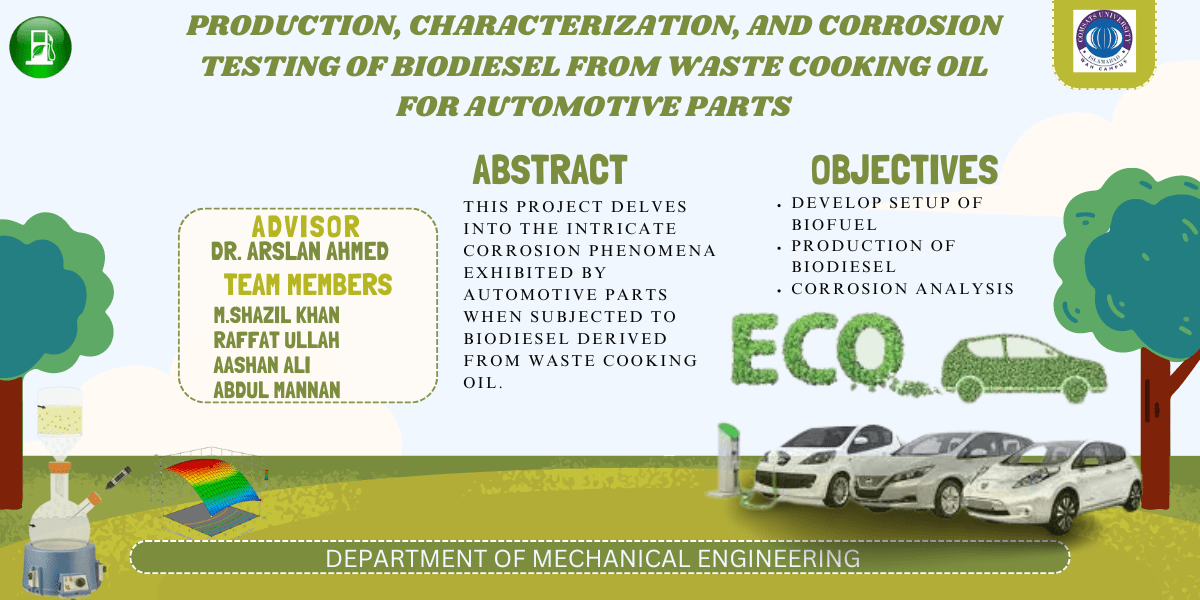
PRODUCTION, CHARACTERIZATION, AND CORROSION TESTING OF BIODIESEL FROM WASTE COOKING OIL FO…
With the growing population and escalating energy demands, the traditional reliance on fossil fuels poses sign…
Supervisor: Dr. Arslan Ahmed

Energy Saving In Building Envelope Using Passive Measures
In this era, the world is heading towards energy saving as it is the need of the hour due to its increasing hi…
Supervisor: Engr. Sir Samad Ali Taj
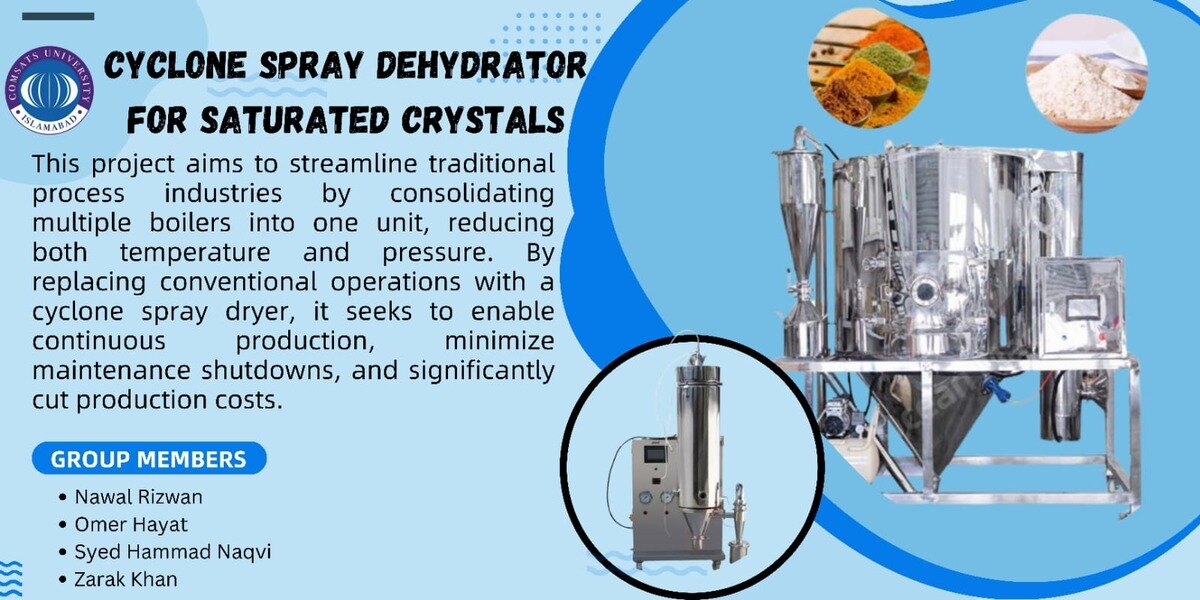
Cyclone Spray Dehydrator for Saturated Crystals
A transformative project for the sugar industry proposes consolidating boilers, reducing temperature and press…
Supervisor: Dr. Shoaib Naseem

Design And Fabrication Of Air Breathing Ionic Thruster
Our mission is to craft an air-breathing ion thruster that outshines traditional wings in power efficiency. We…
Supervisor: Dr. Shoaib Nasseem