Design and Fabrication Of Pyrolyzed Wood Burner
Description
The project addresses the urgent demand for sustainable, affordable domestic energy solutions. The program aims to adapt industrial-scale solutions to families' modest energy needs by developing a combustor suited for home-based Pulverized Coal. The project seeks to construct a prototype combustor that generates sustainable energy and reduces environmental effects using wood char and complete combustion. Our main part was the design of a burner consisting of an air-fuel inlet and 2 separate air inlets generating a swirling effect. Their angles are used for adjusting the flame length and mixing of air. We also made a Fluidized Bed that is being used for mixing the air and pulverized coal.
Objectives
The primary objective of this project is to develop and implement a combustion system capable of efficiently igniting pulverized coal, thereby generating a consistent flame suitable for a multitude of applications. The main objectives of the project are described below: 1. Efficient Ignition of Pulverized Coal: The foremost aim is to devise a combustion mechanism that swiftly and reliably ignites pulverized coal particles. This involves exploring ignition methods, such as spark ignition or pilot flames, to initiate combustion promptly and consistently. 2. Generation of a Constant Flame: A critical objective is to produce a stable flame that can be sustained over prolonged periods. This necessitates the design and optimization of combustion chambers and fuel delivery systems to ensure a steady supply of coal particles and air, facilitating continuous combustion. 3. Optimization of Air/Fuel Mixture: Achieving an optimal air/fuel ratio is imperative for efficient combustion and minimal emissions. The project will focus on developing control mechanisms and sensor technologies to monitor and adjust the air-to-fuel ratio in real-time, optimizing combustion efficiency while mitigating operational complexities and costs. 4. Reduction of Carbon Emissions: Environmental sustainability is a key driver of this project. Therefore, a primary objective is to minimize carbon emissions associated with coal combustion. This entails exploring combustion enhancements, such as staged combustion or flue gas recirculation, to improve combustion efficiency and reduce the release of greenhouse gases. 5. Sustainable and Efficient Combustion: In line with global efforts towards sustainability, the project aims to develop a combustion system that meets performance targets and adheres to environmental standards. This involves integrating technologies for emissions monitoring and control and utilizing cleaner coal technologies where feasible. 6. Cost and Complexity Considerations: Balancing performance objectives with cost-effectiveness and simplicity is crucial. Thus, the project will prioritize designs and technologies that offer optimal performance while minimizing both capital and operational expenses, ensuring the combustion system's viability and scalability.
Socio-economic benefit
In an era where environmental sustainability and energy security are increasingly pivotal, the project is to develop a specialized combustor for home-based small power plants. By integrating innovative combustion technology that optimizes the use of wood char, this initiative not only promises a reduction in household energy costs but also plays a crucial role in mitigating environmental degradation. Some socio-economic benefits are as follows: 1. Environmental Impact Reduction: The project’s primary socio-economic benefit is its potential to significantly reduce environmental impact through cleaner combustion processes. By optimizing the combustion of pulverized coal and wood char, the technology minimizes particulate matter and toxic emissions such as sulfur oxides (SOx) and nitrogen oxides (NOx). This contributes to better air quality and a healthier living environment, potentially reducing healthcare costs associated with respiratory and cardiovascular diseases caused by air pollution. 2. Energy Security and Independence: This project can enhance energy security by diversifying energy sources away from traditional fossil fuels and towards more sustainable ones like wood char. For regions with abundant biomass resources, this technology provides an opportunity to harness local resources, reducing reliance on imported fuels and promoting energy independence. 3. Job Creation and Economic Development: The development and deployment of these home-based combustors are likely to stimulate local economies by creating jobs in manufacturing, installation, maintenance, and fuel supply (such as local wood char production). This can be particularly impactful in rural areas, where economic opportunities are often limited, thereby supporting community development and sustainability. 4. Innovation and Technological Leadership: By leading in the development of advanced, cleaner coal technologies, this project can position communities at the forefront of innovation in energy technology. This enhances the local skill base and fosters an environment conducive to further technological advancements and entrepreneurship. 5. Compliance with Environmental Regulations: As global attention to environmental issues increases, more stringent environmental regulations are being put in place. This technology enables households to comply with these regulations by reducing their carbon footprint and emissions, thus avoiding potential penalties and contributing to national and international environmental goals. 6. Enhanced Social Welfare: By providing a cleaner energy source, the project indirectly contributes to enhanced social welfare. Cleaner energy means fewer environmental health risks, which translates to a lesser burden on the health care system, improved overall health, and increased productivity of the population.
Methodologies
The project commenced with an exhaustive literature review to ensure a solid theoretical foundation and to glean insights from existing research on combustion technology and pulverized coal energy systems. This review helped identify key variables that influence the efficiency and emissions of coal combustion systems. Subsequent to the literature review, the project transitioned into the design phase, utilizing Computer-Aided Design (CAD) software to create detailed models of the combustor. These models were crucial for visualizing the assembly and ensuring that all components were accurately represented and would function as intended. With CAD models in place, the next step involved conducting simulations using ANSYS Fluent, a computational fluid dynamics (CFD) software, to analyze the combustor's behavior under various operational conditions. Simulations were performed to assess the effects of different models, velocities, angles, diameters, and lengths on the combustion process. This phase was critical in understanding how changes in these parameters influenced the combustion efficiency and emission characteristics. To refine and optimize the design parameters further, the Response Surface Methodology (RSM) was applied using Minitab statistical software. This method helped in analyzing the effects of multiple variables and their interactions on the desired outcomes, thus allowing for the development of an optimized parameter table based on the results from ANSYS simulations. Upon identifying the optimized model parameters through Minitab, the project advanced to the manufacturing stage. The final parameters obtained from the optimization phase guided the manufacturing process, ensuring that each component of the combustor was fabricated according to the precise specifications required to achieve optimal performance. Finally, the project culminated with the testing phase, where the assembled combustor was subjected to operational trials to ensure stable and constant flame production. This testing was crucial to verify that the combustor met all design expectations and performance criteria, thereby confirming its reliability and efficiency in a residential setting. Throughout each phase, rigorous documentation and validation processes were maintained to ensure the accuracy and reproducibility of the results.
Outcome
The primary outcome of the project, focusing on the development of a specialized combustor for home-based Pulverized Coal power plants using wood char, was the achievement of a constant and stable flame. This consistent flame represents a critical milestone in ensuring that the combustion process can be controlled and maintained efficiently, which is essential for practical residential applications. Achieving this steady flame indicates the successful integration and functionality of the optimized design parameters and manufacturing processes developed through our comprehensive approach involving CAD modeling, ANSYS simulations, and Response Surface Methodology optimization. Furthermore, a significant reduction in carbon emissions as compared to industrial emissions was observed, underscoring the project’s alignment with global sustainability goals and environmental regulations. This reduction is primarily attributable to the complete and efficient combustion of wood char, a renewable biomass resource. By optimizing combustion conditions—such as airflow, fuel mixture, and combustion chamber design—through detailed simulations and testing, the project effectively minimized the release of unburnt carbon particles and other harmful pollutants. This achievement not only enhances the environmental credentials of the technology but also contributes to cleaner air quality, thereby supporting public health. In addition to these achievements, the project confirmed the capability of the system to achieve sustainable and complete combustion. The design of the combustor allows for a more thorough and efficient conversion of fuel to energy, maximizing the heat output while minimizing waste and residual ash. This complete combustion is crucial for the economic viability of the technology, as it ensures that the energy content of the wood char is fully utilized, thereby reducing the amount of fuel needed to achieve the desired thermal output. This efficiency translates into lower operational costs and decreased fuel consumption, making the technology an attractive option for households looking to decrease their energy expenditures and environmental impact. With these results, the project not only contributes to the field of energy technology but also offers a tangible solution that can be implemented to improve energy independence, reduce environmental impact, and promote sustainable living practices in residential settings. As such, this project represents a vital step forward in the quest for sustainable and efficient home-based energy systems, setting a benchmark for future innovations in the sector.
Gallery

More from Mechanical Engineering
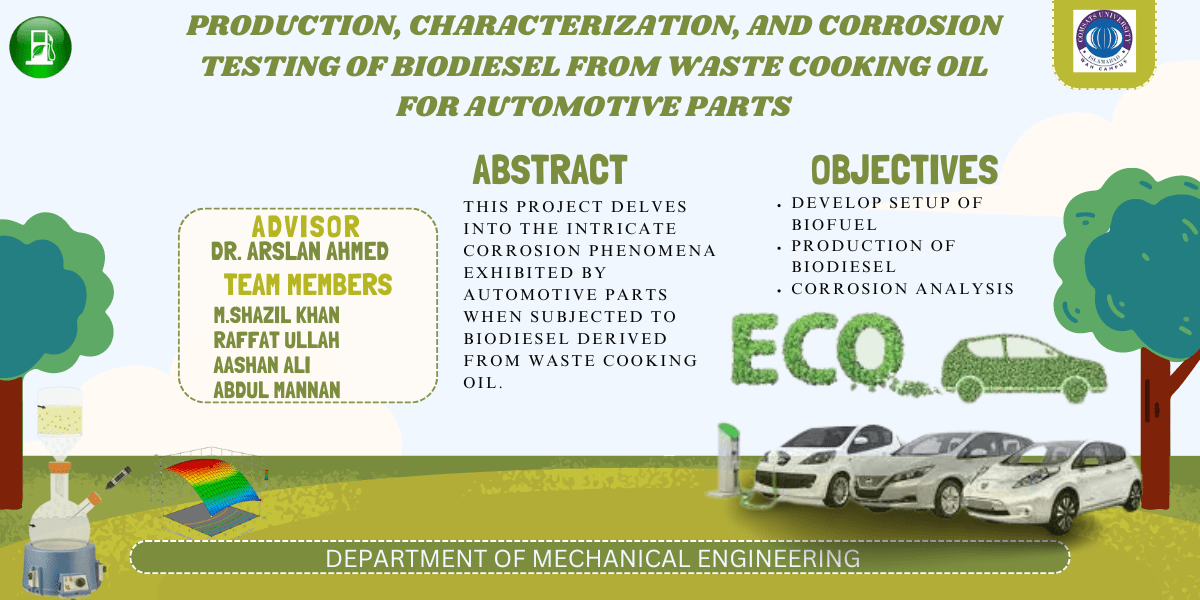
PRODUCTION, CHARACTERIZATION, AND CORROSION TESTING OF BIODIESEL FROM WASTE COOKING OIL FO…
With the growing population and escalating energy demands, the traditional reliance on fossil fuels poses sign…
Supervisor: Dr. Arslan Ahmed
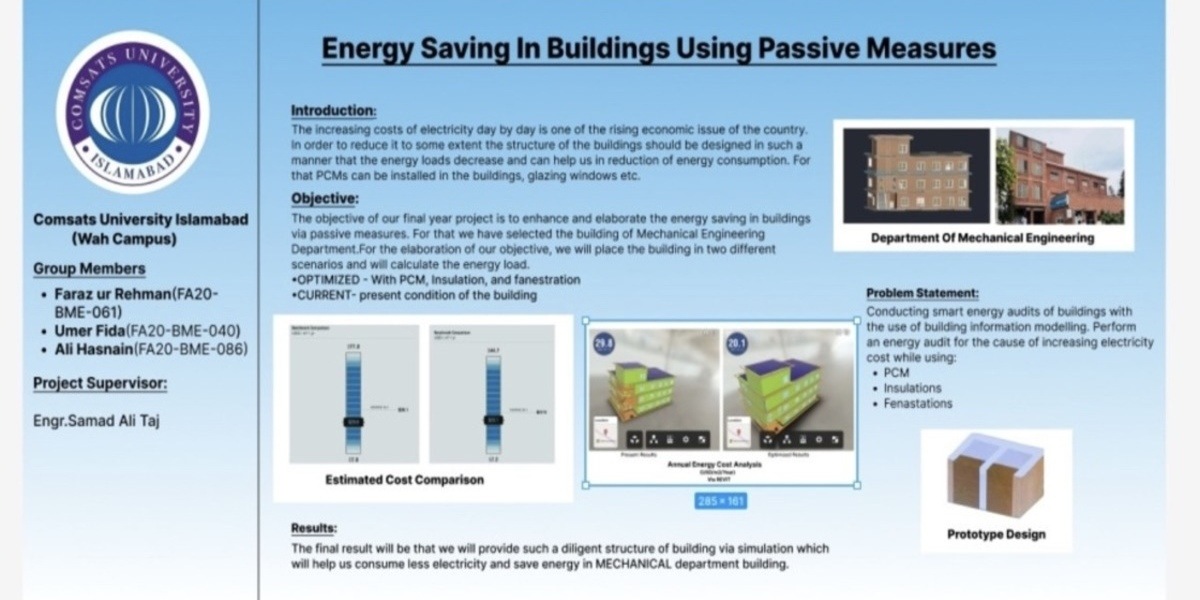
Energy Saving In Building Envelope Using Passive Measures
In this era, the world is heading towards energy saving as it is the need of the hour due to its increasing hi…
Supervisor: Engr. Sir Samad Ali Taj

Cyclone Spray Dehydrator for Saturated Crystals
A transformative project for the sugar industry proposes consolidating boilers, reducing temperature and press…
Supervisor: Dr. Shoaib Naseem

Design And Fabrication Of Air Breathing Ionic Thruster
Our mission is to craft an air-breathing ion thruster that outshines traditional wings in power efficiency. We…
Supervisor: Dr. Shoaib Nasseem