Fatigue Testing of 3D Printed Samples Using FDM Technique
Description
Project Description Fatigue Testing of 3D Printed Samples Using FDM Technique" is a project aimed at assessing the endurance and reliability of parts fabricated through Fused Deposition Modeling (FDM) 3D printing. FDM is a widely used additive manufacturing method known for its versatility and cost-effectiveness. This project involves subjecting 3D printed samples to repetitive loading and unloading cycles to simulate real-world usage conditions. By systematically analyzing the samples' mechanical properties and structural integrity throughout the testing process, researchers aim to understand how FDM-printed components perform under prolonged stress and identify any weaknesses or failure points. The findings of this study could inform improvements in FDM printing parameters, material selection, and design considerations, ultimately enhancing the durability and performance of 3D printed parts in various applications, from aerospace to consumer products. We are applying it on a medical
Objectives
The project aims to enhance hip joint transplants by conducting fatigue testing on 3D printed samples made with PLA material using the FDM technique. The objectives include evaluating the fatigue resistance of PLA-printed components under hip joint loading conditions, identifying failure modes, optimizing printing parameters based on test results, and translating findings into guidelines for implant design. This research seeks to improve implant reliability and patient outcomes through advancements in additive manufacturing for orthopedic applications.
Socio-economic benefit
Project Details Project Objective: The project aims to enhance hip joint transplants by conducting fatigue testing on 3D printed samples made with PLA material using the FDM technique. The objectives include evaluating the fatigue resistance of PLA-printed components under hip joint loading conditions, identifying failure modes, optimizing printing parameters based on test results, and translating findings into guidelines for implant design. This research seeks to improve implant reliability and patient outcomes through advancements in additive manufacturing for orthopedic applications. Socio-Economic Benefits: The project of fatigue testing printed samples using FDM technique with PLA material for enhancing hip joint transplants carries significant socio-economic benefits. By improving the reliability and durability of 3D printed hip joint implants, this research directly impacts patient outcomes, reducing the need for costly revision surgeries and post-operative complications. Enhanced implant longevity also enhances patients' quality of life, enabling them to maintain active lifestyles and return to work sooner. Moreover, by optimizing FDM printing parameters and material selection, the project contributes to advancements in additive manufacturing technology, potentially lowering manufacturing costs for personalized medical devices. Ultimately, this research has the potential to alleviate the economic burden on healthcare systems and society while improving patient care and advancing the field of orthopedic surgery.
Methodologies
kkkkkkkkkkkkkkkkkkk
Outcome
In conclusion, the fatigue testing of 3D printed samples using FDM technique with PLA material has provided valuable insights into enhancing hip joint transplants. Through rigorous mechanical evaluation, this research has identified critical factors influencing the durability and reliability of PLA-printed implants under hip joint loading conditions. By optimizing FDM printing parameters and PLA material composition based on these findings, significant strides have been made towards improving implant longevity and reducing the risk of post-operative complications. This project not only contributes to advancements in additive manufacturing for personalized medical devices but also holds promise for enhancing patient outcomes and quality of life following hip joint replacement surgery. Continued research and implementation of these findings have the potential to revolutionize orthopedic implant manufacturing, ultimately benefiting patients and healthcare systems alike..
Gallery

More from Mechanical Engineering
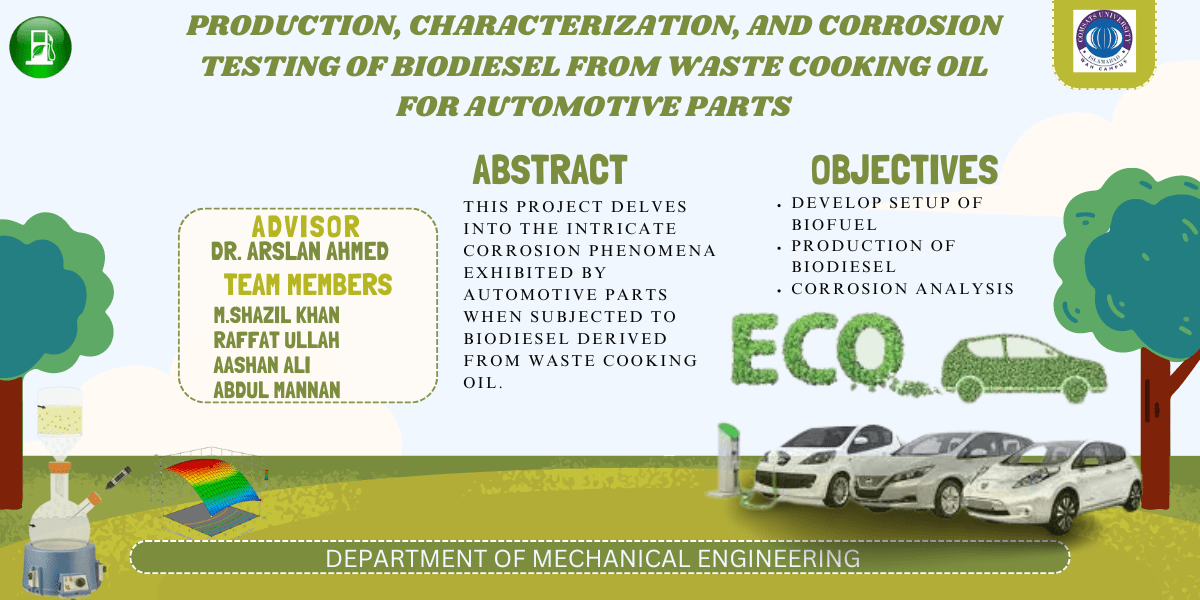
PRODUCTION, CHARACTERIZATION, AND CORROSION TESTING OF BIODIESEL FROM WASTE COOKING OIL FO…
With the growing population and escalating energy demands, the traditional reliance on fossil fuels poses sign…
Supervisor: Dr. Arslan Ahmed
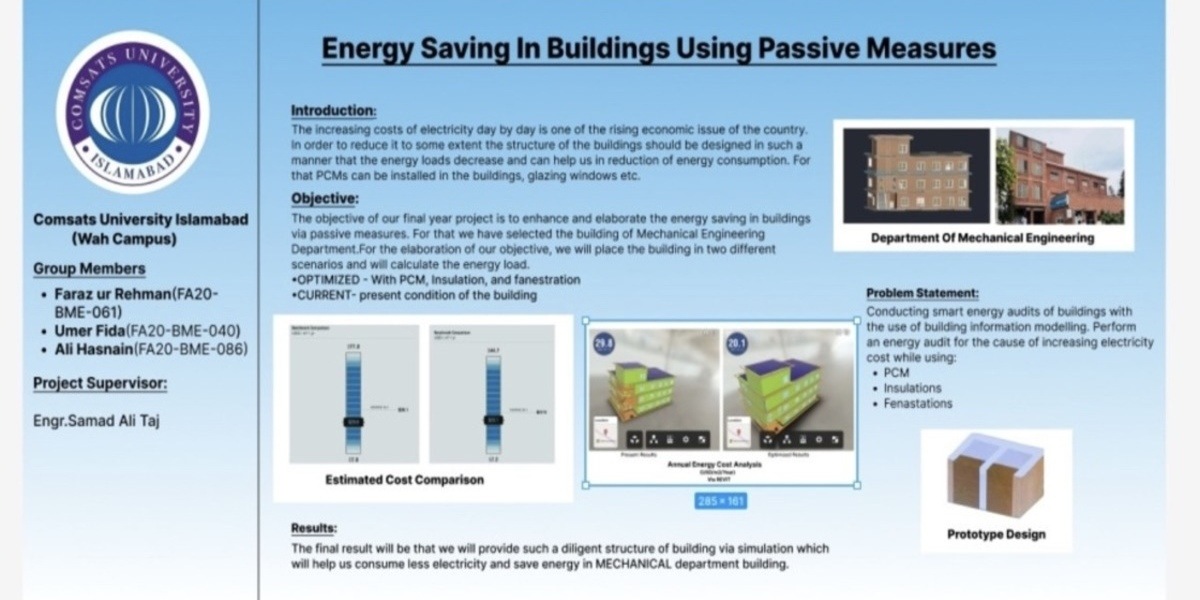
Energy Saving In Building Envelope Using Passive Measures
In this era, the world is heading towards energy saving as it is the need of the hour due to its increasing hi…
Supervisor: Engr. Sir Samad Ali Taj

Cyclone Spray Dehydrator for Saturated Crystals
A transformative project for the sugar industry proposes consolidating boilers, reducing temperature and press…
Supervisor: Dr. Shoaib Naseem

Design And Fabrication Of Air Breathing Ionic Thruster
Our mission is to craft an air-breathing ion thruster that outshines traditional wings in power efficiency. We…
Supervisor: Dr. Shoaib Nasseem