TrafficEye – Intelligent Speed Monitoring and Violation Detection System
Description
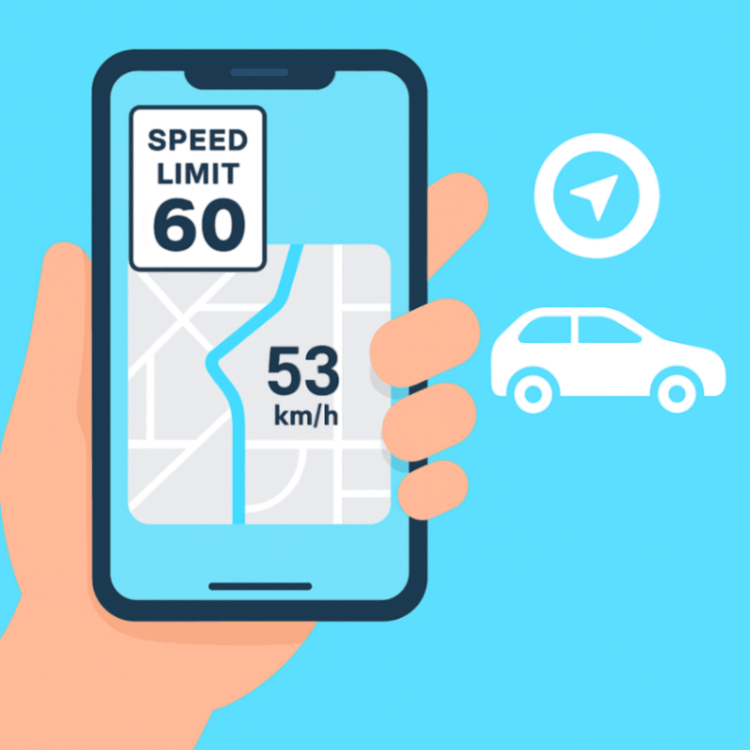
Traffic Eye is a mobile-based application that uses smartphone GPS technology to monitor vehicle speed and detect traffic violations in real time. It compares current speed against dynamically fetched or preloaded speed limits and issues instant audio-visual alerts when a violation is detected. The app also logs each event for historical analysis and includes features like accident detection, emergency alerts, and real-time location sharing. Designed as a cost-effective alternative to traditional speed cameras, Traffic Eye promotes road safety through smart, user-friendly technology.
Objectives
The objective of the Traffic Eye project is to develop an intelligent, mobile-based solution for real-time speed monitoring and traffic violation detection using GPS technology. It aims to address the critical issue of over speeding—a leading cause of road accidents—by providing instant feedback to drivers through audio and visual alerts when they exceed the designated speed limit. Traffic Eye enables users to track their driving behavior, maintain a history of speed violations, and receive timely warnings to reduce the likelihood of accidents. The system leverages the built-in GPS capabilities of smartphones to provide a low-cost, hardware-free solution suitable for wide adoption. It also includes optional features such as accident detection, automatic SOS alerts to emergency contacts, and live location tracking. By promoting self-awareness and responsible driving habits, Traffic Eye seeks to minimize traffic violations, support driver education, and offer a scalable tool for traffic safety initiatives.
Socio-economic benefit
TrafficEye offers significant socio-economic benefits by contributing to road safety, reducing accident rates, and supporting low-cost implementation for individuals, governments, and organizations. Public Safety Improvement: By reducing overspeeding, the app helps prevent accidents, thereby saving lives and minimizing injury-related healthcare costs. Cost-effective Alternative: TrafficEye eliminates the need for costly infrastructure such as speed cameras and radars, making it ideal for deployment in developing regions or rural areas. Driver Education: It serves as an educational tool for new drivers and driving schools by reinforcing safe driving practices. Emergency Response: The built-in SOS alert system enhances emergency communication, which is crucial for reducing response time after accidents.
Methodologies
TrafficEye followed a structured software development approach based on the Software Development Life Cycle (SDLC). The process began with requirement gathering and analysis, where the project scope, functional goals, and user needs were defined. This was followed by a system design phase, where UI/UX wireframes, data flow models, and system architecture were outlined. The frontend was developed using React Native to ensure cross-platform compatibility, while the backend was built in Node.js for scalable logic handling. Data storage was implemented using MongoDB/PostgreSQL, and Google Maps API was integrated for dynamic speed zone tracking and geolocation services. Unit testing and integration testing were carried out to ensure real-time speed monitoring accuracy and system stability. Firebase and Postman were used for testing, authentication, and data operations. The system was iteratively refined based on user feedback and validation simulations.
Outcome
TrafficEye successfully achieved its objective of providing a smart, GPS-based solution for monitoring overspeeding. The system is capable of detecting vehicle speed, issuing real-time alerts when the driver exceeds set speed limits, and logging violations with time and location metadata. The application includes a clean and intuitive interface and offers extra features like trip summaries, violation reports, and configurable thresholds. Accident detection and SOS alert mechanisms are planned for future updates. The project demonstrates the viability of mobile-based speed monitoring systems as a low-cost alternative to physical infrastructure like speed cameras, particularly in rural or resource-limited areas. It has strong potential for real-world deployment in driver training, fleet management, and municipal road safety initiatives.
Gallery
More from Computer Science

Trimix: Cut, Clip & Create
TriMix falls under the AI & Video Content Automation track. It’s a web-based application tailored for influenc…
Supervisor: Mr Sabeeh Ahmed Saeed

HorizonTech: Academic Management System for Horizon Institute of Health Sciences
HorizonTech is a web-based academic management system developed for the Horizon Institute of Health Sciences.…
Supervisor: DR. WASIF NISAR

STREAMLINE SUBMISSION AND REVISION OF FYP FOR OPEN HOUSE
FYP Quality Testing Portal is a web-based system that manages and automates the final submission and review of…
Supervisor: Sania Umer

The Hungry Hustler
The Hungry Hustler project is a smart restaurant management system designed to digitize and optimize the opera…
Supervisor: Beenish Noor