Project Title: Innovative Sustainable Geopolymer Concrete Development Utilizing Rubber Chips and Nano-Silica
Description
Description:This project focuses on the development of an eco-friendly geopolymer concrete by incorporating waste rubber chips and nano-silica. The aim is to reduce environmental impact by recycling rubber waste and replacing conventional cement with geopolymer binders, while enhancing the mechanical and durability properties of concrete. This innovative approach supports sustainable construction practices and contributes to circular economy goals.
Objectives
Our objectives 1. Develop geopolymer concrete incorporating recycled rubber chips and nano-silica to create an eco-friendly and sustainable construction material. 2. Assess the compressive and tensile strength of the developed concrete to overcome the strength reduction caused by adding rubber chips. 3. Reduce carbon emissions by minimizing cement usage, recycle tire waste effectively, and provide alternatives to natural coarse aggregates to conserve natural resources
Socio-economic benefit
Project Socio-Economic Benefits The development of innovative sustainable geopolymer concrete using rubber chips and nano-silica offers several socio-economic and environmental benefits: Promotes Sustainable Infrastructure (SDG 9: Industry, Innovation, and Infrastructure): This project encourages the adoption of eco-friendly construction materials, fostering resilient and sustainable infrastructure while promoting innovation in material science. Supports Sustainable Cities and Communities (SDG 11): By incorporating recycled rubber waste into concrete, the project reduces landfill burden and contributes to cleaner urban environments, enhancing the sustainability of communities. Ensures Responsible Consumption and Production (SDG 12): The reuse of industrial and post-consumer waste (like rubber chips) aligns with circular economy principles, reducing raw material demand and encouraging responsible material usage. Combats Climate Change (SDG 13: Climate Action): Replacing traditional cement with geopolymer binders significantly reduces carbon emissions associated with concrete production, helping to mitigate the environmental impact of the construction industry.
Methodologies
Project Methodologies The project begins with the selection of sustainable materials including fine and coarse aggregates, rubber chips, fly ash, GGBFS, nano-silica, NaOH, and Na2SiO3. The proportions are carefully chosen to balance strength and sustainability—such as 200?kg of coarse aggregates, 118?kg of fine aggregates, 55?kg of fly ash, 25?kg of GGBFS, 25?kg of rubber chips, and up to 3% nano-silica. Specimen casting is performed using standard ASTM procedures to produce concrete cylinders and beams for testing. Mechanical properties like compressive, tensile, and flexural strength, along with water absorption, are evaluated. The results are then analyzed to assess the impact of incorporating rubber chips and nano-silica into geopolymer concrete.
Outcome
Project Outcome The study revealed that incorporating rubber chips into geopolymer concrete reduces its compressive strength. However, the addition of nano-silica significantly improves the strength properties—even in the presence of rubber. For instance, compressive strength increased from 25.54 MPa to 29.62 MPa with 3% nano-silica (no rubber), and from 16.93 MPa to 18.92 MPa with 20% rubber. Flexural strength also improved notably. Without rubber, it rose from 3.10 MPa to 7.05 MPa. With 10% and 20% rubber, the strength increased from 4.51 MPa to 7.93 MPa and from 5.61 MPa to 8.54 MPa, respectively. Despite the initial strength drop caused by rubber, nano-silica effectively enhanced flexural performance in all mixes. Tensile strength followed a similar trend. It improved from 4.04 MPa to 4.99 MPa without rubber, and from 3.99 MPa to 5.43 MPa (10% rubber) and 3.63 MPa to 4.40 MPa (20% rubber) with 3% nano-silica. These results confirm that nano-silica consistently enhances tensile strength even in rubberized mixes. Water absorption tests also yielded positive results, indicating good durability and reduced permeability of the concrete. Overall, the project demonstrates that combining rubber chips and nano-silica in geopolymer concrete enhances its mechanical and durability properties. This innovative mix provides an eco-friendly alternative by recycling rubber waste and minimizing the use of traditional cement, contributing to sustainable construction and green engineering practices.
Gallery


More from Civil Engineering
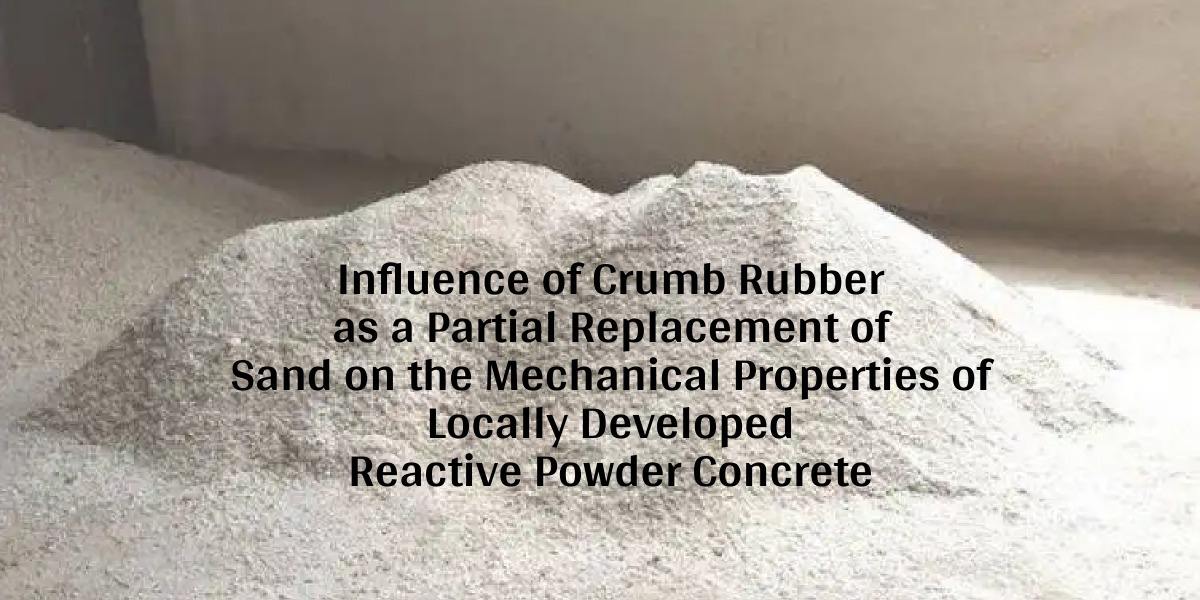
Influence of Crumb Rubber as a Partial Replacement of Sand on the Mechanical Properties of…
This project investigates the use of crumb rubber, derived from recycled waste tires, as a partial replacement…
Supervisor: Raja Tasaddiq

Monitoring Construction Progress by Integrating 4D BIM and Business Intelligence Data Anal…
Modern construction projects face increasing complexity due to growing client demands, stakeholder expectation…
Supervisor: Dr. Hassan Ashraf
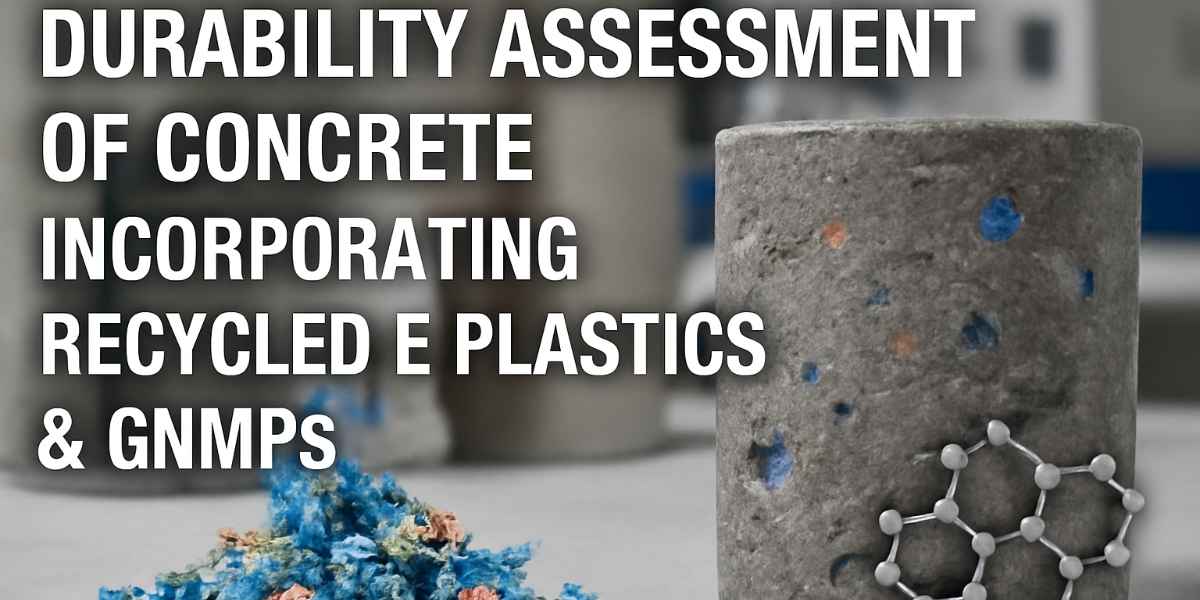
DURABILITY ASSESSMENT OF CONCRETE INCORPORATING RECYCLED E-PLASTICS & GNMPs
Our project titled "Durability Assessment of Concrete Incorporating Recycled E-plastics & GNMPs (Graphite Nano…
Supervisor: Dr. Rana Faisal Tufail
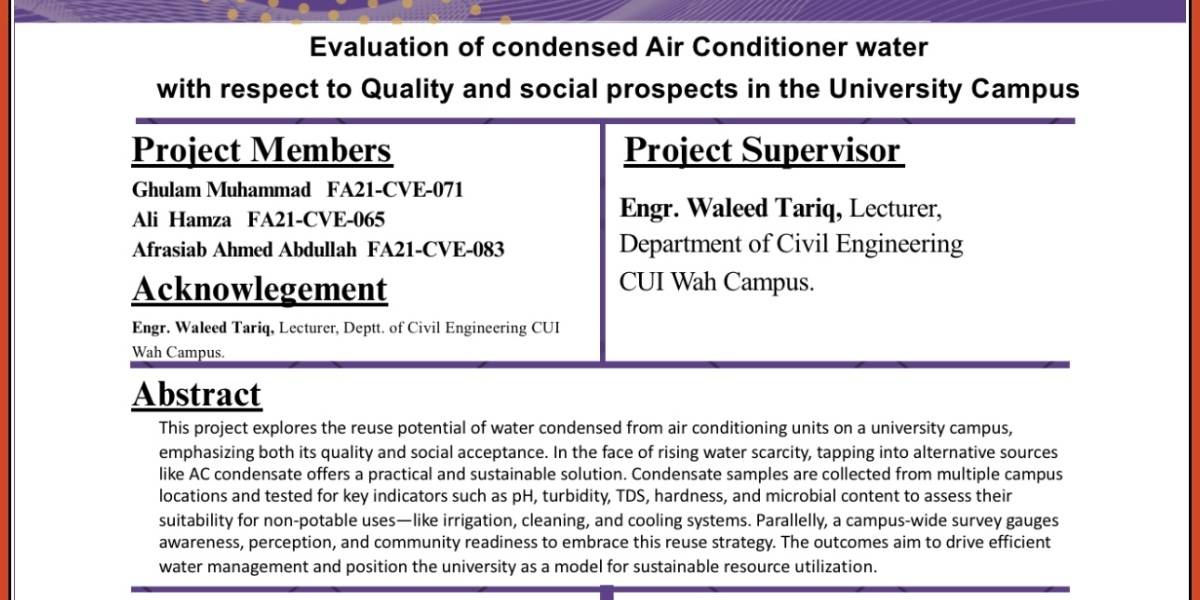
Evaluation of Air Conditioner condensed water with respect to Quality and social prospects…
1) Atmospheric Water Harvesting (AWH):2) Defined as the process of collecting water from air moisture.3) A sus…
Supervisor: Engineer Waleed Tariq