Machine Learning-Based Prediction of the Compressive Strength of Plastic Aggregate Concrete
Description
This project applies machine learning to predict the compressive strength of concrete made with plastic aggregates, offering a sustainable alternative to traditional materials. By training an AI model on curated data from academic research, the team created a robust predictive tool that reduces reliance on costly, time-intensive laboratory testing. The final model refined through XGBoost and Grid Search delivers high accuracy based on mix design inputs, advancing eco-friendly and data-driven construction practices.
Objectives
The primary aim of this project is to develop a machine learning model capable of predicting the compressive strength of concrete incorporating plastic waste as aggregate. Traditional strength testing methods are time-consuming and costly, typically requiring extensive laboratory work. This project seeks to minimize or replace such testing by leveraging AI to make accurate predictions based on concrete mix designs. The approach not only conserves resources and accelerates the evaluation process but also supports sustainable construction through the reuse of plastic waste.
Socio-economic benefit
Here are the socio-economic benefits of our project • Environmental Sustainability By incorporating plastic waste as aggregate, the project contributes to reducing plastic pollution and encourages recycling, fostering a cleaner and more sustainable environment. • Cost Reduction The replacement of conventional aggregates and the minimization of laboratory testing lead to significant cost savings in the construction process. • Time Efficiency The use of AI-driven prediction models accelerates the evaluation process by reducing reliance on time-intensive physical testing, enabling faster construction decisions. • Promotion of Green Construction The project advocates for eco-friendly construction practices, aligning with global sustainable development goals and encouraging environmental responsibility within the industry. • Support for Developing Regions Offering a cost-effective and practical alternative to traditional testing methods, the approach is particularly beneficial in regions with limited resources or access to advanced laboratory infrastructure. SUSTAINABLE DEVELOPMENT GOALS: Following goals are mapped with this project 9. Industry, Innovation and Infrastructure 11. Sustainable Cities and Communities 12. Responsible Consumption and Production 13. Climate Action
Methodologies
• Data Collection Relevant data was sourced from published research papers on concrete incorporating plastic aggregates. The compiled dataset includes 164 records detailing various mix proportions and their corresponding mechanical properties. • Data Cleaning Outliers and inconsistencies were identified and removed to enhance data quality, ensuring the dataset was reliable for training machine learning models. • Exploratory Data Analysis (EDA) Analytical tools such as heatmaps and SHAP summary plots were used to explore feature correlations and importance. Notably, the percentage of PET showed a strong correlation with compressive strength. • Model Training Machine learning models, particularly the XGBoost Regressor, were trained using Google Colab. Grid Search was employed to optimize hyperparameters and improve prediction performance. • Model Testing and Evaluation The model was validated using additional data from literature. Iterative refinements were made until satisfactory accuracy was achieved. • Deployment Plans were made to deploy the trained model as a web or mobile application, enabling users to input mix design details and receive real-time strength predictions.
Outcome
• Accurate Prediction Model A machine learning model, specifically an XGBoost Regressor, was successfully developed to predict the compressive strength of concrete containing plastic aggregates based on input mix proportions. • Enhanced Efficiency The model provides a faster, cost-effective alternative to traditional lab testing, significantly improving the efficiency of strength evaluation in concrete design. • Valuable Data Insights Exploratory analysis using heatmaps and SHAP plots highlighted key factors influencing compressive strength, including PET content, cement proportion, and the water-cement ratio. • High-Quality Dataset Through rigorous data cleaning and outlier removal, a reliable and consistent dataset was established, contributing to the model’s improved accuracy. • User-Friendly Accessibility The model was designed for integration into a web or mobile application, allowing engineers and researchers to easily input mix data and receive real-time strength predictions. • Support for Sustainable Construction By encouraging the use of recycled plastic in concrete, the project supports environmentally responsible construction practices and contributes to waste reduction efforts.
Gallery


More from Civil Engineering
Influence of Crumb Rubber as a Partial Replacement of Sand on the Mechanical Properties of…
This project investigates the use of crumb rubber, derived from recycled waste tires, as a partial replacement…
Supervisor: Raja Tasaddiq

Monitoring Construction Progress by Integrating 4D BIM and Business Intelligence Data Anal…
Modern construction projects face increasing complexity due to growing client demands, stakeholder expectation…
Supervisor: Dr. Hassan Ashraf
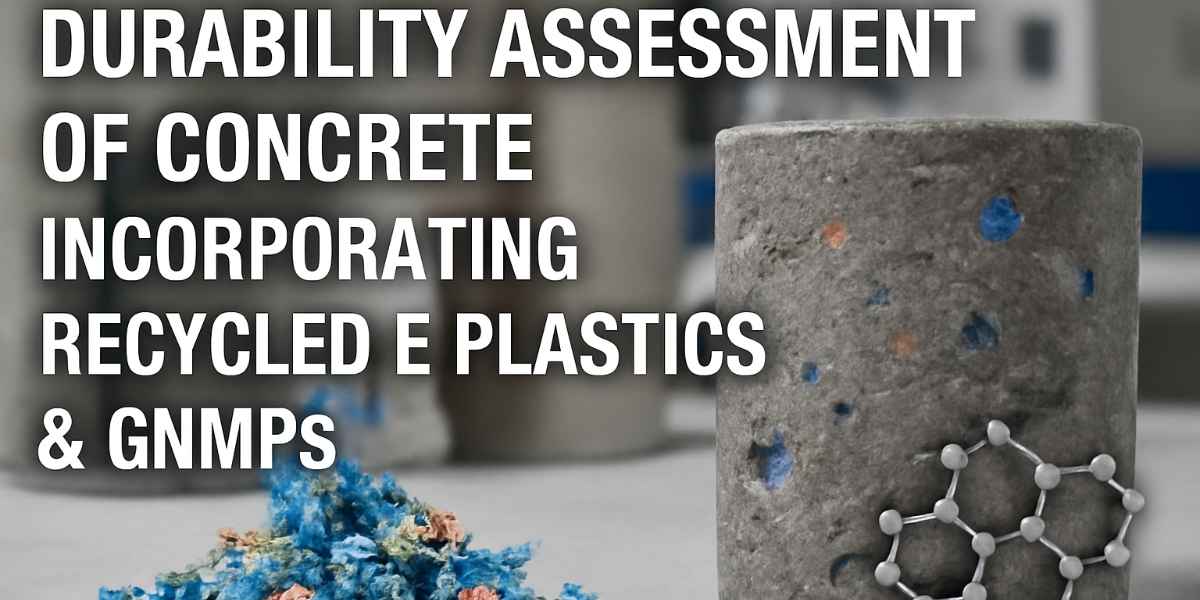
DURABILITY ASSESSMENT OF CONCRETE INCORPORATING RECYCLED E-PLASTICS & GNMPs
Our project titled "Durability Assessment of Concrete Incorporating Recycled E-plastics & GNMPs (Graphite Nano…
Supervisor: Dr. Rana Faisal Tufail

Evaluation of Air Conditioner condensed water with respect to Quality and social prospects…
1) Atmospheric Water Harvesting (AWH):2) Defined as the process of collecting water from air moisture.3) A sus…
Supervisor: Engineer Waleed Tariq