Behavior of GNMP's and Nano-silica on Properties of Recycled Aggregates Concrete.
Description
This research investigates the effect of Nano Silica (NS) and Nano Graphite (NG) on concrete containing recycled aggregate, aiming to assess their impact on different ratios of Nano materials. The study examines how the properties of concrete are affected by incorporating recycled aggregate, Nano Silica, and Nano Graphite. It focuses on studying the enhancement in compression and tensile strength of recycled aggregates. Concrete mixes containing recycled aggregates was used by adding GNMP’s and Nano silica equivalent to a small fraction of ordinary Portland cement with 0.1%, 0.3%, 0.5%, 1%, 3% of NG and 1%, 2.5%, 3%, 1% 3% of NS respectively. Concrete made from RCA along with Nano silica (3%) and GNMP’s (0.5%) is economical and has sufficient strength and can be used in areas where applied load is not significant. Nano materials are used as additives and hence It is observed that with the increasing proportions of Nano materials (GNMP’s and Nano-silica) the concrete propertie.
Objectives
To study effect of GNMP's and nano-silica on properties of concrete containing recycled aggregates.
Socio-economic benefit
Recycled concrete aggregate presents numerous benefits: Increased protection from seepage. Reduced costs, since it doesn't need to be mined. One of the greatest advantages of recycled aggregate is the fact that it is environmentally sustainable. Reduced environmental impact, more appealing to governments and customer. experiments have shown that the recycled aggregate is durable, no doubt, but not as sturdy as natural coarse aggregate. However, to tackle the lack of strength, you can treat the mix with materials such as GNMP's and nano-silica etc. Our project is sustainable and provides several advantages such as saving energy, conserving natural resources, protecting ecosystem and wildlife. It goes perfectly well with the three R's: Reduce, Reuse, Recycle.
Methodologies
The methodology employed in this project involves a systematic approach to investigate the combined effect of nano-silica and nano-graphite on recycled aggregate concrete. Various concrete mixes were prepared with different percentages of Graphite Nano/Micro Platelets (GNMPs) and Nano Silica. Mix-01 contained 0.1% GNMPs and 1% Nano Silica, while Mix-02 had 0.3% GNMPs and 2.5% Nano Silica. Mix-03 consisted of 0.5% GNMPs and 3% Nano Silica. Mix-04 had equal proportions of 0.5% GNMPs and 0.5% Nano Silica. Mix-05 had 1% GNMPs and 1% Nano Silica, while Mix-06 had the highest amounts of 3% GNMPs and 3% Nano Silica. These varying combinations were explored to evaluate their effects on the properties of the concrete. Prior to mixing, a solution containing GNMP, Acacia Gum, Nano Silica, and water is prepared and left to stand for 24 hours. Then, Cement, Sand, Fine Aggregates, and recycled aggregates are dried and mixed for 2 minutes. Next, the prepared solution is added to the mixer and mixed thoroughly. The fresh concrete is poured into molds in 3 layers, with each layer tamped 25 times. After 24 hours, the molds are demolded and placed in a curing tank for 28 days. Following the curing period, the molds are removed from the tank, their surfaces are cleaned, and testing is conducted to assess the concrete's properties.
Outcome
Based on the test results and observations, the following conclusions can be drawn: Slump Test: The addition of nano-silica and nano-graphite in recycled aggregate concrete showed an increase in the slump value, indicating improved workability and flowability of the concrete mixes. Compressive Strength Test: The concrete mixes containing nano-silica and nano-graphite exhibited higher compressive strength compared to the control mix. This indicates that the addition of these nanoparticles enhanced the mechanical properties of the recycled aggregate concrete. Splitting Tensile Strength Test: The incorporation of nano-silica and nano-graphite resulted in improved splitting tensile strength of the recycled aggregate concrete, indicating enhanced resistance to cracking and better performance under tensile stresses. Flexural Strength Test: The concrete mixes with nano-silica and nano-graphite exhibited higher flexural strength compared to the control mix. This indicates improved resistance to bending and better structural performance. Ultrasonic Pulse Velocity Test: The measured ultrasonic pulse velocity values for the concrete mixes were within the expected range. This indicates that the addition of nano-silica and nano-graphite did not adversely affect the density and homogeneity of the concrete. Overall, the findings suggest that the combined effect of nano-silica and nano-graphite in recycled aggregate concrete has a positive impact on its mechanical properties, durability, and workability. These results support the use of these nanoparticles as additives in concrete production to enhance its performance and contribute to sustainable and efficient construction practices.
Gallery


More from Civil Engineering
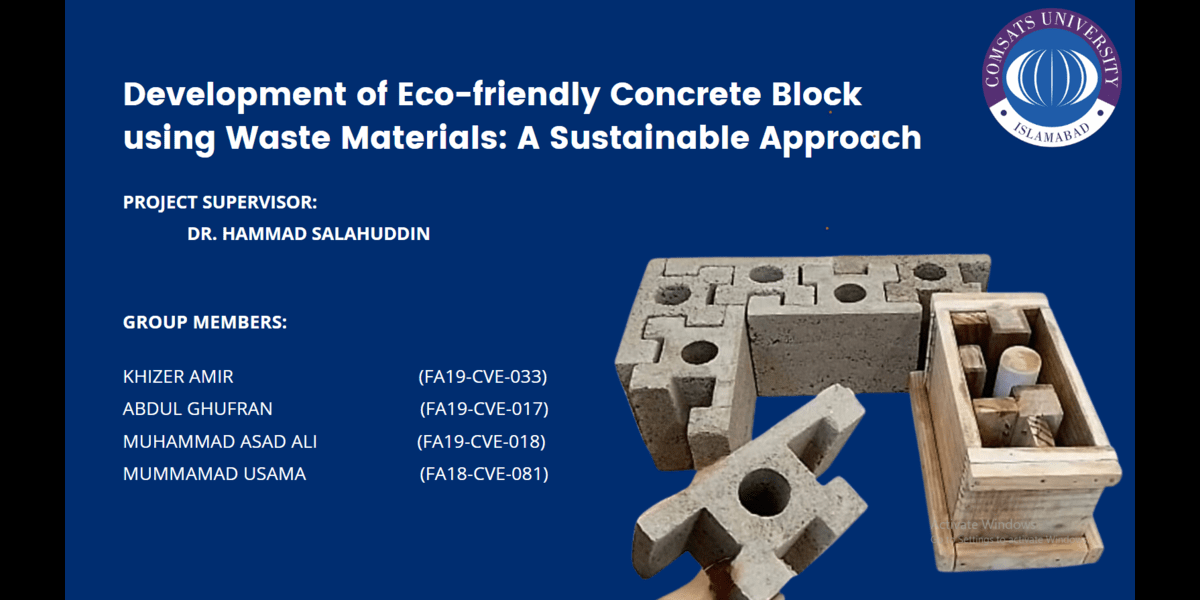
Development of Eco-friendly Concrete Block using Waste Materials: A Sustainable Approach
It was a materials-oriented project that investigated the effects of using Fly Ash, Granite Powder, and Recycl…
Supervisor: Dr. Hammad Salahudin
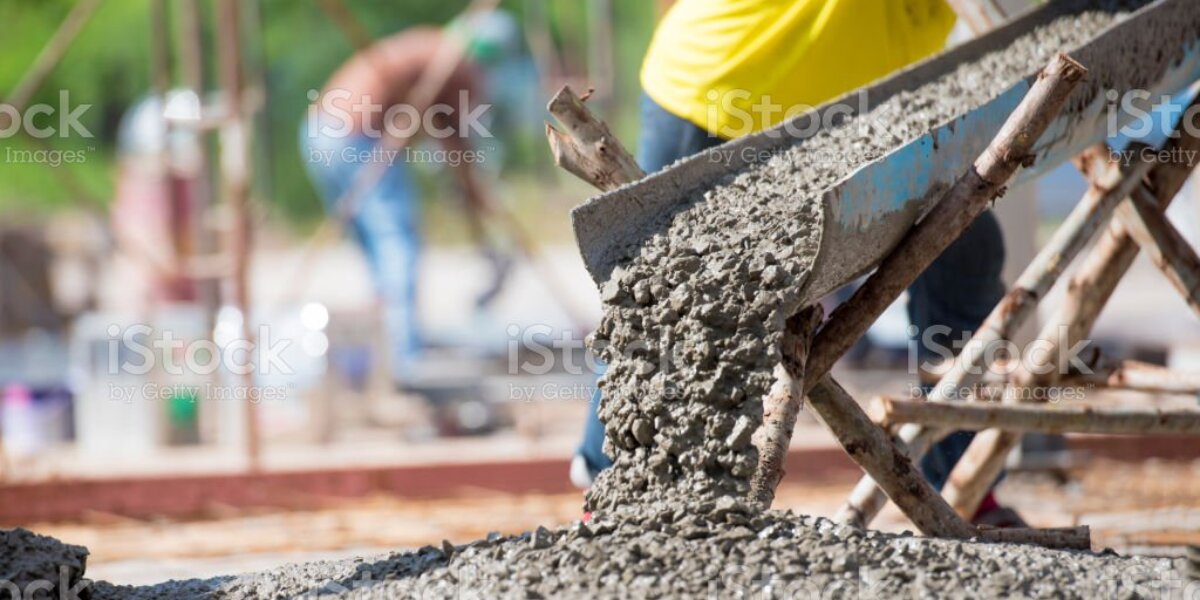
Influence of Nano-silica on the properties of recycled aggregate concrete.
This project investigated the effects of Nano-Silica (NS) on concrete containing recycled concrete aggregate…
Supervisor: Dr. Rana Faisal

CAPITALIZING ON BIM TO ENHANCE CONSTRUCTION SAFETY AND OPTIMAL PROJECT SCHEDULING OF MULTI…
An insight to case study of Twin Towers for advance construction management methods
Supervisor: DR AHSEN MAQSOOM

Quantification of the Environmental Impacts of Karakoram Highway Construction in the North…
The Karakoram Highway is a pathway of CPEC that provides important economic and social services to human commu…
Supervisor: Dr. Ahsen Maqsoom