Life Cycle Assessment of Self-Compacting Concrete Incorporating Nano-Silica and Recycled Aggregates.
Description
The project aims to target the unique idea of using three different components that can impact the major global issue of "Construction versus Environment." Nano-silica has been gaining attention throughout the world as a partial additive or replacement for concrete due to its favorable outputs. Dumping aggregate from demolished structures cause a great loss of land, so what's the answer? Recycling. Finally, SCC will save precious energy required for compaction. Many researches covering two of these can be found, but we tried to use all three in one project. That is our way of playing a part towards sustainable and green future.
Objectives
The objectives for this research are three-fold: 1)To investigate influence of nano-silica as an additive in self compacting concrete incorporating recycled aggregates. 2)To compare properties and test results of fresh and hardened forms of SCC with and without Nano-Silica. 3)To observe difference in properties by comparing results on SCC with Nano-Silica that do not incorporate recycled aggregates.
Socio-economic benefit
1) We were able to target five of the seventeen sustainability goals. SDG number 9 : By adding NS and RCA to SCC that is a new concept. SDG number 11: NS with 25% of RCA showed more strength and more durability. SDG number 12: Using RCA reduces waste from demolished sites and conserves Natural Aggregates. SDG number 13: Instead of using additional cement for high-strength, Nano-silica helped in reducing greenhouse gas emissions. SDG number 15 : Saving more land from dumping of used aggregates and recycling them for future projects 2) The additional cost of superplasticizer and nano-silica were compensated with zero compaction costs/energy and by getting same strength with recycled aggregates with the help of Nano-silica. 3) Less time Consuming. 4) Nano-Silica is an optimum additive for high-rise buildings that require high strength.
Methodologies
1) Mix Proportions. 2) Trial Mix. 3) SCC Tests to check if our sample is within the required limits. 4) Several Tests on Fresh and Hardened Concrete. 5) Durability Tests. 6) Quantity Takeoff using Revit. 7) Life Cycle Assessment.
Outcome
1) SCC had similar results to Ordinary Concrete with minor differences in the properties when compared to other research papers. 2) With 0% of Recycled Aggregates, increase in Nano-Silica achieved better Compressive, Flexural, and Split-Tensile Strength with the best result at 0 to 2%. 3) When recycled aggregates are added to 25%, minor increase in properties is observed with best increment at addition of 2 to 4% of Nano-Silica. 4) Increasing recycled aggregates to 50% had a negative effect on concrete’s Compressive, Flexural, and Tensile Strength. 5) Additional use of Nano-Silica in about 4% negated the negative effect when RCA is used in 50% and showed better results than 0% Nano-Silica and 0% RCA when it was increased to 6%.
Gallery


More from Civil Engineering
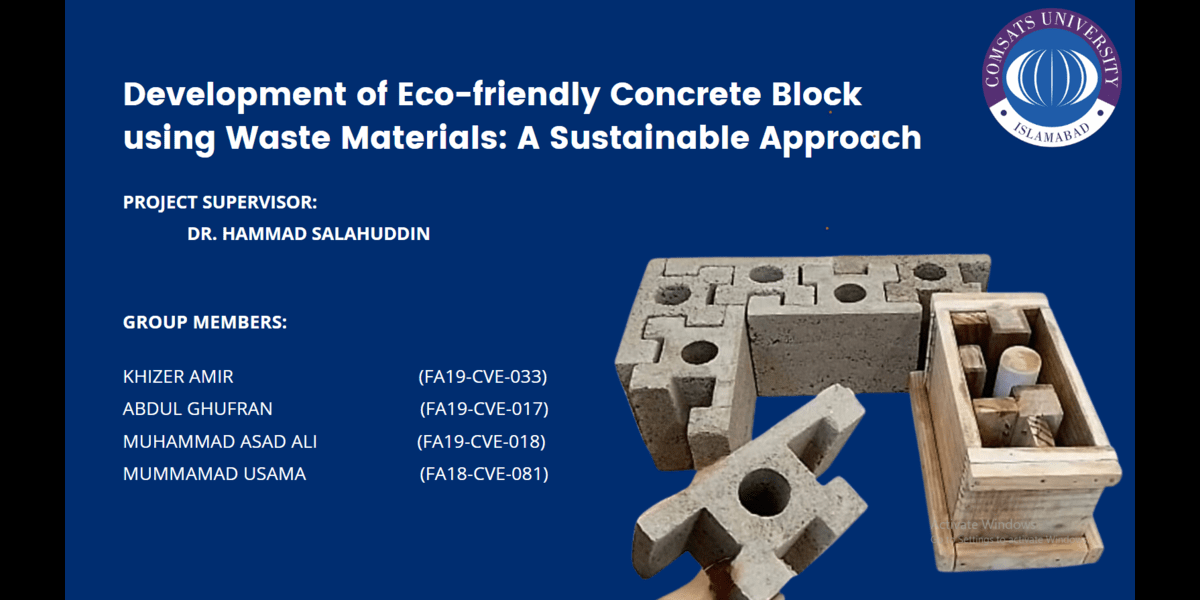
Development of Eco-friendly Concrete Block using Waste Materials: A Sustainable Approach
It was a materials-oriented project that investigated the effects of using Fly Ash, Granite Powder, and Recycl…
Supervisor: Dr. Hammad Salahudin
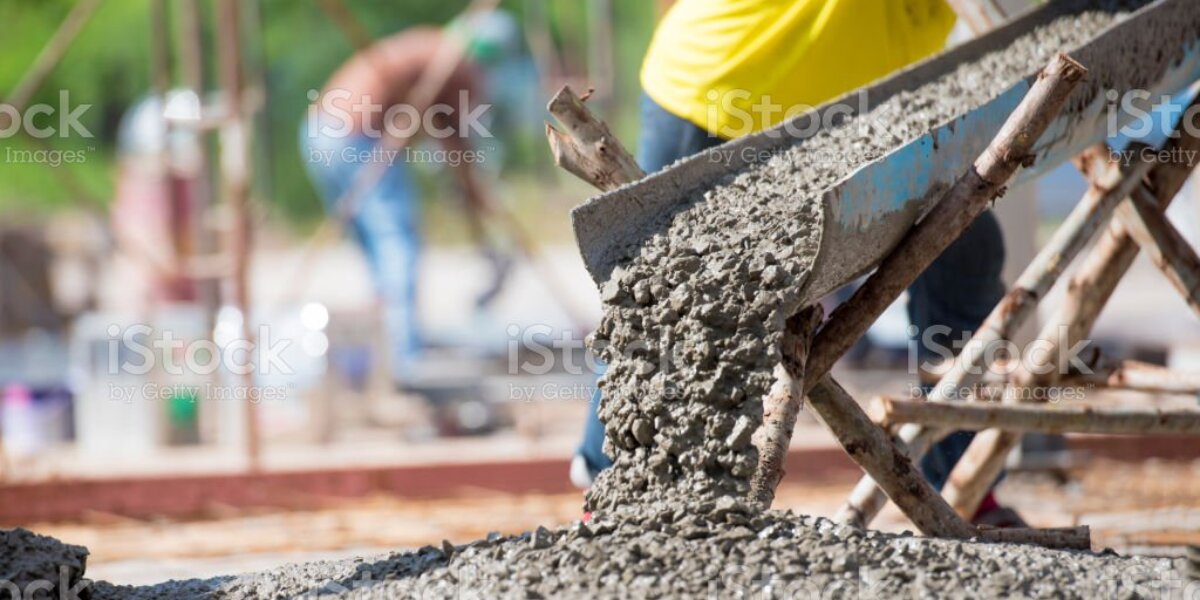
Influence of Nano-silica on the properties of recycled aggregate concrete.
This project investigated the effects of Nano-Silica (NS) on concrete containing recycled concrete aggregate…
Supervisor: Dr. Rana Faisal

CAPITALIZING ON BIM TO ENHANCE CONSTRUCTION SAFETY AND OPTIMAL PROJECT SCHEDULING OF MULTI…
An insight to case study of Twin Towers for advance construction management methods
Supervisor: DR AHSEN MAQSOOM

Quantification of the Environmental Impacts of Karakoram Highway Construction in the North…
The Karakoram Highway is a pathway of CPEC that provides important economic and social services to human commu…
Supervisor: Dr. Ahsen Maqsoom