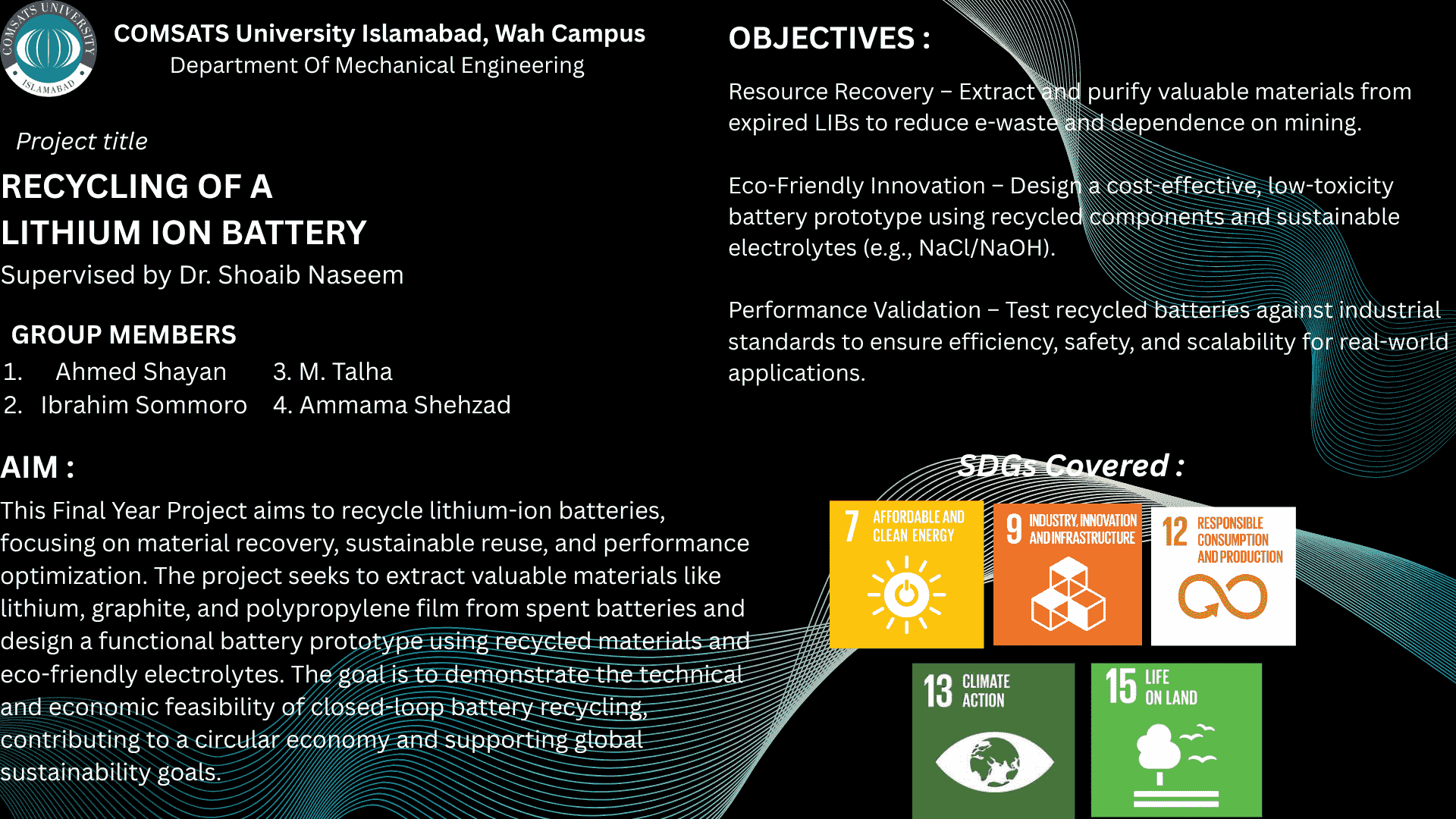
Lithium-ion (Li-ion) batteries are widely used in consumer electronics, electric vehicles (EVs), and renewable energy storage systems due to their high energy density, long cycle life, and lightweight properties. However, the increasing demand for these batteries has led to significant environmental concerns regarding their disposal. Improper handling of spent Li-ion batteries can result in hazardous waste, resource depletion, and pollution.To address these challenges, this project focuses on the recycling of lithium-ion batteries to recover valuable materials such as lithium, cobalt, nickel, and manganese while minimizing environmental impact. The project aims to establish an efficient, cost-effective, and sustainable recycling process that complies with environmental regulations and promotes a circular economy.
Objectives
To restoring the lithium-ion battery by using extracted raw materials from expired batteries and create a sustainable and immaculate energy solution.
Socio-Economic Benefit
We considered several sustainable development goals in our project like; SDG-7 (Affordable and Clean Energy), SDG-9 (Industry, Innovation, and Infrastructure), SDG-12 (Responsible Consumption and Production), SDG-13 (Climate Action) and SDG-15 (Life on Land) to obtain maximum socio-economic benefits.
Methodologies
Initial base material like lithium salt extracted from the drained LIB cell with classified extraction processes of alcohol dipping and purify the raw material for better results. Other components (Cathode chemical, electrolyte and separator) of a cell were selected based on literature. Graphite, polypropylene film, Sodium chloride and sodium hydroxide were used as cathode chemical, separating film and electrolyte respectively. These common components allow us to achieve more sufficient and cheaper solution. For isolation and increasing thermal efficiency glass slides were used.
Outcome
We had achieved 2.1V output from a single restored cell of LIB and with the combination of six LIB cell we had obtained 6.37V.