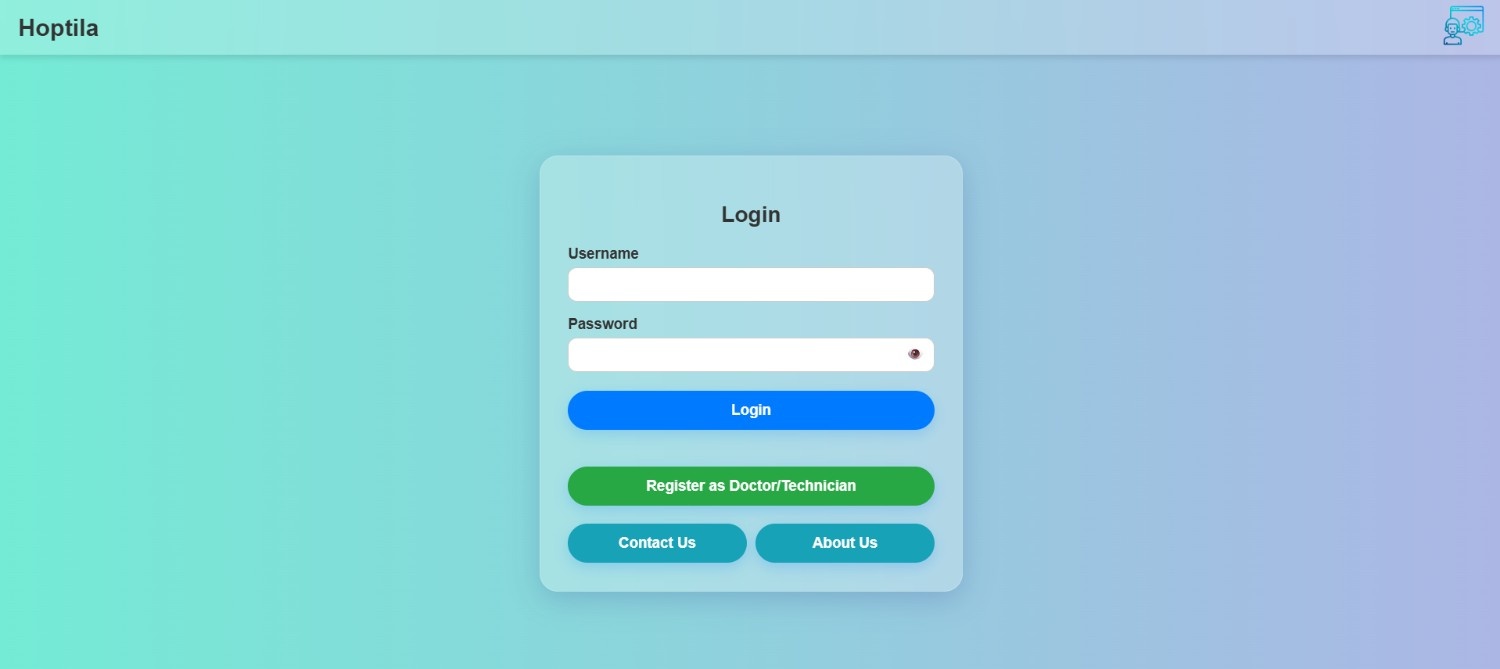
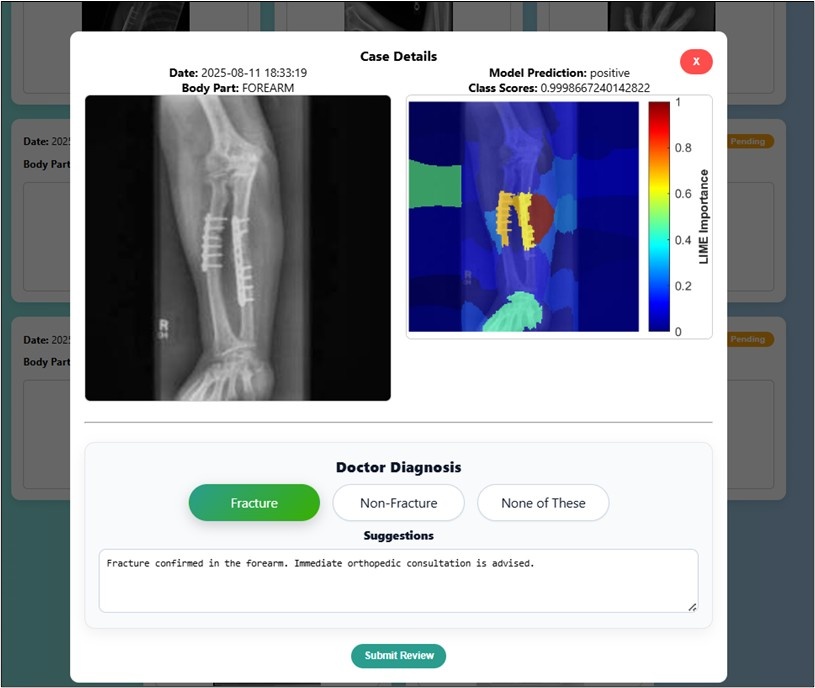
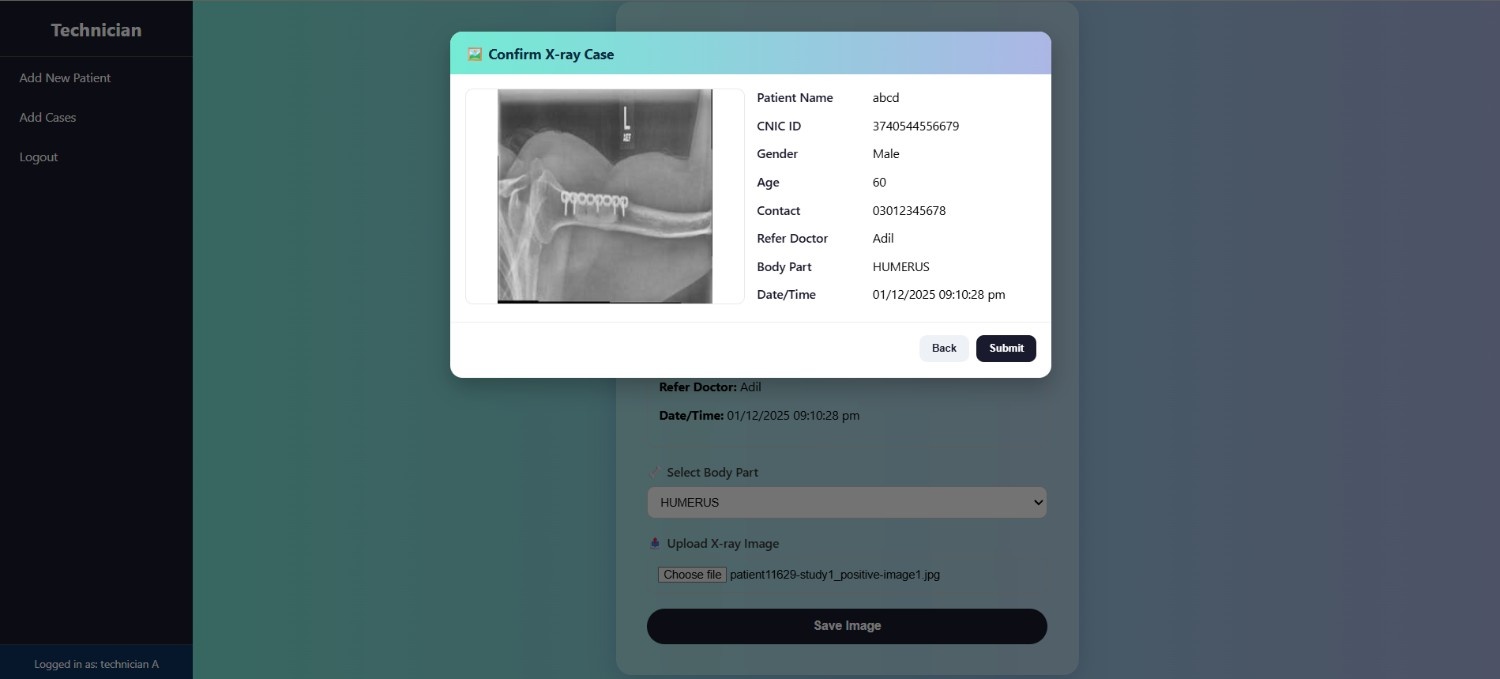
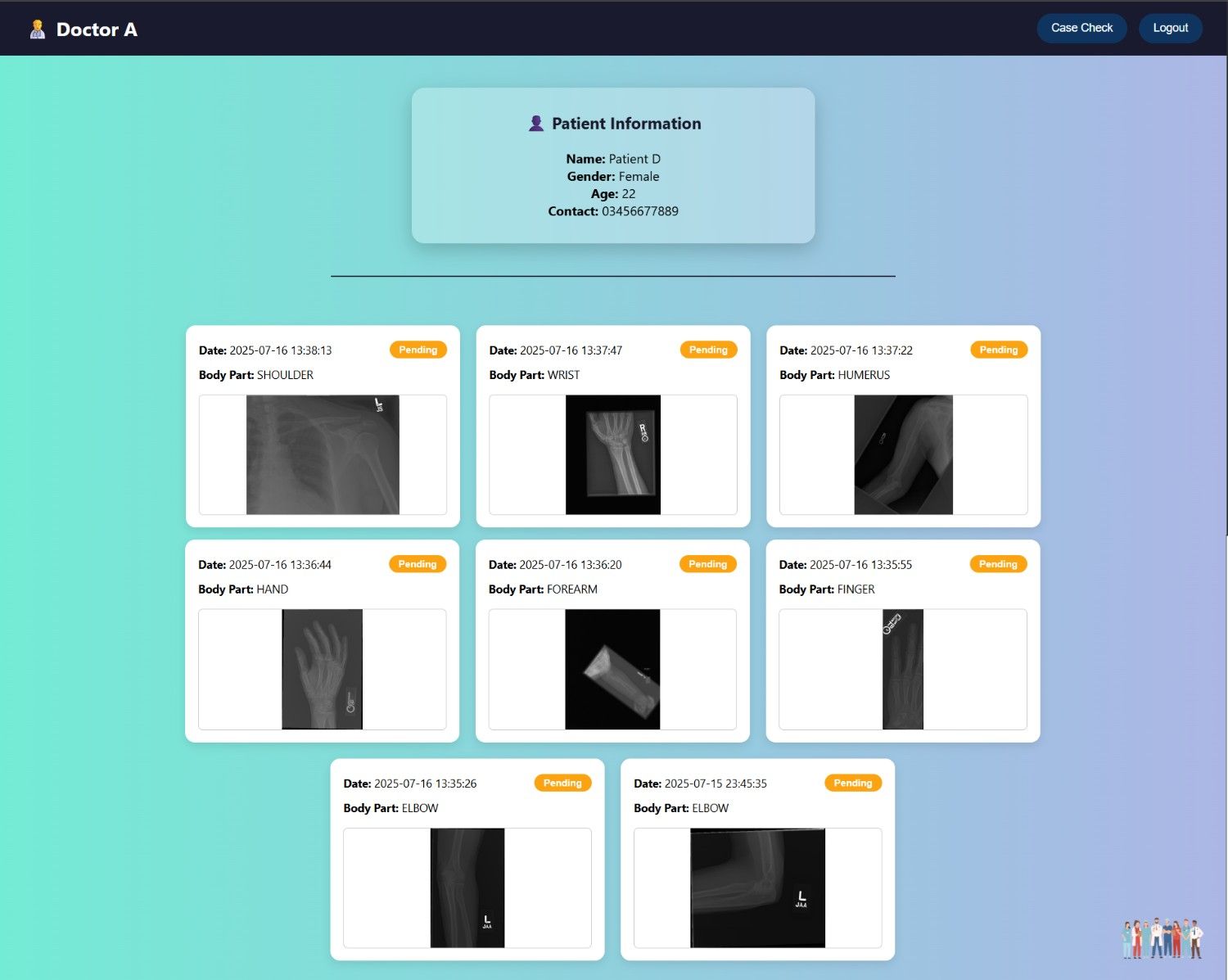
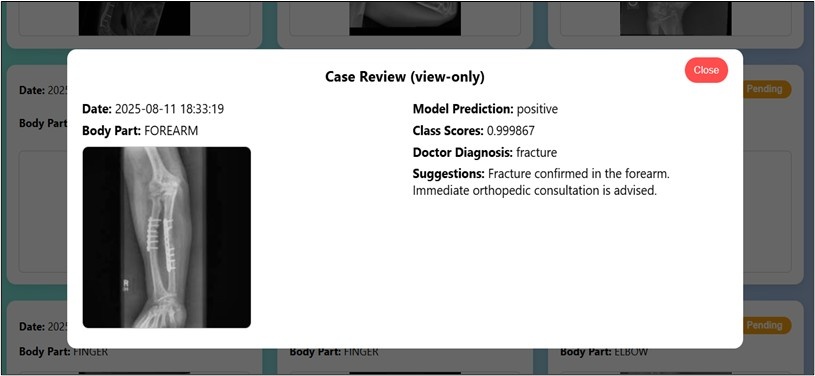
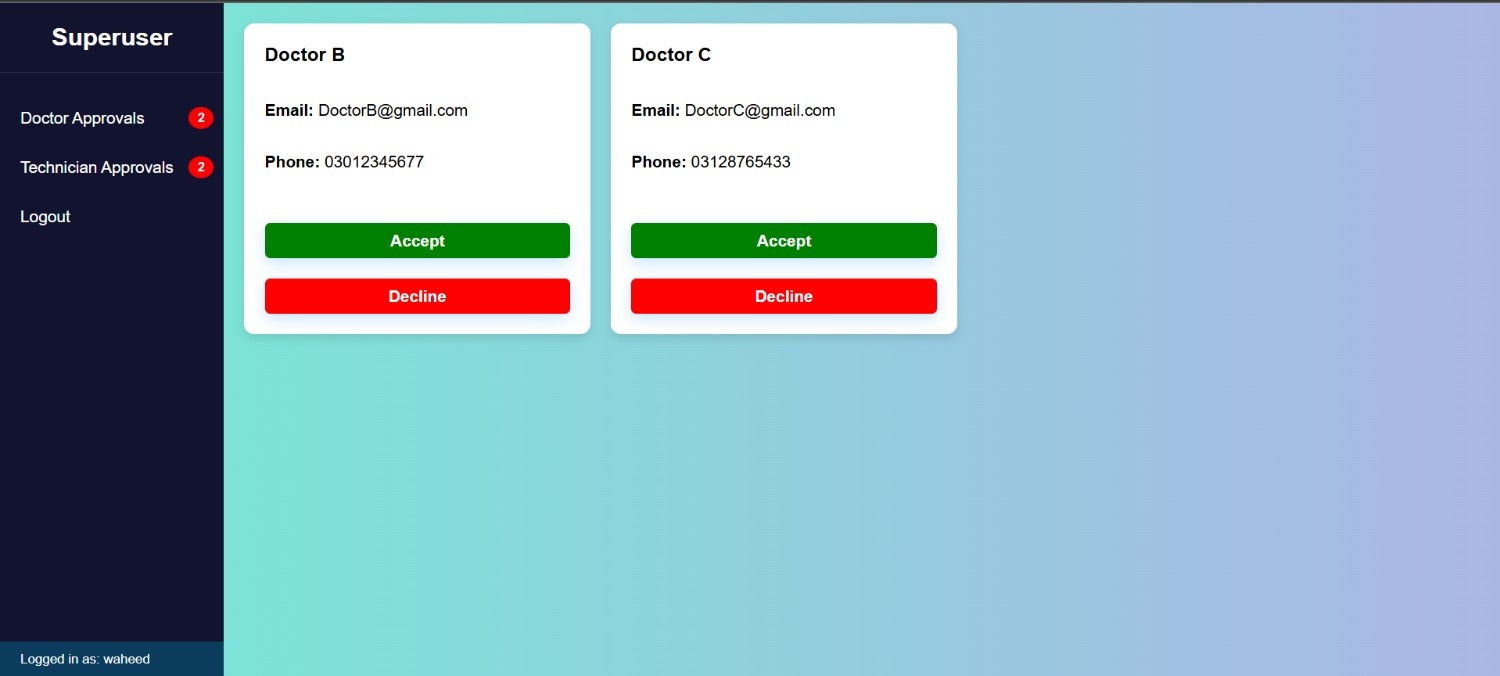
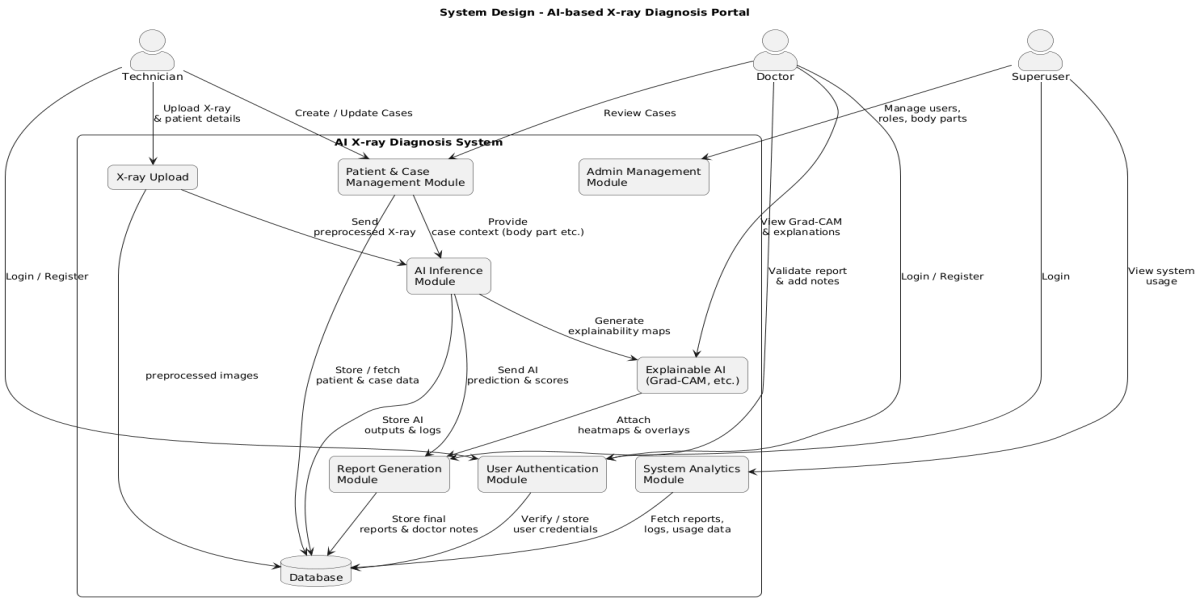
This project is an AI-based web platform developed for automated detection of bone fractures from X-ray images and efficient management of digital medical records. The system uses deep learning models trained on musculoskeletal radiograph datasets to classify X-ray images as fracture or non-fracture with confidence scores. It also integrates Explainable AI using LIME heatmaps to highlight important regions in X-ray images, helping doctors understand model decisions. The platform provides role-based access for doctors, technicians, and administrators, supports patient history management, and enables doctors to give feedback for model improvement. The system improves diagnostic accuracy, reduces workload for radiologists, and offers clinical decision support in hospitals, especially in under-resourced medical environments.
Objectives
The main objective of this project is to develop an AI-based web platform that automatically detects bone fractures from X-ray images and manages patient medical records digitally. The system aims to assist doctors by providing accurate predictions, confidence scores, and explainable visual outputs using LIME heatmaps. It also includes role-based access for doctors, technicians, and administrators, ensuring security and efficient workflow management. Another goal is to reduce diagnostic errors, speed up fracture detection, and provide reliable clinical decision support, particularly in hospitals with limited radiology resources.
Socio-Economic Benefit
This project provides significant socio-economic benefits by improving healthcare services through intelligent and automated fracture detection. It reduces dependency on manual diagnosis, which saves time for doctors and increases overall hospital efficiency. Early and accurate detection helps prevent long-term complications, reducing medical expenses for patients. The digital record system minimizes paperwork and loss of reports, improving service quality and hospital management. The project also supports under-resourced hospitals by offering affordable AI-based diagnostic tools, helping to bridge the gap between urban and rural healthcare facilities. Moreover, the system enhances employment opportunities for IT professionals, AI engineers, and healthcare technologists while encouraging technological growth in the medical sector.
Methodologies
The project methodology includes multiple phases starting from data collection and preprocessing of X-ray images for quality enhancement. Deep learning models were trained using convolutional neural networks and transfer learning techniques with datasets such as MURA. Preprocessing techniques including resizing, normalization, and noise removal were applied to improve model performance. The trained model was integrated into a web framework developed using Flask. For explainability, LIME was implemented to visualize decision regions on X-ray images. A MySQL database was used to manage patient information and case history. Role-based authentication was implemented for security. Continuous evaluation and optimization were done using accuracy metrics, confusion matrices, and real-world doctor feedback.
Outcome
The project was successfully completed as an AI-based web platform capable of detecting bone fractures from X-ray images and managing patient medical records digitally. The implemented system can classify fractures with confidence scores and generate LIME-based heatmaps to explain model decisions for clinical transparency. Role-based access control was implemented for doctors, technicians, and administrators to ensure secure and efficient use of the platform.
The system demonstrated reliable performance on musculoskeletal X-ray data, producing accurate predictions for different body parts such as shoulder, forearm, wrist, elbow, and hand. Doctor feedback is stored and can be used for future model improvement, allowing continuous learning and refinement. A structured database was successfully integrated for patient record management, enabling fast retrieval and improved continuity of care.
Overall, the project achieved its goals of improving diagnostic efficiency, enhancing transparency through explainable AI, reducing doctors’ workload, and supporting decision-making in healthcare environments, particularly in under-resourced hospitals.