DeepHunt AI
Description
DeepHunt AI is an intelligent, multi-agent career discovery platform developed as a Final Year Project at COMSATS University Islamabad, Wah Campus. It automates the process of finding jobs, internships, and scholarships by using AI agents to continuously scrape and aggregate opportunities from across the web. The system then matches these opportunities to each user's profile using LLM-powered semantic search and vector embeddings, providing personalized rankings and identifying skill gaps with adaptive learning path recommendations. A standout feature is the Smart Application Assistant, which auto-generates tailored resumes and cover letters. Built with FastAPI, Next.js, PostgreSQL, LangGraph, and Google Gemini, the platform also includes a conversational AI chatbot and a three-tier admin panel for moderation and system management.
Objectives
DeepHunt AI is a cloud-ready, LLM-powered career discovery and recommendation platform that uses autonomous AI agents to match users with personalized career opportunities including jobs, internships, and scholarships. The system addresses the critical real-world problem where job seekers spend months and significant effort searching through fragmented, poorly personalized platforms with frustrating outcomes. The primary objectives of DeepHunt AI are to develop a Multi-Agent Opportunity Scanner that continuously scrapes and aggregates global and local opportunities from APIs, RSS feeds, and permitted web sources. It implements an AI Personalization Engine utilizing Large Language Models to accurately match opportunities to detailed user profiles based on skills, academics, and career goals. The platform provides real-time skill gap detection and recommends adaptive personalized learning paths to help users become competitive candidates. A key feature is the Smart Application Assistant, which auto-generates customized, high-quality resumes and cover letters tailored to specific opportunity requirements using LLM processing. The system also includes secure user authentication, profile management, an interactive dashboard with analytics and career insights, and a conversational AI chatbot for natural language opportunity search and career guidance. On the administrative side, the platform provides a three-tier role-based admin panel for moderators, content managers, and super admins to manage data quality, system configuration, and LLM parameters. The backend is built on FastAPI with PostgreSQL and pgvector for hybrid semantic search, while LangGraph orchestrates the multi-agent scraping pipelines. The frontend is developed in Next.js with a clean, responsive interface accessible across all devices, making DeepHunt AI a powerful end-to-end career intelligence solution.
Socio-economic benefit
DeepHunt AI delivers significant socio-economic benefits across multiple segments of society by transforming the way individuals discover and pursue career opportunities. For Individual Job Seekers and Students: The platform dramatically reduces the time and effort spent searching for jobs, internships, and scholarships. Job seekers currently spend over five months and more than 10 hours per week on fragmented career searches with poor outcomes. DeepHunt AI consolidates this into a single intelligent platform, empowering individuals with personalized recommendations, skill gap analysis, and auto-generated application documents, improving employment rates, reducing career anxiety, and enhancing financial stability. For Fresh Graduates and Underprivileged Communities: By providing access to global scholarships and internships alongside local opportunities, the platform bridges the gap between education and employment. Students from remote or underprivileged areas who lack access to career counseling can now receive the same quality of personalized guidance as those with premium resources, promoting equal opportunity and social inclusion. For Academic Institutions: Universities can leverage DeepHunt AI as an advanced career services tool to improve student placement rates, strengthen industry-academia relationships, and contribute to a more skilled and employable graduate workforce. For the Economy and Workforce Development: By efficiently matching skilled individuals with relevant opportunities, the platform reduces structural unemployment and talent mismatch. The labor market insights generated can help policymakers and training organizations identify in-demand skills and design targeted vocational programs, contributing to higher workforce productivity and economic growth. Overall Impact: DeepHunt AI promotes economic empowerment, reduces inequality in career access, and contributes to a more efficient and dynamic labor market — making it a platform with lasting socio-economic value.
Methodologies
Agile Development Methodology: DeepHunt AI was developed following an Agile methodology, breaking the project into iterative phases and sprints. Each sprint focused on delivering specific functional modules such as authentication, scraping agents, AI personalization, and the admin panel. This approach allowed continuous testing, feedback, and improvement throughout the development lifecycle, ensuring the final product aligned closely with the defined requirements. Multi-Agent Architecture: The system employs a multi-agent AI architecture built on LangGraph, where specialized autonomous agents handle distinct responsibilities including data discovery, extraction, cleaning, and quality assurance. This modular agent-based approach ensures scalability, fault tolerance, and efficient parallel processing of large volumes of opportunity data. Hybrid AI Matching Approach: The personalization engine combines two complementary techniques — semantic vector search using pgvector and Sentence-Transformers for fast similarity matching, and Large Language Model reasoning for deep contextual analysis, skill gap detection, and rationale generation. This hybrid approach balances speed with accuracy. Reinforcement Learning: A LinUCB contextual bandit model was implemented to adaptively optimize scraping and recommendation strategies based on continuous user feedback and interaction data, improving match quality over time. RESTful API Design: The backend follows REST architectural principles with over 65 endpoints, implementing Role-Based Access Control, JWT authentication, and Redis-backed rate limiting to ensure secure, scalable, and maintainable API communication between all system components. Test-Driven Quality Assurance: A layered testing strategy was adopted including unit testing, integration testing, functional testing, security testing, boundary value testing, and performance testing. A Requirement Traceability Matrix was maintained to ensure every functional requirement was verified by one or more test cases. Containerized Deployment: Docker and Docker Compose were used to containerize all services including the frontend, backend, scraping agents, and database. This ensures environment consistency, portability, and ease of deployment across development, testing, and production environments.
Outcome
DeepHunt AI has been successfully developed as a fully functional, production-grade career intelligence platform that achieves all defined objectives. The following outcomes were accomplished throughout the project: Functional Platform Delivery: A complete full-stack web application was built using FastAPI and Next.js, featuring over 65 REST API endpoints, secure JWT-based authentication, OTP email verification, and a responsive user interface accessible across all devices and platforms. Multi-Agent Scraping Pipeline: A robust LangGraph-based multi-agent scraping system was successfully implemented, consisting of operational supervisor agents for jobs, scholarships, and internships, alongside a dedicated R&D squad for source discovery and pipeline maintenance. The system is capable of collecting, cleaning, and normalizing over 5,000 opportunities per 24-hour cycle. AI Personalization Engine: A hybrid matching engine combining pgvector semantic search and LLM-powered contextual reasoning was successfully deployed, providing users with accurate match scores, detailed match rationales, skill gap identification, and personalized learning path recommendations. Smart Application Assistant: The LLM-powered document generation feature was successfully implemented, enabling users to generate tailored resumes and cover letters in seconds based on their profile and the specific requirements of a selected opportunity. Admin Control Panel: A fully functional three-tier role-based admin panel was delivered, enabling moderators to review and approve scraped data, content managers to maintain platform content, and super admins to configure LLM parameters and monitor system health. Reinforcement Learning Integration: A LinUCB contextual bandit model was successfully integrated to adaptively improve recommendation and scraping strategies based on real-time user feedback, ensuring continuous improvement in match quality over time. Quality Assurance: A comprehensive test suite of 40 test cases was executed covering functional, security, integration, boundary, and performance testing. All critical test cases passed successfully, validating the reliability and correctness of the platform. Technical Achievements: The project successfully overcame significant technical challenges including complex anti-scraping mechanisms, large-scale data heterogeneity, multi-agent orchestration, and real-time LLM integration — establishing a new standard for AI-powered career discovery platforms. Overall: DeepHunt AI successfully bridges the gap between raw unstructured opportunity data and personalized actionable career curation, delivering a scalable, secure, and intelligent platform that genuinely reduces the time and effort required for career exploration while improving the quality of matches and application materials for every user.
Gallery


More from Computer Science
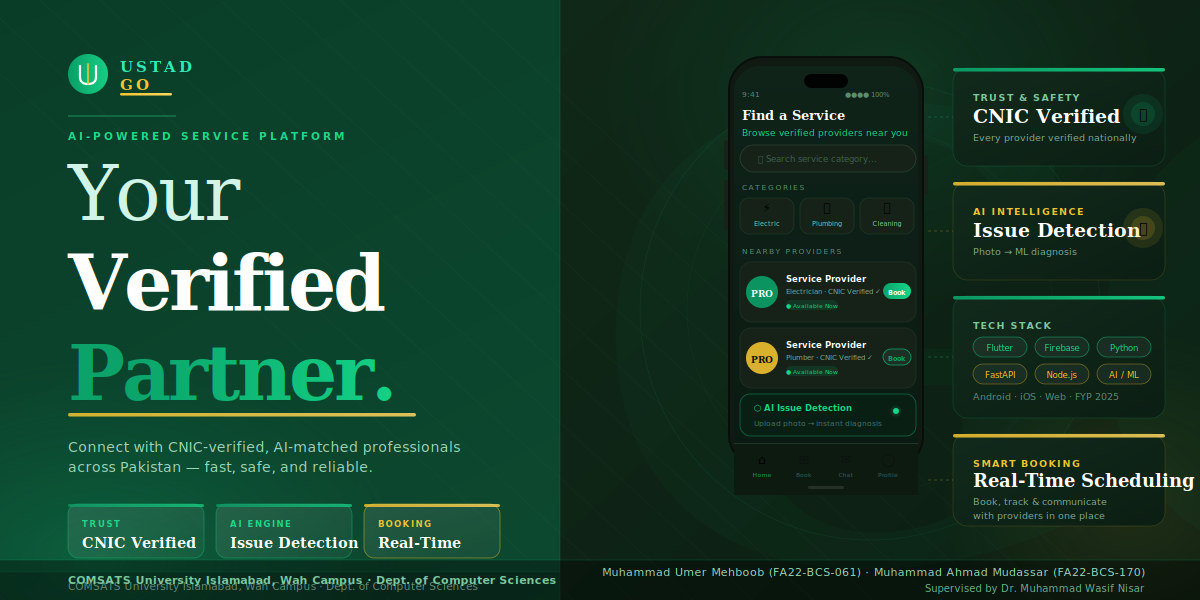
Ustad Go: An AI-Powered Mobile and Web Ecosystem for Verified Local Service Provision in P…
Ustad Go is a dual-platform solution bridging the gap between skilled local service providers and households.…
Supervisor: Dr. Wasif Nisar

Sales Distribution Hub
The Sales Distribution Hub is a web-based management system designed for Masood & Company to automate and stre…
Supervisor: Dr. Wasif Nisar.
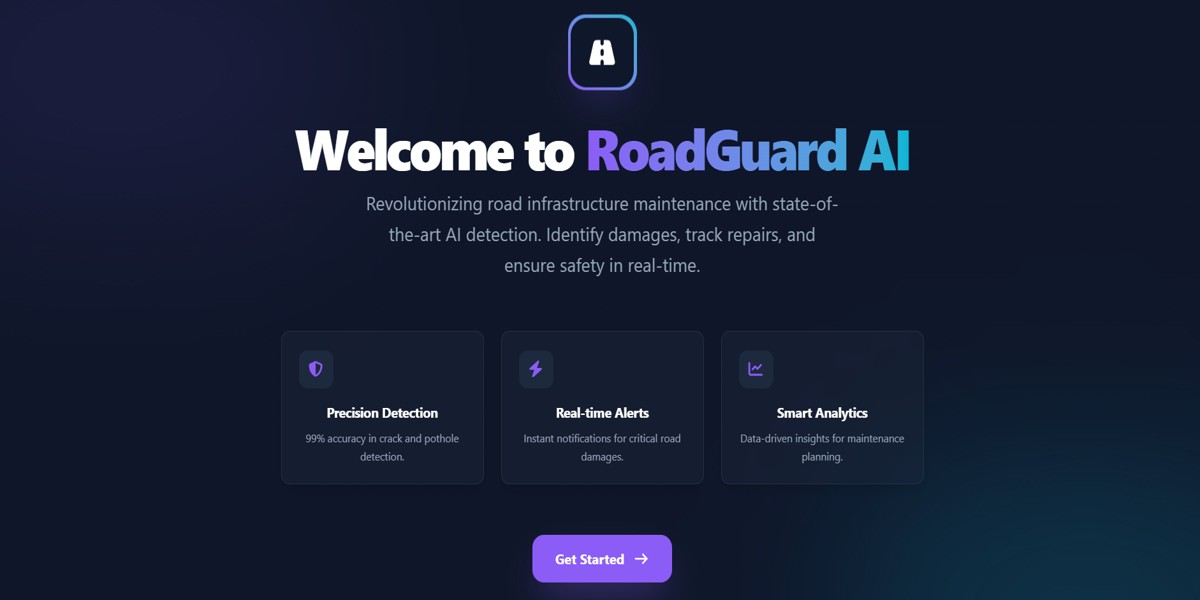
AI Based Road Damage Detection System
AI Based Road Damage Detection System is a smart application that uses YOLOv8 and computer vision techniques t…
Supervisor: Mehwish Mukhtar
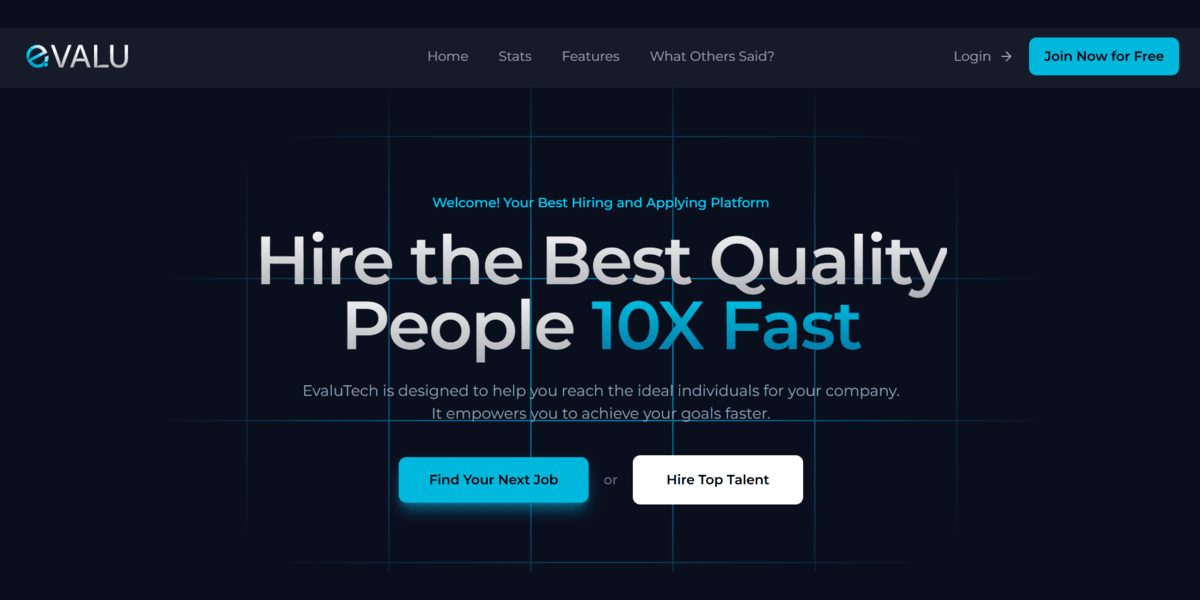
EvaluTech: AI-Powered Hiring & Job Platform for Employers and Applicants
EvaluTech is an intelligent recruitment management platform that streamlines the complete hiring lifecycle fro…
Supervisor: Dr. Wasif Nisar