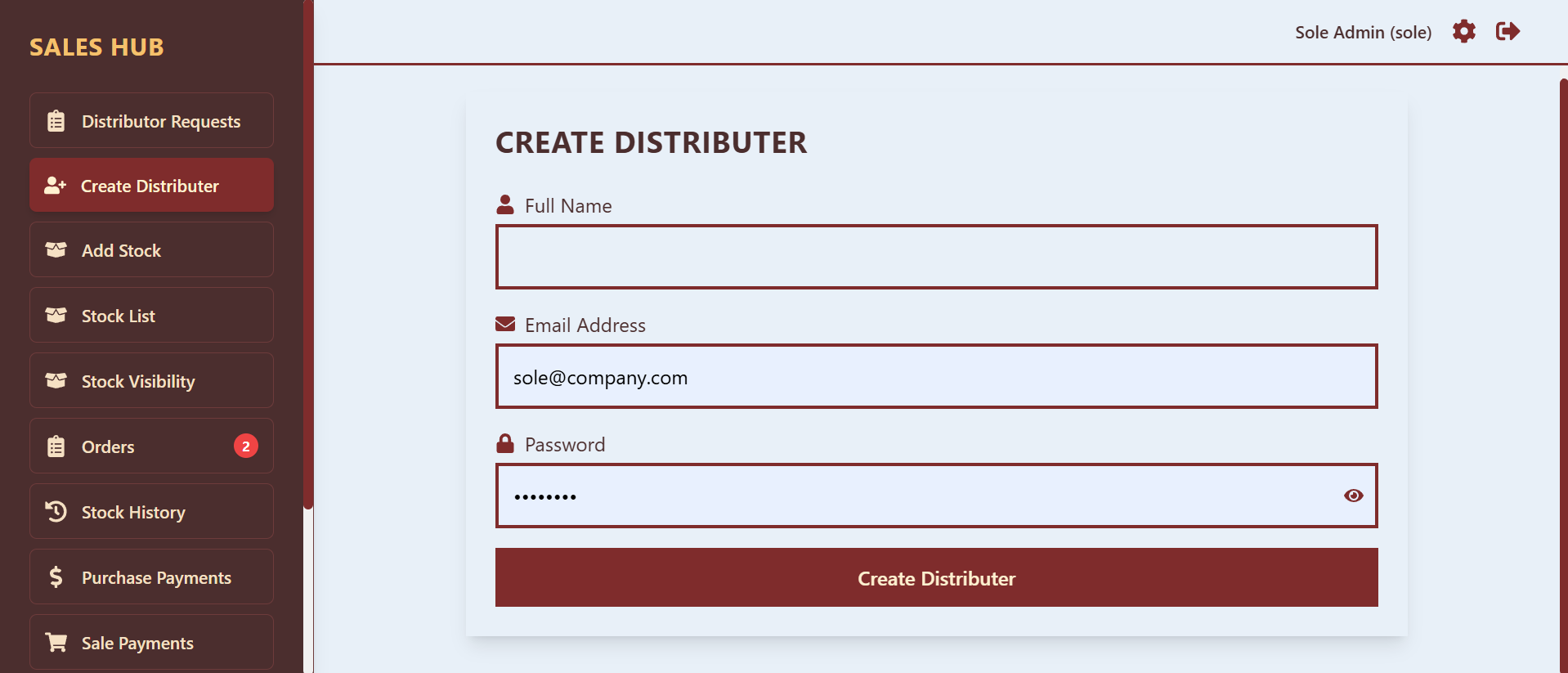
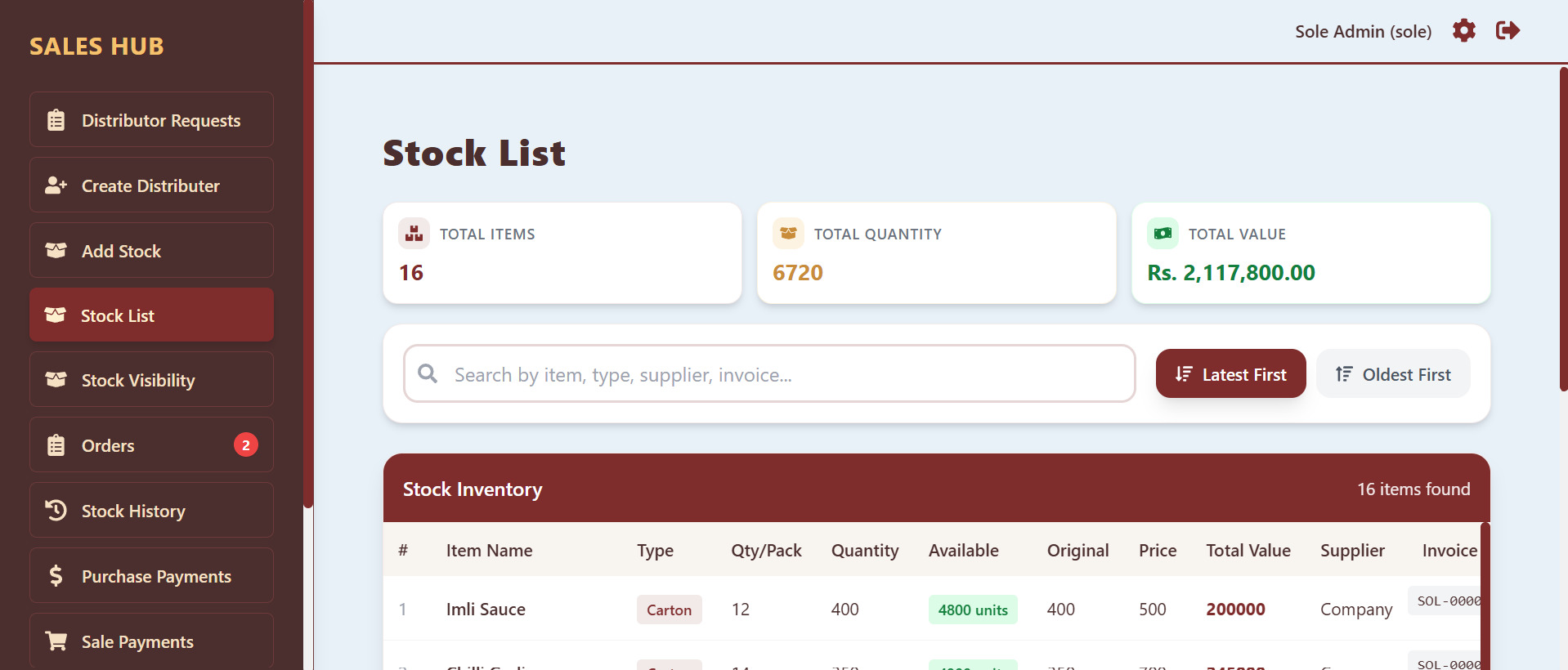
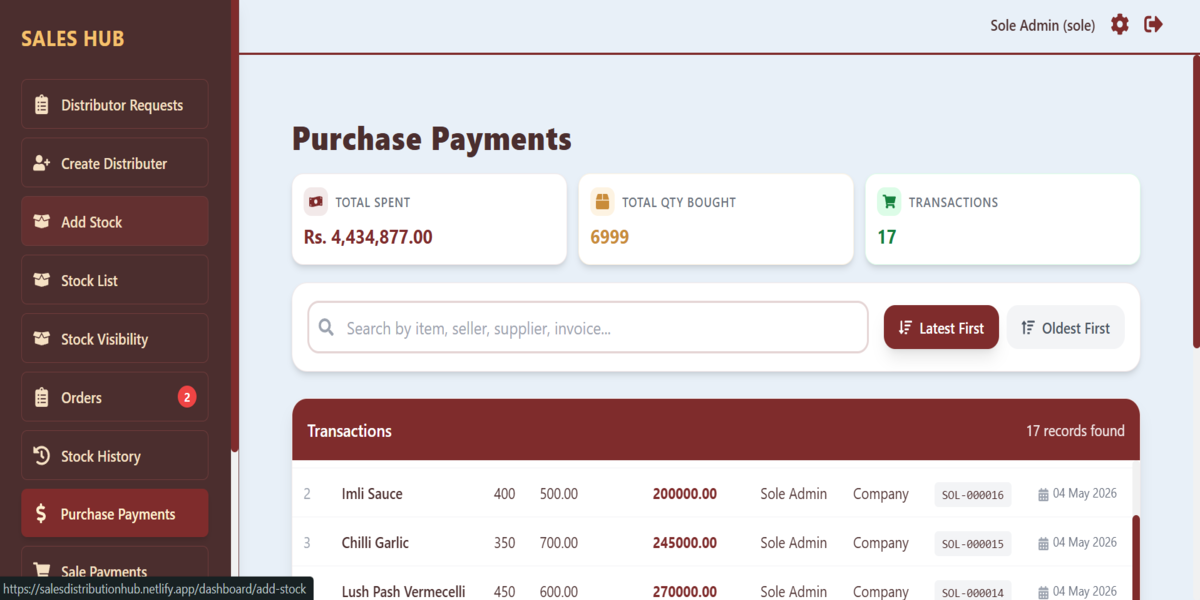
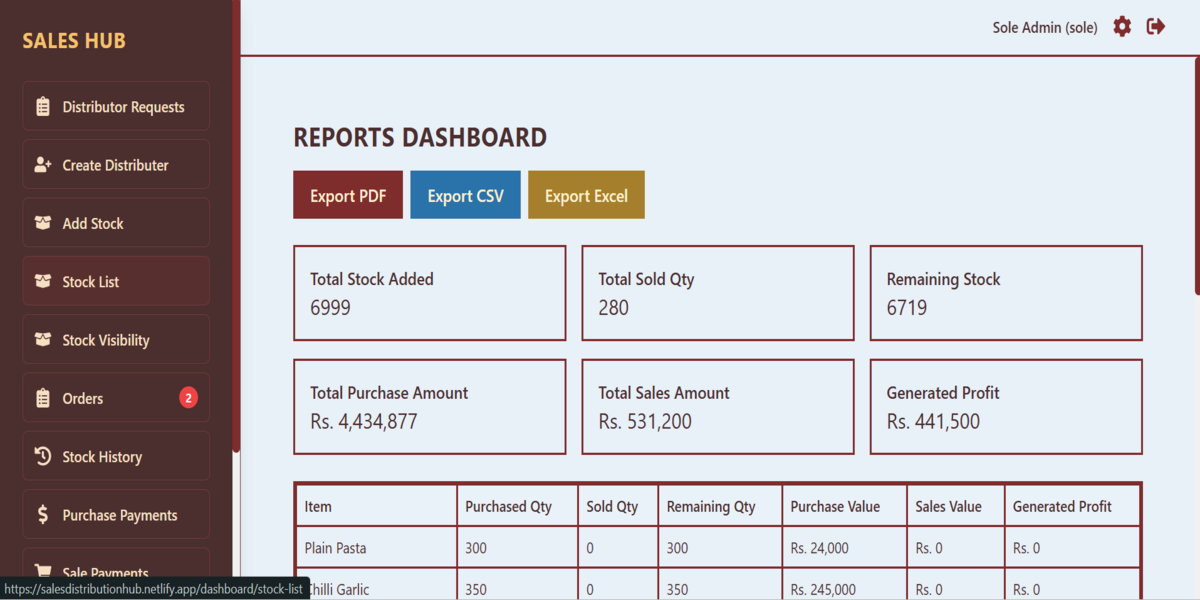
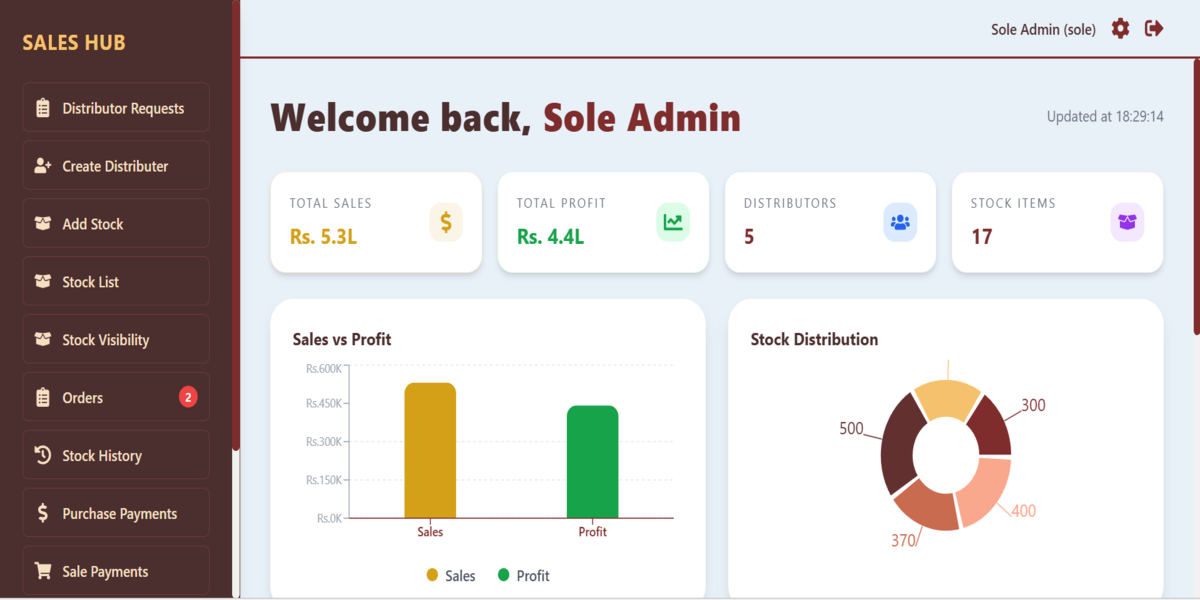
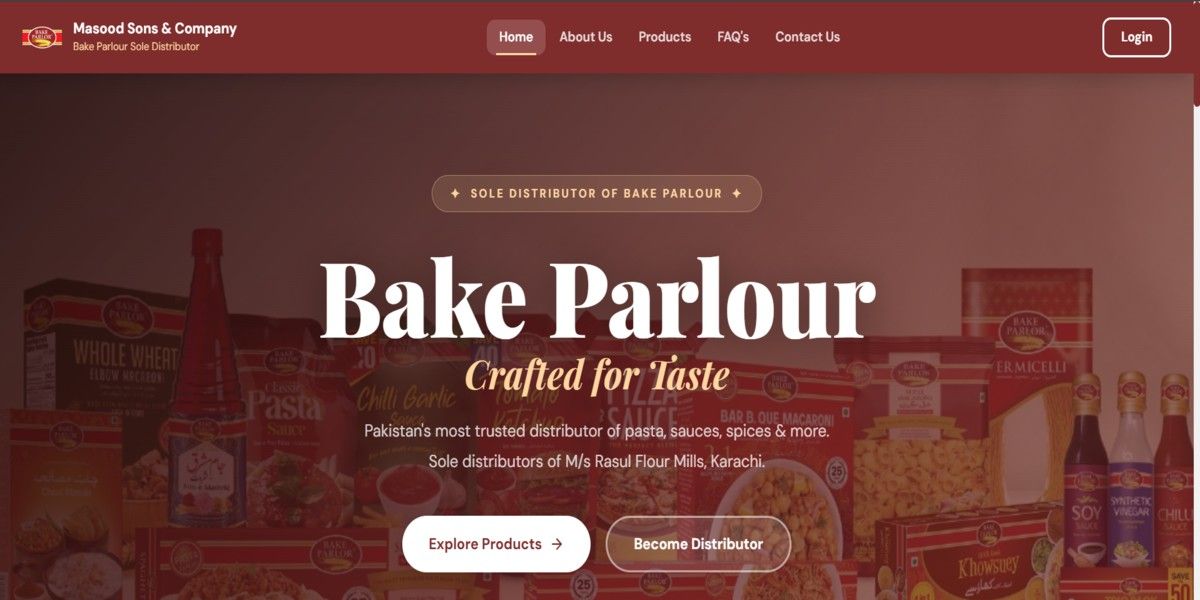
The Sales Distribution Hub is a web-based management system designed for Masood & Company to automate and streamline the operations of a sole proprietorship distribution network. The project replaces manual, paper-based tracking with a digital ecosystem that manages inventory, sales, and personnel across a multi-tier hierarchy.The system features Role-Based Access Control (RBAC) for four distinct users:Sole (Admin): Manages the central inventory, pricing, and approves distributor stock requests.Distributor: Manages Field Officers (FOs), sets area-specific targets, and monitors local stock.Field Officer: Supervises Bookers, assigns geographical routes, and consolidates daily orders.Booker: Operates at the shop level to record real-time orders and manage deliveries.Built using the MERN stack (MongoDB, Express.js, React.js, and Node.js), the platform ensures data integrity, real-time reporting, and efficient logistics from the warehouse to the retail shelf.
Objectives
The primary objective of the Sales Distribution Hub is to revolutionize the operational workflow of Masood & Company by transitioning from a manual, paper-based distribution model to a streamlined, automated digital platform. The project aims to eliminate the inefficiencies, data redundancies, and human errors inherent in traditional record-keeping through a centralized management system.
The core objectives include:
Automation of the Sales Lifecycle: To digitize the entire process from the initial order booking at the retail shop level to the final approval and fullfillment by the Sole Proprietor. This ensures that every transaction is recorded in real-time, providing an audit trail and reducing the time-lag between order placement and delivery.
Hierarchical Accountability through RBAC: To implement a rigorous Role-Based Access Control system. By defining specific functionalities for the Sole (Admin), Distributor, Field Officer, and Booker, the project ensures that each stakeholder has the exact tools they need while maintaining strict data security and organizational hierarchy.
Real-time Inventory and Stock Management: To provide the Sole Proprietor and Distributors with live visibility into stock levels. This prevents "stock-outs" and overstocking by tracking inventory movement across multiple tiers of the distribution chain, allowing for data-driven replenishment.
Optimized Logistics and Route Management: To empower Field Officers with tools to manage geographical areas and routes effectively. By assigning specific territories to Bookers, the system ensures maximum market coverage and efficient delivery scheduling.
Financial Transparency and Reporting: To generate automated, accurate financial reports, including sales summaries, profit/loss tracking, and payment statuses. This objective focuses on providing the business owner with actionable insights and high-level analytics to support strategic decision-making.
Scalability and Performance: To build a robust system using the MERN stack that can handle increasing volumes of data and users as the company grows, ensuring the software remains a long-term asset for the enterprise.
Socio-Economic Benefit
The Sales Distribution Hub provides several socio-economic benefits by modernizing traditional business practices and enhancing organizational efficiency. Based on the project report, these benefits include:
Operational Efficiency and Automation: The system replaces manual, paper-based operations with an integrated digital workflow, significantly improving accuracy and speed across all levels of the distribution chain.
Reduced Human Error: By automating stock transfers, order approvals, and payment reconciliation, the platform eliminates the inefficiencies and errors common in Manual record-keeping. Enhanced Transparency and Accountability: The implementation of Role-Based Access Control (RBAC) ensures that every transaction is recorded and traceable, fostering a culture of transparency and accountability among all stakeholders (Sole, Distributors, FOs, and Bookers).
Data-Driven Decision Making: Real-time visibility into stock levels, order statuses, and payment histories allows the business owner to make informed, strategic decisions based on accurate data.
Scalability for Growth: Built on a modern tech stack (MERN), the system is designed to handle increasing volumes of data and users, providing a sustainable solution that can grow alongside the business.
Productivity Gains: Centralized management and automated reporting reduce the time spent on administrative tasks, allowing personnel to focus on core sales and distribution activities.
Methodologies
The Sales Distribution Hub was developed using the Agile Software Development Methodology, specifically utilizing the Iterative and Incremental model. This approach was selected to accommodate the evolving requirements of a complex multi-role distribution system and to ensure constant feedback loops between the developers and the stakeholders at Masood & Company.
The methodology followed several key phases to ensure project success:
1. Requirement Analysis & Planning
In this initial stage, detailed discussions were conducted to understand the manual processes of the distribution chain. The requirements were gathered from different perspectives: the business owner (Sole), the distributor, the field officer, and the booker. This phase involved defining the core functionalities, such as Role-Based Access Control (RBAC), real-time stock tracking, and automated reporting.
2. System Design (Architectural & Database)
The project utilized a structured design approach.
Database Design: Since the project uses MongoDB, a non-relational document-based approach was used to design schemas for Users, Inventory, Orders, and Routes, ensuring high performance and flexibility.
System Architecture: A three-tier architecture was adopted (Presentation, Application, and Data layers).
Modeling: Visual representations such as UML Use Case Diagrams, Class Diagram and Sequence Diagrams were created to map out user interactions and data flow.
3. Iterative Development (Sprints)
Development was divided into manageable modules or "sprints."
Backend Development: Building the RESTful API using Node.js and Express.js, focusing on secure authentication (JWT) and logic for inventory management.
Frontend Development: Creating responsive interfaces using React.js.
Integration: Connecting the frontend components with the backend services to ensure seamless data exchange.
4. Testing & Quality Assurance
A rigorous testing phase was implemented to ensure the system’s reliability:
Unit Testing: Individual components and API endpoints were tested in isolation.
Integration Testing: Verifying that different modules (e.g., Order Booking and Inventory Update) work together correctly.
User Acceptance Testing (UAT): Testing the system against real-world scenarios at Masood & Company to ensure it meets the specific needs of the distribution business.
5. Deployment & Maintenance
The system was deployed with a focus on cloud compatibility (AWS/Linux support) to ensure accessibility for field-based users like Bookers and FOs. The iterative nature of the project allows for future enhancements, such as adding more analytical tools or expanding the number of distributors.
By employing the Agile methodology, the project maintained a focus on delivering a high-quality, functional product that directly addresses the logistical and financial challenges of the distribution industry.
Outcome
The Sales Distribution Hub successfully transformed Masood & Company from a manual working system into a fully digital business platform. The main outcomes of the project are:
Centralized Management: The company now works through a single system where the Sole Proprietor can monitor everything, including warehouse stock, sales activities, and shop orders, from one place.
Role-Based Access System: A complete Role-Based Access Control (RBAC) system was developed. Different users such as Sole Proprietor, Distributor, Field Officer, and Booker have separate dashboards and access according to their responsibilities.
Accurate Inventory Management: The system automatically updates stock levels whenever orders are booked, approved, or delivered. This reduced manual mistakes and improved inventory accuracy.
Digital Order Processing: The old manual order booking process was replaced with a digital system. Bookers can now place orders directly through the platform, and these orders become instantly visible to Field Officers and Distributors, making the process faster and more efficient.
Improved Financial Management: The platform generates automatic sales and financial reports, helping the company track payments, profits, losses, and pending balances more effectively.
Modern Technology Platform: The project was developed using the MERN stack, providing a modern, scalable, and high-performance system that can support future upgrades like mobile applications and AI-based features.
Overall, the project created a more organized and professional working environment where efficiency increased, human errors decreased, and management could focus more on business growth instead of manual paperwork.