Smart Meal Scanner, Nutrition Estimator & Weight Loss Planner
Description
Smart Meal Scanner is an AI-powered mobile application designed to revolutionize dietary tracking and weight management. Traditional calorie counting is tedious and prone to manual errors. This project addresses this by allowing users to simply take a photo of their meal to receive instant, accurate nutritional insights. Utilizing advanced Vision Transformers (ViT) and Convolutional Neural Networks (CNN) trained on extensive food datasets, the app accurately recognizes diverse food items and estimates their portion sizes. Beyond simple tracking, the application serves as a personalized health companion, offering a customized weight loss planner, real-time macro tracking (proteins, carbs, fats), and actionable dietary recommendations. Built with a cross-platform Flutter frontend and a robust Python-based AI backend, it provides an intuitive, seamless, and highly responsive user experience aimed at promoting healthier lifestyle choices.
Objectives
The primary objectives of the Smart Meal Scanner project are: Automate Dietary Tracking: To eliminate the friction of manual data entry in health apps by replacing it with a seamless, image-based food recognition system. Deploy Advanced Deep Learning: To implement and optimize state-of-the-art Computer Vision models, specifically Vision Transformers (ViT) and CNNs, ensuring high accuracy in identifying complex, multi-item food plates. Provide Precise Nutritional Estimation: To accurately calculate caloric values and macronutrient breakdowns (carbohydrates, proteins, and fats) from a single photograph by analyzing food types and volume. Deliver Personalized Health Insights: To develop an intelligent weight loss planner within the app that adapts to individual user profiles, dietary goals, and historical eating habits. Ensure Cross-Platform Accessibility: To design and deploy a highly responsive, user-friendly mobile application using Flutter that operates smoothly on both Android and iOS devices.
Socio-economic benefit
The Smart Meal Scanner offers significant socio-economic benefits by bridging the gap between artificial intelligence and public healthcare: Combating Chronic Health Issues: By promoting mindful eating and accurate calorie tracking, the application directly aids in managing and preventing lifestyle-driven health crises such as obesity, diabetes, and cardiovascular diseases. Reducing Healthcare Costs: Preventative health measures significantly decrease the long-term financial burden on public and private healthcare systems. Users can manage their weight and nutrition independently, reducing the frequency of medical consultations and treatments. Democratizing Nutritional Guidance: Professional dietary consulting is often expensive and inaccessible to the general public. This app acts as a free or low-cost digital nutritionist, providing personalized dietary plans to users regardless of their socioeconomic status. Enhancing Daily Productivity: Improved nutrition directly correlates with better energy levels, cognitive function, and overall workplace productivity, contributing positively to the broader economic output. Promoting Digital Health Awareness: The project fosters a tech-savvy culture around personal wellness, encouraging individuals to take proactive control of their health using accessible mobile technology.
Methodologies
The development of the Smart Meal Scanner follows a structured, agile methodology divided into distinct phases: 1. Data Collection & Preprocessing: The AI models are trained using comprehensive, standard food image datasets (such as Food-101 and UECFood-100). Preprocessing involves data augmentation (rotation, scaling, color adjustments) to ensure the model performs accurately under varying lighting and angles. 2. AI Model Development & Optimization: A hybrid deep learning approach is utilized. Convolutional Neural Networks (CNNs) are employed for localized feature extraction, while Vision Transformers (ViTs) handle global context to accurately classify mixed or overlapping food items. Models are fine-tuned to balance high accuracy with low computational latency. 3. Backend & API Integration: The trained model is deployed using a Python-based microservice framework (FastAPI). This backend receives image uploads from the mobile app, processes them through the AI pipeline, and returns nutritional data instantly via structured APIs. 4. Frontend Application Development: The user interface is crafted using Flutter and Dart, ensuring a single, high-performance codebase for both Android and iOS. Special attention is paid to a clean UI/UX, allowing users to scan meals with a single click. 5. Testing & Deployment: Continuous integration is maintained using Git. The application undergoes rigorous unit testing, model validation, and cross-device performance optimization before final deployment.
Outcome
The successful completion of the Smart Meal Scanner yields the following outcomes: A Fully Functional Mobile Application: A robust, cross-platform app capable of capturing or uploading meal images and receiving instant nutritional breakdowns. High-Accuracy AI Classification Engine: An optimized deep learning model that successfully recognizes diverse food items with high precision, minimizing false classifications. Automated Caloric & Macro Reporting: An automated system that instantly translates visual food data into exact numbers for calories, protein, carbohydrates, and fats. Interactive Weight Loss & Planning Module: A dynamic user dashboard tracking daily nutritional targets, generating tailored meal plans, and visually mapping weight loss progress over time. Scalable Backend Architecture: A reliable, cloud-deployable backend pipeline capable of handling concurrent user requests and image processing with minimal latency.
Gallery


More from Computer Science
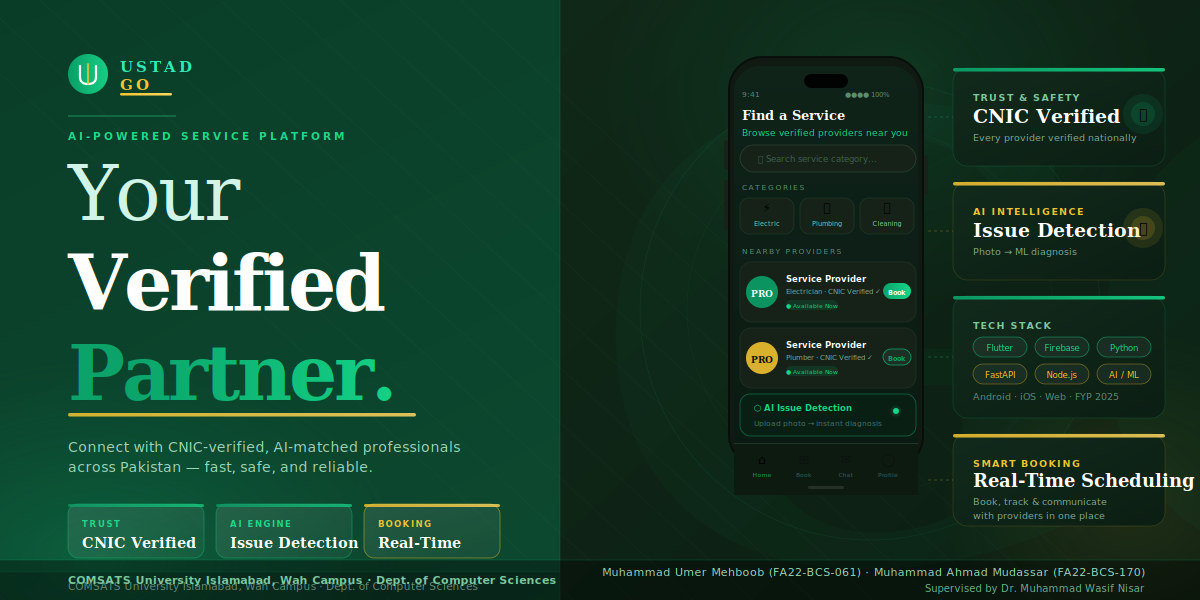
Ustad Go: An AI-Powered Mobile and Web Ecosystem for Verified Local Service Provision in P…
Ustad Go is a dual-platform solution bridging the gap between skilled local service providers and households.…
Supervisor: Dr. Wasif Nisar
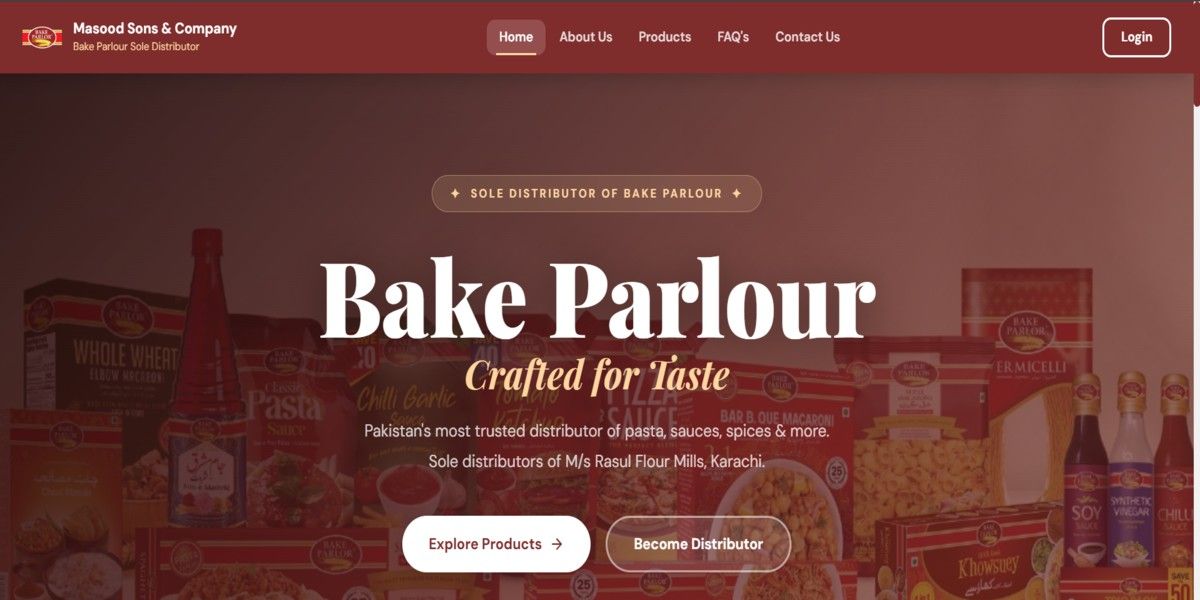
Sales Distribution Hub
The Sales Distribution Hub is a web-based management system designed for Masood & Company to automate and stre…
Supervisor: Dr. Wasif Nisar.
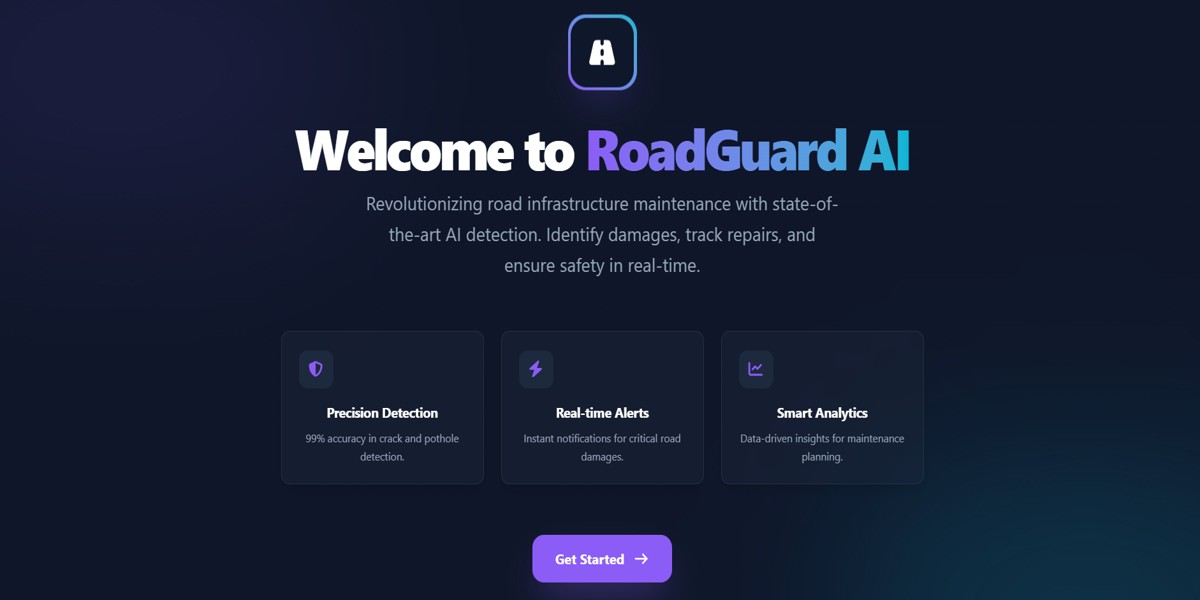
AI Based Road Damage Detection System
AI Based Road Damage Detection System is a smart application that uses YOLOv8 and computer vision techniques t…
Supervisor: Mehwish Mukhtar
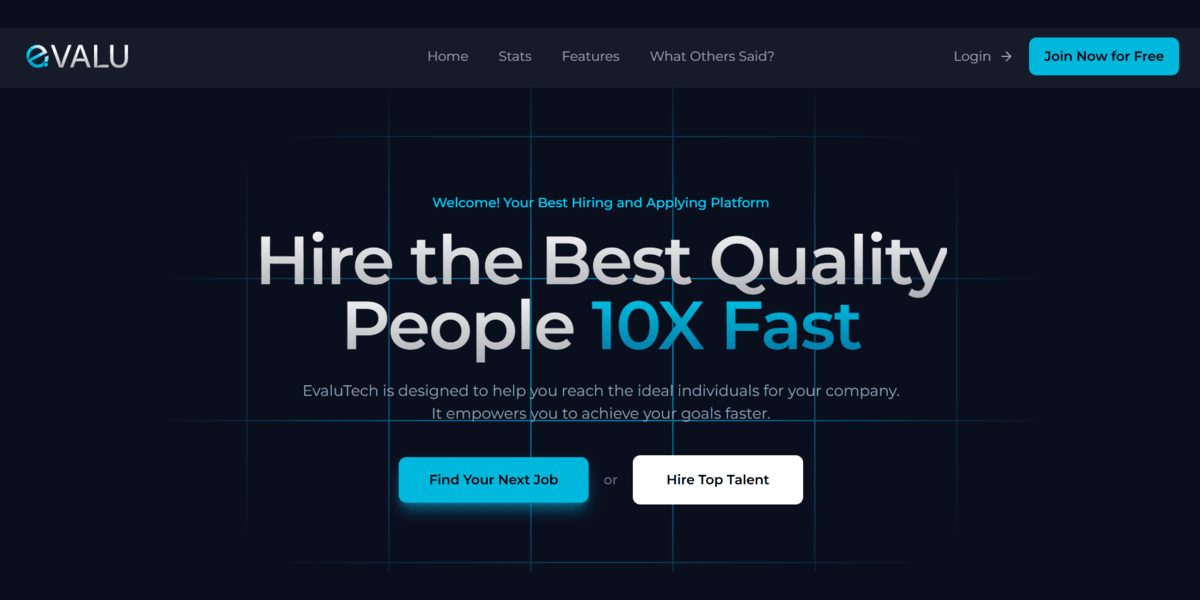
EvaluTech: AI-Powered Hiring & Job Platform for Employers and Applicants
EvaluTech is an intelligent recruitment management platform that streamlines the complete hiring lifecycle fro…
Supervisor: Dr. Wasif Nisar