DupeFinder: Affordable Alternatives for Luxury Wearables
Description
DupeFinder is an AI-powered mobile application that helps shoppers discover affordable, visually similar alternatives to luxury and premium-style fashion items. Users upload or capture a photo of a wearable; the system uses FashionCLIP deep-learning embeddings and FAISS vector search to return ranked matches from a curated catalogue with prices and retailer links. A Flutter app provides browsing, image search, wishlist, compare lists, dupe history, and a moderated community for sharing finds. A React admin dashboard supports catalogue import, scraping/re-sync jobs, user management, and analytics. The platform focuses on discovery and referral—not in-app checkout—making budget-friendly fashion accessible while giving affordable retailers more visibility.
Objectives
To design and implement an integrated software system that enables image-driven discovery of affordable fashion products visually similar to a user’s query image. Primary objectives: 1. Image Based Similarity Search: Build a search pipeline using FashionCLIP embeddings and FAISS approximate nearest-neighbour indices (per category) so users receive ranked dupe matches with similarity scores, price filters, and combined ranking (visual similarity, price, and attribute consistency). 2. Mobile Application: Deliver a Flutter app for shoppers with registration/login (email OTP + JWT), home browsing, image upload/capture search, product detail views, wishlist, compare, dupe history, local insights, and optional guest access. 3. Admin Dashboard: Provide a React (Vite) web dashboard for administrators to manage products (CSV import, link repair, delete/cleanup), categories, scraping/re-sync jobs, re-indexing, user administration, overview metrics, and community moderation. 4. Community Module: Support posts, replies, likes, reports, blocks, and notifications with backend moderation and retention policies to encourage peer sharing of dupes within platform rules. 5. Secure Authentication: Implement bcrypt password hashing, email OTP verification, JWT access/refresh tokens, and separate admin authentication. 6. Data Quality & Scalability: Maintain a modular architecture (FastAPI backend, MongoDB persistence, ml-engine for ML tooling) with scraping/import pipelines to keep the catalogue current and searchable. Success criteria include functional end-to-end search from mobile, admin control over catalogue and users, and documentation suitable for academic evaluation against the running system.
Socio-economic benefit
DupeFinder addresses a practical gap in regional fashion markets, including Pakistan, where many consumers admire luxury or premium international styling but cannot afford designer prices. Manual searching across boutiques, marketplaces, and social media is time-consuming and inconsistent. This project reduces that burden through automated visual matching over a curated, locally relevant catalogue. Economic benefits: • Cost savings for users: Side-by-side price comparison and ranked affordable alternatives help shoppers make informed, budget-friendly decisions (e.g. finding a similar kurta or handbag at a fraction of designer cost). • Visibility for affordable retailers: Products in the dataset gain exposure through search results and outbound links, supporting small and mid-tier sellers without requiring them to run their own AI systems. • Reduced search friction: Visual search replaces keyword guessing when users only have a photo or screenshot of an item they want to replicate. Social benefits: • Inclusive fashion access: Budget-conscious students, young professionals, and families can explore styles previously perceived as out of reach. • Community knowledge sharing: Users can post, discuss, and validate dupes, building trust through reviews, reports, and moderation rather than isolated shopping. • Transparency: Displaying prices, similarity scores, and source links improves confidence compared to unverified social-media recommendations. Broader impact: The system demonstrates how deep learning (content-based image retrieval) can be applied to real consumer problems when combined with sound software engineering (mobile UX, secure APIs, admin tooling). It does not replace physical retail or guarantee stock at third-party sites, but it improves discovery efficiency and supports a more equitable fashion ecosystem focused on affordability rather than exclusivity.
Methodologies
DupeFinder was developed using a structured software-engineering approach aligned with the FYP proposal, SRDS, and iterative implementation. Requirements & analysis: Functional and non-functional requirements were derived from the proposal and refined against the implemented system (user/admin actors, use cases for signup, login, image search, wishlist, community, scraping). UML artefacts include system diagram, use case diagram, package/sequence/state diagrams, and deployment diagram. Architecture: Three-tier client–server design: • Presentation: Flutter mobile app (primary user) and React admin dashboard. • Application: FastAPI REST API (authentication, catalogue, search, community, user data, admin routes). • Data & ML: MongoDB for users, products, community, and user-specific lists; FashionCLIP model + FAISS indices in ml-engine; optional Docker Compose for local MongoDB. Development methodology: Agile-style iterations: backend API and MongoDB schemas first, then ML indexing and search endpoint, then mobile screens, then admin modules (products, scraping, moderation). Features were integrated incrementally with manual and documented test cases (traceability matrix in QA chapter). Key technical methodologies: 1. Content-Based Image Retrieval (CBIR): Query images are embedded with FashionCLIP; FAISS retrieves top-k neighbours per display category; re-ranking combines similarity, price signals, and simple attribute checks. 2. Data acquisition: CSV import and automated scraping/re-sync pipelines with admin job polling, link health repair, and re-index triggers after catalogue updates. 3. Security: Email OTP via SMTP, JWT sessions, role-separated admin auth, input validation, CORS for dev clients. 4. API design: REST over JSON; multipart upload for images; paginated admin lists. 5. Testing: Unit/integration checks on auth and search; functional test cases for registration, search, wishlist, community, and admin workflows. Tools: Python 3.10+, FastAPI, Uvicorn, Motor/PyMongo, Flutter/Dart, React/Vite, Hugging Face Transformers, OpenCV/Pillow, Git, VS Code/Cursor, Windows 10/11 for development, Android for mobile deployment.
Outcome
The DupeFinder system was successfully implemented as a cohesive FYP deliverable with the following outcomes: Functional outcomes: Users can photograph or upload a luxury-style item and receive visually similar, more affordable alternatives from the catalogue with prices and links. Administrators can maintain data quality through import, scraping, and moderation tools. Performance & quality: Search is suitable for interactive mobile use; model loads once per API process. Test cases cover critical flows (signup, login, search, wishlist, community, admin login, scraping). Limitations (honest scope): No in-app payments, shipping, or stock guarantees at external retailers. Accuracy depends on catalogue coverage and image quality; target is strong top-3 similarity rather than perfect duplicates. Future work: Expand catalogue categories, improved GPU deployment, stronger spam detection, and retailer API partnerships. The project demonstrates practical integration of AI-based visual search with full-stack mobile and web engineering for real-world fashion discovery.
Gallery


More from Computer Science

Ustad Go: An AI-Powered Mobile and Web Ecosystem for Verified Local Service Provision in P…
Ustad Go is a dual-platform solution bridging the gap between skilled local service providers and households.…
Supervisor: Dr. Wasif Nisar
Sales Distribution Hub
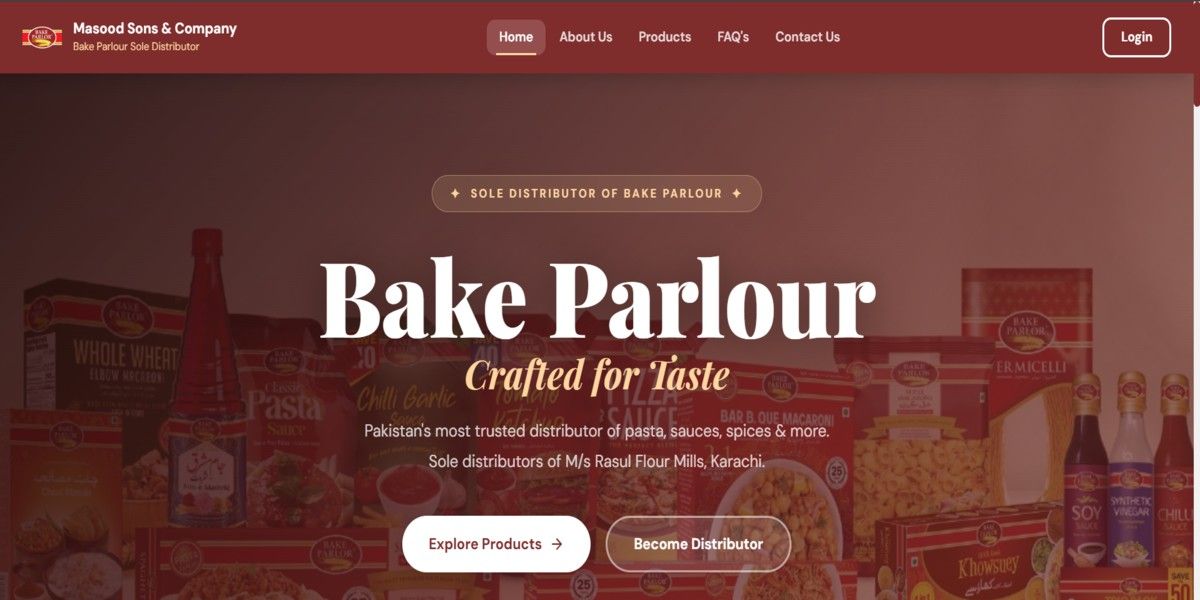
The Sales Distribution Hub is a web-based management system designed for Masood & Company to automate and stre…
Supervisor: Dr. Wasif Nisar.

AI Based Road Damage Detection System
AI Based Road Damage Detection System is a smart application that uses YOLOv8 and computer vision techniques t…
Supervisor: Mehwish Mukhtar

EvaluTech: AI-Powered Hiring & Job Platform for Employers and Applicants
EvaluTech is an intelligent recruitment management platform that streamlines the complete hiring lifecycle fro…
Supervisor: Dr. Wasif Nisar