PMNH BioConnect
Description
PMNH BioConnect is an integrated web and mobile platform designed to digitalize and streamline biological specimen tracking and biodiversity data management, successfully replacing traditional paper and spreadsheet-based workflows with a secure, centralized digital repository. The architecture of the system is governed by a strict role-based access control mechanism that customizes interface capabilities across five distinct profiles, ensuring specialized dashboards for the webmaster, data entry operator, data processor, data organizer, and researchers. By organizing biological entries seamlessly across the botanical, earth, and zoological sciences divisions, the platform introduces operational harmony to institutional environments. Beyond standard data entry, the system features a rich functional layer including real-time data synchronization, offline data caching for field research, bulk upload and export capabilities in formats like CSV or
Objectives
The primary objective of the BIO-CONNECT Biodiversity Specimen Database System is to develop a comprehensive, integrated web and mobile platform engineered to modernize, automate, and centralize biological specimen management and species tracking operations. Legally constrained by scattered paper forms and unlinked spreadsheets, traditional institutional systems routinely encounter critical operational gaps, inconsistent record layouts, and poor multi-department coordination. BIO-CONNECT targets these limitations by replacing disconnected tracking tasks with an optimized, centralized digital ecosystem, thereby reinforcing data integrity through rigid electronic verification rules. To fulfill this larger mission, the system institutes a secure Role-Based Access Control framework across multiple system dashboards. This structural constraint isolates distinct interfaces for webmasters, data operators, validators, and researchers. A key objective is ensuring that technical operators can input, edit, or execute bulk data uploads via spreadsheets, while specialized scientific reviewers and data organizers evaluate, classify, label, and partition information into correct biological divisions. The system natively structures records under the Botanical Sciences, Earth Sciences, and Zoological Sciences branches to reflect institutional divisions. Equally vital to the project's operational goals is real-time synchronization, which links field tasks directly to institutional oversight dashboards. When status alterations occur, database modifications are propagated to connected clients immediately via server listeners. Furthermore, to accommodate environmental research conditions, the design integrates a local data-caching module. This offline system capability allows field workers to safely cache files, manage active tracking data, and extract saved species records even when operating inside isolated test environments completely stripped of mobile data coverage.
Socio-economic benefit
The PMNH BioConnect database platform yields clear socio-economic benefits by advancing scientific productivity, safeguarding national biodiversity data assets, maximizing institutional resource allocation, and modernizing research structures. By shifting biological collection archives away from manual tracking registries and disconnected spreadsheets into an integrated web and mobile framework, the project delivers clear advantages to environmental planners, educational systems, public sectors, and research organizations. From an institutional and scientific perspective, the platform accelerates biodiversity discovery and documentation workflows. In traditional setups, historical species files are heavily isolated across distinct departments, resulting in major administrative delays when compiling cross-disciplinary reports. By establishing unified, relational digital pathways between the Botanical, Earth, and Zoological Sciences divisions, PMNH BioConnect completely cuts down the time needed to record and parse specimens. Researchers can query intricate taxonomic listings in seconds, driving faster publication rates, timely conservation reporting, and more agile scientific collaboration. Furthermore, biological databases function as a critical part of a nation’s natural capital. Disjointed paper documentations are fragile and highly susceptible to physical loss or degradation. PMNH BioConnect mitigates this vulnerability by enforcing strict data validation criteria backed by secure relational storage. This permanent digital repository ensures long-term data preservation, giving policymakers an empirical foundation to evaluate environmental shifts, track regional habitat loss, monitor species distribution patterns, and formulate practical, data-driven conversation guidelines. From an economic optimization standpoint, building the system over an open-source backend like Supabase cuts out high licensing fees associated with proprietary corporate database software. Leveraging a cross-platform Flutter application architecture allows an organization to sustain both administrative web dashboards and field-ready mobile interfaces from a single codebase, drastically decreasing development and maintenance overheads. Additionally, features like bulk imports via Excel spreadsheets automate heavy data ingestion tasks, maximizing the financial efficiency of institutional research budgets and public grants. Finally, the platform bridges the gap between field research constraints and community education. The inclusion of an offline data caching mechanism enables field workers to record precise specimen geolocations and taxonomy details in isolated regions lacking cellular coverage, preventing operational gaps. Outside the laboratory, the platform serves as an open educational utility. Public users, students, and citizen scientists can easily explore species statuses, read linked publications, and interact on comm
Methodologies
The methodology for PMNH BioConnect follows a structured, multi-tier architectural framework integrated with an agile systems development lifecycle. Architecturally, the platform is engineered using a three-layer system that explicitly separates the user interface from backend processes and persistence. The presentation layer employs the Flutter framework to serve uniform, high-performance web and mobile cross-platform instances from a single unified codebase. Beneath this, the service layer operates on Python logic models alongside Supabase Edge Functions to orchestrate real-time operational listeners. The persistent data layer utilizes a relational Supabase PostgreSQL engine to secure user accounts, species metadata, and photographic files. Structurally, project development spans distinct milestones across two semesters. Initial project implementation focused on scope mapping, requirements engineering, and configuring baseline schemas on Supabase. Advanced stages introduced bulk spreadsheet ingestion algorithms, a strict role-based data validation and verification workflow, an automated Python-based image classifier, and a local database caching engine driven by the Hive library for offline fieldwork. This modular engineering approach guarantees a scalable database ecosystem capable of securely managing intricate taxonomic records.
Outcome
The primary outcome of the PMNH BioConnect project is the successful deployment of a fully unified, cross-platform biodiversity specimen database ecosystem. By replacing paper-based documentation and isolated spreadsheets, the platform delivers optimized digital tracking workflows across the Botanical, Earth, and Zoological Sciences divisions. A major system achievement is the implementation of a robust role-based access control framework, which creates specialized, highly responsive dashboards for webmasters, data operators, validators, and researchers. Functional outcomes include real-time database synchronization via server listeners and dependable offline data caching driven by the Hive engine, ensuring that field researchers can securely input and access specimen records without active cellular connectivity. Furthermore, the successful integration of a Python-driven automated image classifier enables smart taxonomic name suggestions directly from visual media, creating an advanced, highly scalable, and structurally validated digital workspace for modern biological research institutes.
Gallery


More from Computer Science
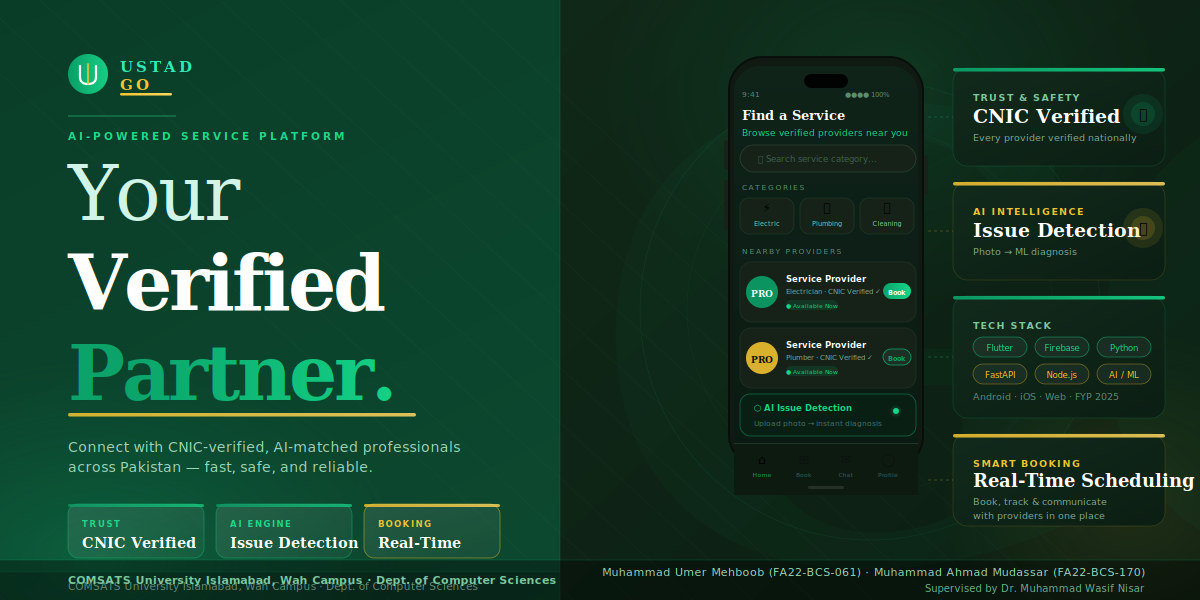
Ustad Go: An AI-Powered Mobile and Web Ecosystem for Verified Local Service Provision in P…
Ustad Go is a dual-platform solution bridging the gap between skilled local service providers and households.…
Supervisor: Dr. Wasif Nisar

Sales Distribution Hub
The Sales Distribution Hub is a web-based management system designed for Masood & Company to automate and stre…
Supervisor: Dr. Wasif Nisar.
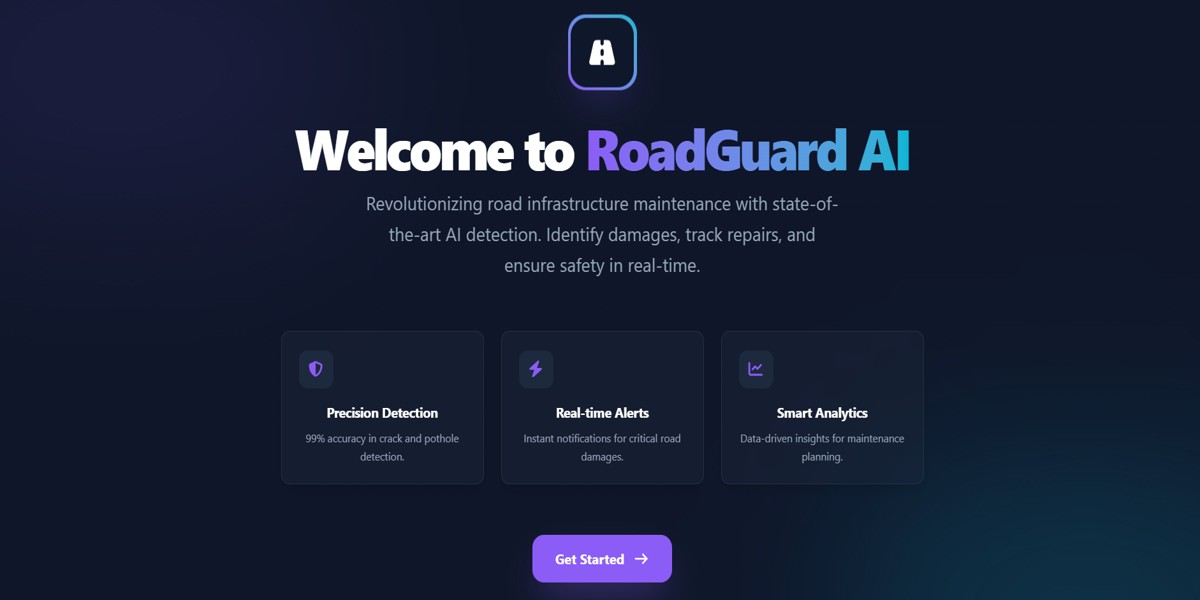
AI Based Road Damage Detection System
AI Based Road Damage Detection System is a smart application that uses YOLOv8 and computer vision techniques t…
Supervisor: Mehwish Mukhtar

EvaluTech: AI-Powered Hiring & Job Platform for Employers and Applicants
EvaluTech is an intelligent recruitment management platform that streamlines the complete hiring lifecycle fro…
Supervisor: Dr. Wasif Nisar