Human Activity Recognition Using Deep Neural Networks
Description
Dive into the exciting world of human action recognition through our project, where we've delved deep into the power of deep neural networks. Our approach is a fusion of cutting-edge techniques, blending Convolutional Neural Networks (CNN) and Vision Transformer (VIT) architectures. We've meticulously crafted a system that excels in image classification tasks. Taking it a step further, we've extended our expertise to analyze videos by breaking them down into individual frames. This meticulous approach allows us to accurately detect and classify various human actions. By leveraging both classical and pre-trained models, we've achieved remarkable precision, paving the way for significant advancements in computer vision technology.
Objectives
This final year project aims to create a robust deep neural network (DNN) architecture for human activity recognition (HAR) with high accuracy. The project has three main objectives: 1. Developing a Deep Neural Network for HAR: Focus on designing a DNN architecture tailored for HAR tasks, utilizing convolutional neural networks (CNNs) and vision transformers (VITs) to capture temporal and spatial dependencies effectively. 2. Achieving High Accuracy in Identifying and Classifying Diverse Human Activities: Targeting accurate identification and classification of various human activities by training the model on a diverse dataset and employing careful data preprocessing, model training, and optimization techniques. 3. Implementing Efficient Algorithms for Large-Scale Datasets: Addressing challenges of handling large-scale datasets by employing efficient algorithms and techniques such as VITs to ensure scalability and robust performance in real-world applications.
Socio-economic benefit
1. Healthcare Optimization: Accurate recognition of basic human actions aids in patient monitoring and rehabilitation, allowing therapists to tailor treatment plans and track recovery progress efficiently, thereby improving patient outcomes and optimizing healthcare resources. 2. Workplace Safety and Efficiency: Identification of human actions enhances workplace safety by identifying ergonomic risks and automating tasks, leading to fewer injuries and increased productivity, especially in manual labor-intensive industries like manufacturing and construction. 3. Education Innovation: By recognizing basic human actions in classrooms, educators can personalize instruction methods based on student engagement levels, revolutionizing teaching methodologies and fostering more effective learning environments. 4. Smart City Development: The project contributes to smart city initiatives by analyzing pedestrian and cyclist behavior, informing urban planning decisions to create pedestrian-friendly infrastructure and prioritize sustainable transportation solutions, resulting in reduced traffic congestion, improved air quality, and economic benefits for communities. 5. Environmental Sustainability: Recognition of basic human actions such as walking and cycling promotes healthier lifestyles, reduces carbon emissions, and contributes to environmental sustainability, aligning with efforts to combat climate change and create greener, more livable cities.
Methodologies
1. Problem Definition: • Clearly define the problem of human activity recognition and its importance in various applications such as healthcare monitoring, sports analytics, and security systems. 2. Data Collection and Preparation: • Gather a dataset containing labelled images or videos of human activities. Ensure that the dataset is diverse, covering a wide range of activities and environmental conditions. • Preprocess the data by resizing images or video frames, applying data augmentation techniques if necessary, and normalizing pixel values. 3. Model Selection: • Choose a suitable deep neural network architecture for activity recognition. In this case, the code uses a pretrained Vision Transformer (VIT), which has shown promising results in various computer vision tasks. • Fine-tune the selected model to adapt it to the specific task of activity recognition. This may involve modifying the architecture, adjusting hyperparameters, and training the model on the target dataset. 4. Training: • Split the dataset into training and testing sets to evaluate the model's performance. • Train the DNN model using the training data. Use techniques like transfer learning to leverage the pretrained weights of the VIT model. • Monitor the training process by tracking metrics such as loss and accuracy. Adjust training parameters as needed to improve performance. 5. Evaluation: • Evaluate the trained model on the testing set to assess its generalization performance. Measure metrics such as accuracy, precision, recall, and F1-score to quantify the model's effectiveness. • Analyze the model's performance across different activities and identify any classes where the model struggles to make accurate predictions. 6. Deployment and Integration: • Once satisfied with the model's performance, deploy it in real-world applications. This may involve integrating the model into existing systems or developing new applications tailored to specific use cases. • Monitor the model's performance in production and continuously update it with new data or retraining as needed to maintain optimal performance. 7. Iterative Improvement: • Iterate on the methodology by experimenting with different architectures, preprocessing techniques, and training strategies to further improve the model's accuracy and robustness. • Stay updated on the latest research and advancements in deep learning for activity recognition to incorporate new methods and techniques into the workflow.
Outcome
1. Adaptability Across Diverse Human Activities: • Develop a versatile model utilizing deep neural networks, including CNN and ViT architectures. • Train the model on extensive datasets covering various human actions to ensure generalization. • Enable seamless integration into multiple industries such as healthcare, sports analytics, and surveillance. 2. Accurate Activity Recognition: • Employ meticulous training and optimization processes to achieve high precision and reliability. • Utilize classical techniques and pre-trained models to enhance performance in identifying human actions from images or video sequences.
Gallery


More from Electrical & Computer Engineering
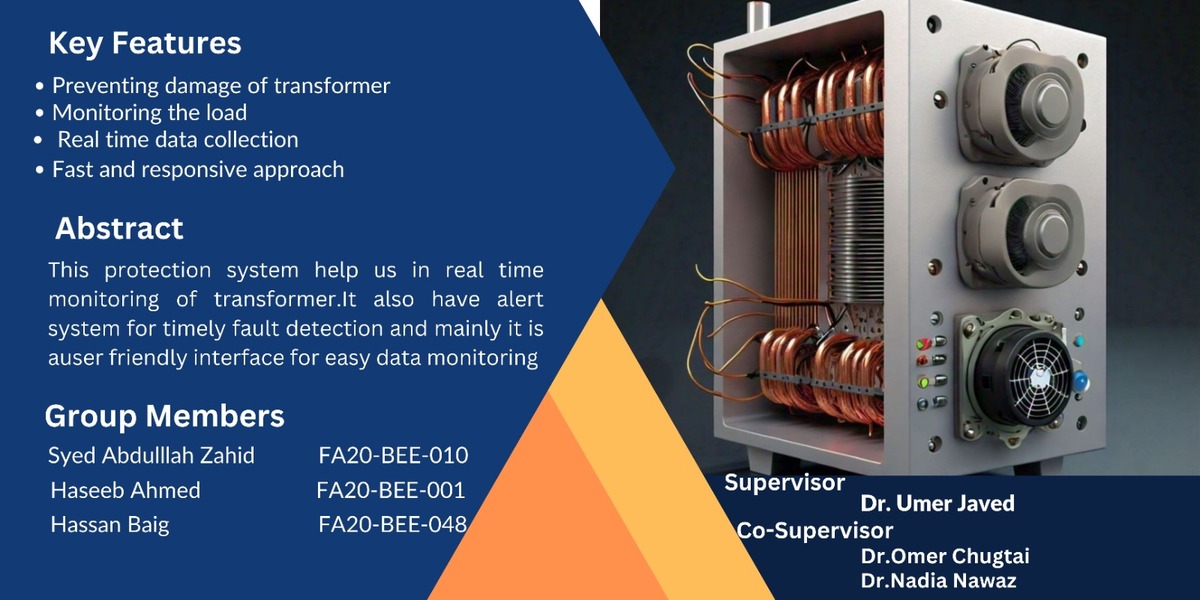
Transformer Protection And Control System
The main purpose of this project is the protection of transformer, and to improve the working of transformer.…
Supervisor: Dr. Umer Javed , Dr. Nadia Nawaz ,Dr. Omer Chugtai
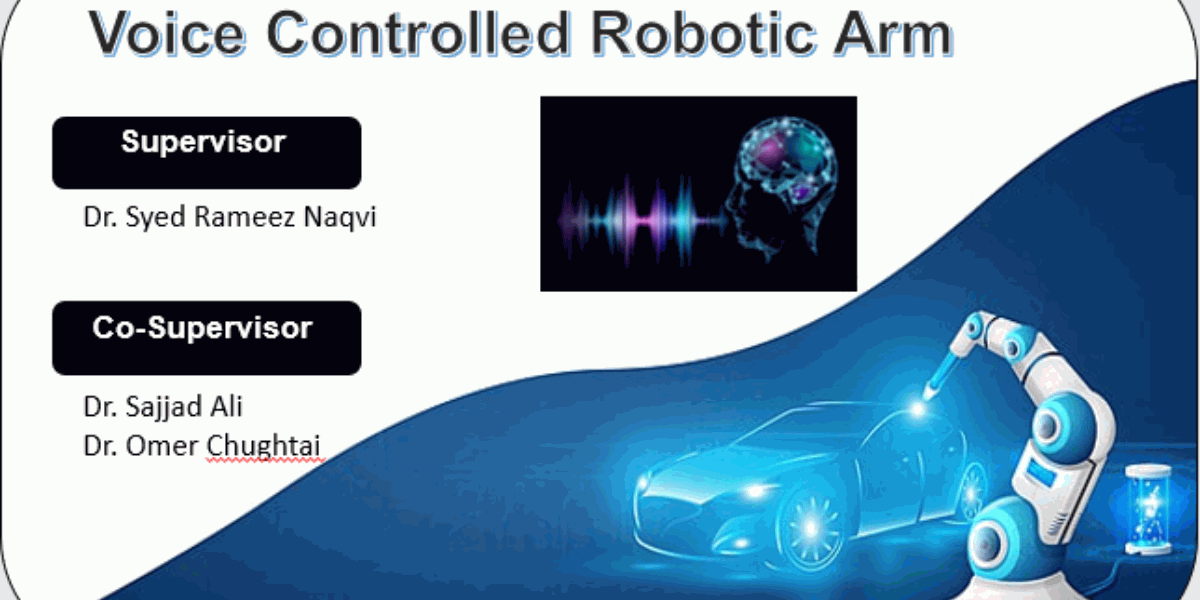
Voice Controlled Robotic Arm
1. A robotic arm is an electrical and mechanical machine that is used to perform tasks that require extreme pr…
Supervisor: Dr. Syed Rameez Naqvi

RENEWABLE ENERGY BASED WATER PURIFICATION SYSTEM
The integration of an ultrasonic sensor into reverse osmosis (RO) systems marks a significant advancement in w…
Supervisor: Bilawal Behram

Automatic Indoor Farming Module
Introducing our Automatic Indoor Farming Module! Powered by an ESP32 microcontroller, it's a smart solution fo…
Supervisor: Engr. Riaz Hussain Junejo