CRAFTMATIC-3D
Description
A 3D printer is a cutting-edge device that transforms digital designs into tangible objects by depositing material layer by layer. It enables the creation of prototypes, custom products, and intricate models with remarkable precision and versatility. From manufacturing to healthcare, 3D printing revolutionizes various industries, offering unparalleled opportunities for innovation and customization
Objectives
The objectives of 3D printing encompass a range of goals and applications, reflecting the diverse capabilities and potential of this transformative technology. Here are some key objectives: 1. Prototyping and Rapid Iteration: One of the primary objectives of 3D printing is to facilitate rapid prototyping and iteration in product development processes. By allowing designers and engineers to quickly create physical prototypes from digital designs, 3D printing accelerates the product development cycle, reduces time-to-market, and enables faster innovation. 2. Customization and Personalization: Another objective of 3D printing is to enable customization and personalization of products. With 3D printing, it's possible to produce unique, one-of-a-kind objects tailored to individual preferences, needs, and specifications. This capability is particularly valuable in industries such as healthcare, where custom-fitted medical devices and prosthetics can significantly improve patient outcomes. 3. Complex Geometries and Lightweight Structures: 3D printing enables the fabrication of objects with intricate geometries and complex structures that would be difficult or impossible to produce using traditional manufacturing methods. This objective is especially relevant in industries like aerospace and automotive, where lightweight components with optimized designs can enhance performance and efficiency. 4. On-Demand Manufacturing and Distributed Production: 3D printing has the potential to decentralize manufacturing and enable on-demand production of goods closer to the point of consumption. By reducing the need for centralized manufacturing facilities and inventory stockpiles, 3D printing offers opportunities for more flexible and responsive supply chains, as well as reducing waste and transportation costs. 5. Sustainability and Resource Efficiency: A key objective of 3D printing is to promote sustainability and resource efficiency in manufacturing processes. Compared to traditional subtractive manufacturing methods, 3D printing generates less material waste, as it only uses the amount of material necessary to build the object. Additionally, 3D printing enables the use of recycled and bio-based materials, further reducing environmental impact. 6. Education and Skill Development: 3D printing is increasingly being used as an educational tool to teach STEM (Science, Technology, Engineering, and Mathematics) concepts and develop practical skills in design, engineering, and manufacturing. By providing hands-on experience with digital design tools and additive manufacturing technologies, 3D printing helps prepare students for careers in a rapidly evolving technological landscape. 7. Innovation and Exploration: Finally, a fundamental objective of 3D printing is to foster innovation and exploration across various industries and disciplines. By democratizing access to manufacturing capabilities and empowering individuals and organizations to experiment with new materia
Socio-economic benefit
The socio-economic benefits of 3D printing are extensive and impactful, contributing to various aspects of society and the economy. Here are some key socio-economic benefits: 1. Localized Manufacturing and Supply Chains: 3D printing enables localized manufacturing by allowing products to be produced on-demand and closer to the point of consumption. This reduces the need for centralized manufacturing facilities and long-distance transportation, leading to shorter supply chains, lower carbon emissions, and reduced dependency on global trade networks. 2. Job Creation and Entrepreneurship: The accessibility of 3D printing technology empowers individuals and small businesses to enter the manufacturing sector with relatively low barriers to entry. As a result, 3D printing fosters entrepreneurship and job creation, particularly in sectors such as product design, customization services, and small-scale production. 3. Customization and Personalization: 3D printing enables the creation of custom-designed products tailored to individual preferences and needs. This enhances consumer satisfaction, fosters brand loyalty, and drives demand for personalized goods and services across various industries, from healthcare and fashion to automotive and consumer electronics. 4. Innovation and Research: 3D printing facilitates innovation by providing researchers, engineers, and designers with a versatile tool for prototyping, experimentation, and iteration. By accelerating the development cycle and reducing costs associated with traditional manufacturing methods, 3D printing encourages exploration and breakthroughs in product design, materials science, and engineering. 5. Resource Efficiency and Sustainability: Compared to traditional manufacturing methods, 3D printing generates less material waste, as it only uses the amount of material necessary to build the object. Additionally, 3D printing enables the use of recycled and bio-based materials, further reducing environmental impact and promoting sustainable practices in manufacturing. 6.Healthcare Advancements: In the healthcare sector, 3D printing has transformative potential, enabling the production of patient-specific medical devices, implants, and prosthetics. Custom-fitted medical devices improve patient outcomes, reduce recovery times, and enhance quality of life. Furthermore, 3D printing enables medical researchers to develop innovative solutions for personalized medicine, drug delivery systems, and tissue engineering. 7. Education and Skills Development: 3D printing is increasingly being integrated into educational curricula to teach STEM concepts and develop practical skills in design, engineering, and manufacturing. By providing hands-on experience with digital design tools and additive manufacturing technologies, 3D printing prepares students for careers in a rapidly evolving technological landscape and fosters a culture of innovation and creativity.
Methodologies
The methodologies of 3D printing, also known as additive manufacturing, encompass a variety of techniques and processes used to build three-dimensional objects layer by layer from digital designs. Here are some of the key methodologies: 1. Fused Deposition Modeling (FDM): FDM is one of the most common 3D printing technologies. It works by extruding thermoplastic filament through a heated nozzle, which melts the material and deposits it layer by layer onto a build platform. As each layer of material is deposited, it quickly cools and solidifies, forming the object from the bottom up. FDM is widely used for producing prototypes, functional parts, and consumer products due to its affordability and ease of use. 2. Stereolithography (SLA): SLA utilizes a liquid photopolymer resin that is selectively cured by a UV laser or other light source. The UV light traces the cross-section of the object layer by layer, solidifying the resin and creating the desired shape. SLA produces high-resolution parts with smooth surface finishes, making it suitable for applications requiring fine details and intricate geometries. 3. Selective Laser Sintering (SLS): SLS employs a high-powered laser to selectively fuse powdered materials, such as nylon, polyamide, or metal powders, into solid objects layer by layer. The laser scans the surface of a powdered bed, sintering or melting the particles together to form each layer of the object. SLS is known for its ability to produce parts with complex geometries and excellent mechanical properties, making it popular in aerospace, automotive, and industrial manufacturing. 4. Digital Light Processing (DLP): DLP is similar to SLA but uses a digital light projector to cure an entire layer of photopolymer resin simultaneously. The DLP projector projects an image of the layer onto the resin, which is then cured by UV light, solidifying the material and forming the desired shape. DLP offers faster print speeds compared to SLA and is suitable for producing detailed prototypes, jewelry, and dental applications. 5. Material Jetting: Material jetting utilizes printheads to deposit droplets of photopolymer resin onto a build platform, which are then cured by UV light to form each layer of the object. Multiple printheads can be used to jet different materials or colors simultaneously, enabling the creation of multi-material and multi-color parts with high resolution and accuracy. Material jetting is commonly used in industries such as dental, jewelry, and prototyping, where high precision and aesthetic appeal are important.
Outcome
The outcomes of 3D printing, also known as additive manufacturing, are diverse and far-reaching, impacting various aspects of industries, innovation, and society. Here are some key outcomes of 3D printing: 1.Customization and Personalization: One of the most significant outcomes of 3D printing is its ability to produce highly customized and personalized products. Whether it's tailored prosthetics, bespoke jewelry, or unique architectural models, 3D printing enables designers to create objects that meet individual preferences and needs with precision and flexibility. 2. Rapid Prototyping and Iteration: 3D printing facilitates rapid prototyping and iteration in product development processes. Designers and engineers can quickly create physical prototypes from digital designs, allowing for faster validation of concepts, design improvements, and iteration cycles. This accelerates the product development timeline and reduces time-to-market for new products and innovations. 3. Complex Geometries and Lightweight Structures: Additive manufacturing techniques enable the production of objects with intricate geometries and complex internal structures that would be difficult or impossible to achieve using traditional manufacturing methods. This outcome is particularly valuable in industries such as aerospace, automotive, and medical, where lightweight components with optimized designs can enhance performance and efficiency. 4. On-Demand Manufacturing and Distributed Production: 3D printing enables on-demand manufacturing, allowing products to be produced as needed, closer to the point of consumption. This outcome reduces the need for large-scale inventory stockpiles, minimizes waste, and enables more responsive and flexible supply chains. Additionally, distributed production models are made feasible, empowering local manufacturing and reducing dependency on centralized production facilities. 5. Innovation and Design Freedom: Additive manufacturing encourages innovation and design freedom by providing designers and engineers with unprecedented creative possibilities. With 3D printing, designers can explore novel forms, experiment with new materials, and push the boundaries of conventional manufacturing techniques. This outcome fosters a culture of innovation and drives advancements in various industries, from healthcare to architecture to consumer goods. 6. Cost Efficiency and Resource Optimization: While initial investment costs for 3D printing technology can be significant, the technology offers long-term cost efficiency by reducing material waste and enabling more efficient use of resources. By only using the amount of material required to build the object, additive manufacturing minimizes material waste and optimizes resource utilization. This outcome contributes to sustainability efforts and supports environmentally conscious manufacturing practices. 7. Education and Skills Development: 3D printing is increasingly being integrated into educational curric
Gallery

More from Electrical & Computer Engineering

Transformer Protection And Control System
The main purpose of this project is the protection of transformer, and to improve the working of transformer.…
Supervisor: Dr. Umer Javed , Dr. Nadia Nawaz ,Dr. Omer Chugtai
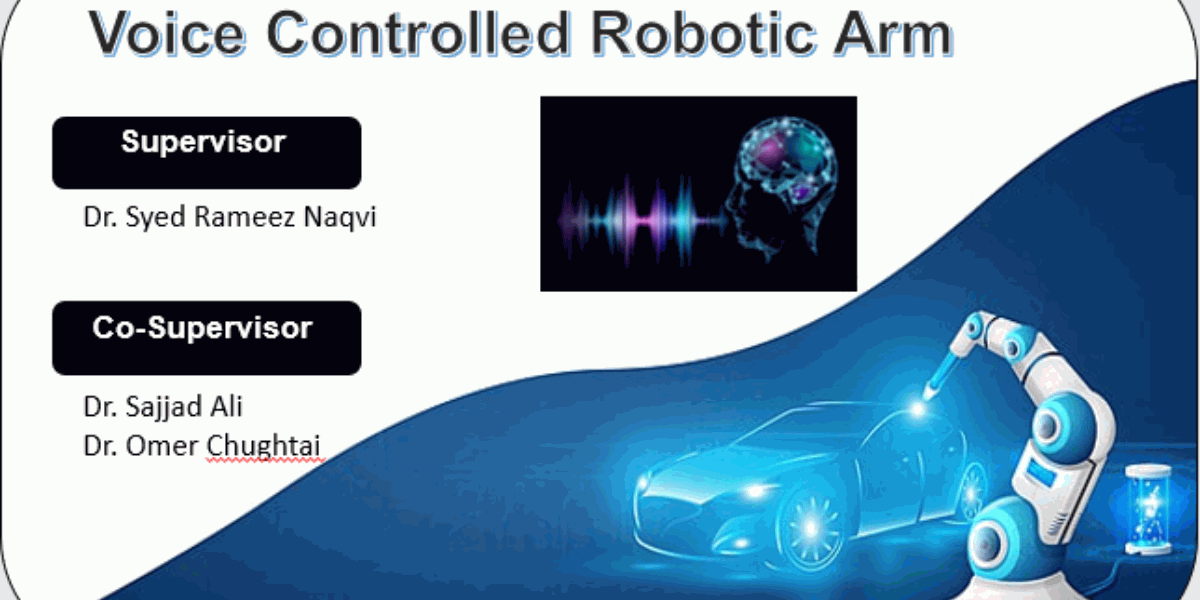
Voice Controlled Robotic Arm
1. A robotic arm is an electrical and mechanical machine that is used to perform tasks that require extreme pr…
Supervisor: Dr. Syed Rameez Naqvi

RENEWABLE ENERGY BASED WATER PURIFICATION SYSTEM
The integration of an ultrasonic sensor into reverse osmosis (RO) systems marks a significant advancement in w…
Supervisor: Bilawal Behram

Automatic Indoor Farming Module
Introducing our Automatic Indoor Farming Module! Powered by an ESP32 microcontroller, it's a smart solution fo…
Supervisor: Engr. Riaz Hussain Junejo