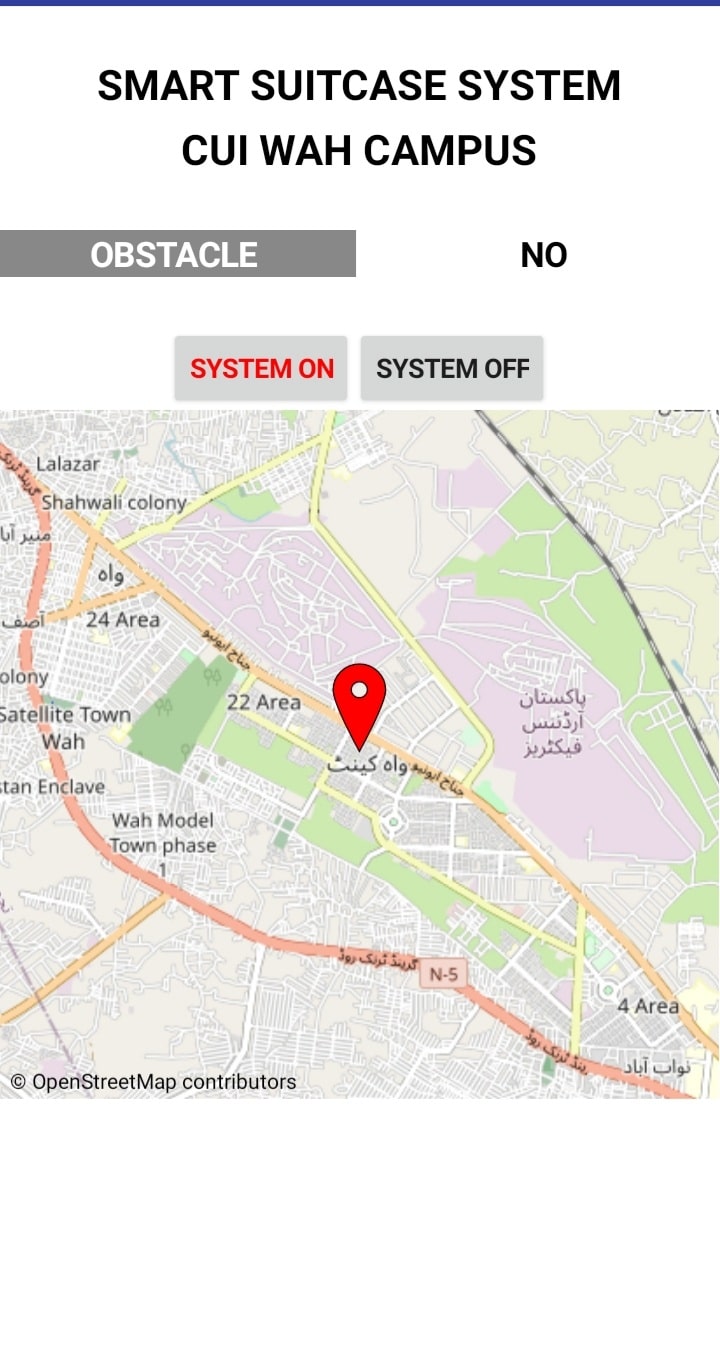
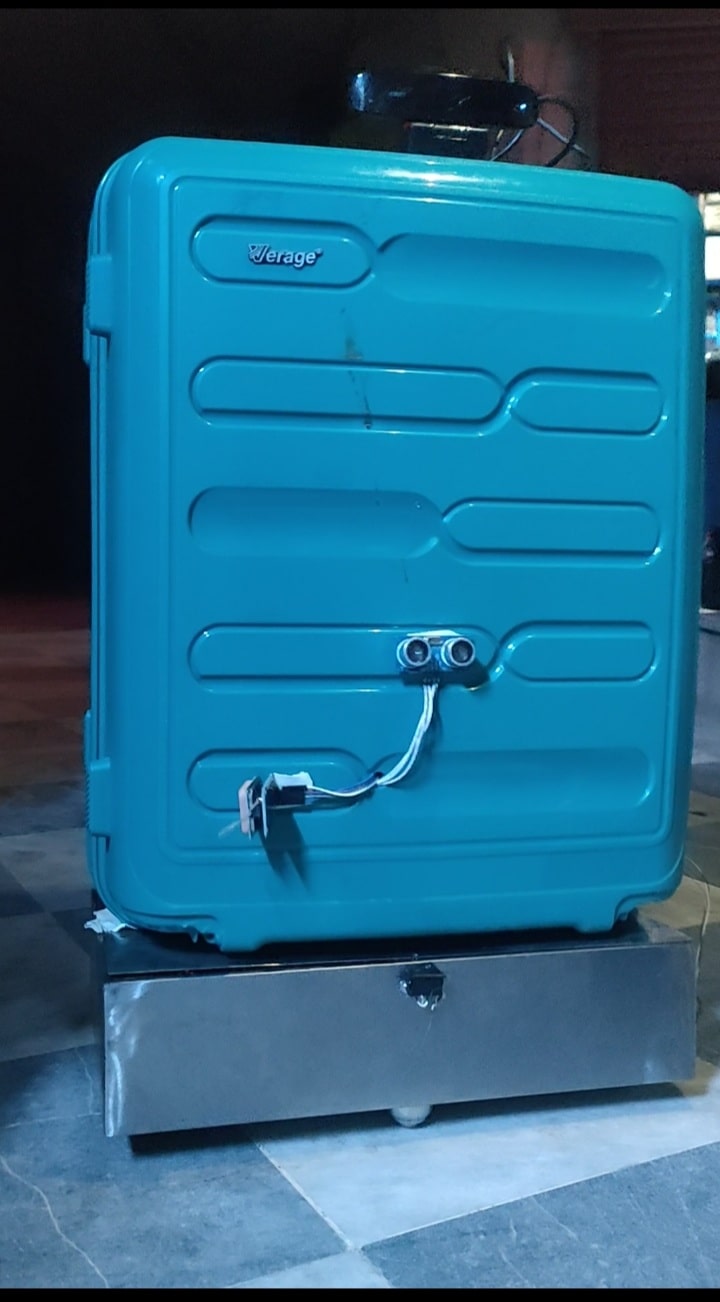
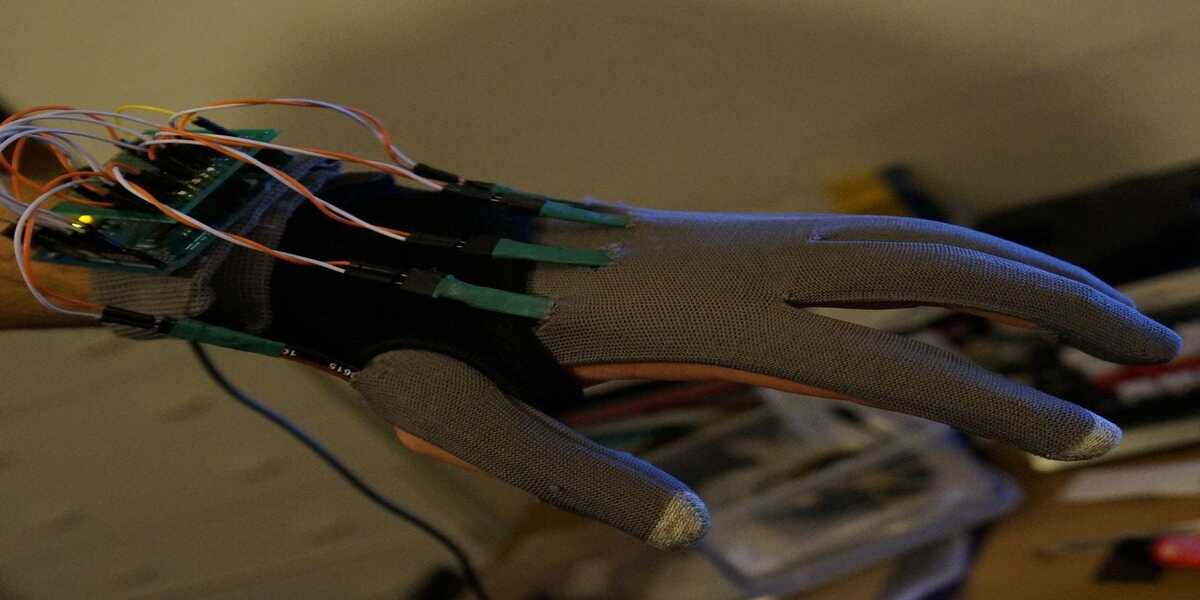
The "Autonomous Smart Suitcase" project aims to revolutionize travel convenience by developing a cutting-edge luggage solution. Equipped with advanced sensors and intelligent algorithms, this suitcase autonomously follows the user, navigating through crowded spaces and avoiding obstacles seamlessly. Its user-friendly interface allows for effortless interaction and customization, promising a hassle-free travel experience. By combining innovation with practicality, the Autonomous Smart Suitcase redefines the standards of efficiency and convenience in modern travel, offering travelers unprecedented freedom and peace of mind on their journeys.
Objectives
• Develop a functional prototype of an Autonomous Smart Suitcase with integrated sensors, actuators, and intelligent algorithms.
• Enable the suitcase to autonomously follow the user in various environments, including airports, train stations, and city streets.
• Implement obstacle detection and avoidance mechanisms to ensure safe and efficient navigation.
• Design user-friendly interfaces and controls for seamless interaction and customization.
• Conduct extensive testing to evaluate the performance, reliability, and usability of the Autonomous Smart Suitcase in simulated and real-world scenarios.
• Optimize the design and functionality based on user feedback and testing results.
• Explore potential applications of autonomous luggage technologies beyond personal travel, such as in logistics and hospitality industries.
• Assess the socio-economic impacts of autonomous luggage technologies, including enhanced accessibility, efficiency, and environmental sustainability.
• Disseminate findings and insights through publications, presentations, and collaborations to advance the field of autonomous mobility.
Socio-Economic Benefit
• Enhanced Accessibility: The Autonomous Smart Suitcase improves travel accessibility for individuals with mobility impairments, elderly travelers, and families with young children by reducing the physical burden of luggage management.
• Time Efficiency: By autonomously following the user and navigating through obstacles, the suitcase streamlines the travel process, saving time and reducing stress for travelers.
• Reduced Congestion: The efficient movement of Autonomous Smart Suitcases in crowded transportation hubs can contribute to reduced congestion and smoother flow of pedestrian traffic.
• Environmental Impact: The adoption of autonomous luggage technologies can lead to more efficient use of transportation resources, potentially reducing carbon emissions associated with traditional travel practices.
• Economic Growth: The enhanced travel experience facilitated by the Autonomous Smart Suitcase may encourage increased tourism and business travel, contributing to economic growth in the travel industry.
• Innovation and Technological Advancement: The development and adoption of autonomous luggage technologies drive innovation and technological advancement, stimulating growth and competitiveness in related industries.
Methodologies
• Research existing autonomous mobility technologies and luggage designs to identify key components and best practices.
• Conduct user surveys and interviews to gather insights into traveler preferences, pain points, and expectations.
• Define specific requirements and design specifications based on user feedback and technological feasibility.
• Develop a modular hardware architecture integrating sensors, actuators, and control systems for autonomous navigation.
• Implement software algorithms for real-time data processing, obstacle detection, and path planning.
• Conduct iterative prototyping and testing to validate hardware and software functionality in simulated and real-world environments.
• Refine the design based on testing feedback and user evaluations, iteratively improving performance and usability.
• Collaborate with industry partners and stakeholders to ensure compatibility and compliance with relevant regulations and standards.
• Document the project methodologies, including design decisions, implementation strategies, and testing procedures, for future reference and replication.
• Continuously evaluate and iterate on the Autonomous Smart Suitcase design to incorporate advancements in technology and address evolving user needs.
Outcome
• The Autonomous Smart Suitcase project has developed a pioneering solution for modern travelers.
• Leveraging advanced sensors and intelligent algorithms, the suitcase autonomously follows the user's movements.
• It adeptly navigates through obstacles, ensuring a seamless and hassle-free travel experience.
• This innovative luggage not only enhances convenience but also improves safety during transit.
• Its user-friendly interface allows for intuitive interaction and customization.
• The project's successful implementation demonstrates the feasibility and effectiveness of autonomous mobility solutions in the travel industry.
• The Autonomous Smart Suitcase has the potential to revolutionize the way people travel, setting new standards for efficiency and convenience.
• Its impact extends beyond individual users to broader societal benefits, including enhanced accessibility and inclusivity in travel.
• Moving forward, further refinement and adoption of autonomous luggage technologies hold promise for shaping the future of travel.