Smart Stick for Partially Blind
Description
This innovative project aims to enhance the mobility and independence of partially blind individuals through a cutting-edge assistive stick. Equipped with advanced technologies like Arduino Nano, ultrasonic sensors, ESP32, GPS module, and MP3 module, this smart stick provides real-time audio feedback and navigation assistance.
Objectives
1. Enhance Mobility: Design and develop an assistive stick that helps partially blind individuals navigate through spaces with greater ease and confidence. 2. Obstacle Detection: Implement ultrasonic sensors to detect obstacles and provide timely audio feedback to avoid collisions. 3. Navigation Assistance: Utilize GPS and server communication to provide location tracking and navigation guidance. 4. Audio Feedback: Integrate an MP3 module to deliver clear and intuitive audio feedback for obstacle detection, navigation, and other important information. 5. User-Friendly Design: Create an accessible and user-friendly interface for partially blind individuals to easily operate the smart stick. 6. Communication: Establish a connection with a server and mobile app to enable real-time communication and location sharing. 7. Improve Independence: Empower partially blind individuals to move around independently, reducing reliance on others for navigation assistance. 8. Safety: Enhance overall safety by detecting obstacles and providing timely warnings to avoid accidents.
Socio-economic benefit
Enhanced mobility and independence for partially blind individuals Improved navigation and obstacle detection Real-time location tracking and communication capabilities User-friendly and accessible design
Methodologies
1. Research and Analysis: Studying existing assistive technologies, understanding the needs of partially blind individuals, and analyzing the requirements for the smart stick. 2. Design and Prototyping: Creating design concepts, developing prototypes, and testing the smart stick's functionality and user interface. 3. Hardware Development: Designing and building the electronic components, including the Arduino Nano, ultrasonic sensors, GPS module, and MP3 module. 4. Software Development: Writing code for the Arduino Nano, developing the mobile app, and integrating the server communication. 5. Testing and Debugging: Verifying the smart stick's functionality, identifying and fixing errors, and ensuring the system's reliability. 6. User-Centered Design: Involving partially blind individuals in the design and testing process to ensure the smart stick meets their needs and is user-friendly. 7. Agile Development: Iteratively developing and refining the smart stick's features and functionality based on user feedback and testing results. 8. Collaboration and Communication: Working with team members, stakeholders, and users to ensure effective communication and collaboration throughout the project. 9. Iterative Refining: Continuously refining and improving the smart stick's performance, user interface, and features based on user feedback and testing results. 10. Documentation and Reporting: Maintaining project documentation, writing reports, and presenting the project's progress and outcomes.
Outcome
1. Functional Smart Stick: A fully developed and tested assistive stick that provides obstacle detection, navigation assistance, and audio feedback for partially blind individuals. 2. Improved Mobility: Enhanced independence and confidence for partially blind individuals to move around in various environments. 3. Increased Safety: Reduced risk of accidents and injuries due to obstacles or navigation errors. 4. Enhanced User Experience: An intuitive and user-friendly interface that provides clear and timely audio feedback. 5. Effective Navigation: Accurate location tracking and navigation guidance using GPS and server communication. 6. Communication and Tracking: Real-time communication and location sharing with caregivers, family, or friends. 7. User Adoption: Partially blind individuals actively using the smart stick in their daily lives, leading to increased independence and confidence. 8. Community Impact: Raising awareness about assistive technologies and promoting inclusivity for individuals with visual impairments. 9. Technical Advancements: Contributions to the development of assistive technologies, sensor integration, and IoT applications. 10. Academic and Research Contributions: Publishing research papers, presenting at conferences, and contributing to the field of assistive technologies and human-computer interaction. 11. Commercialization Potential: A market-ready product with potential for commercialization, leading to wider adoption and impact. 12. User Feedback and Improvement: Continuous refinement and improvement of the smart stick based on user feedback and testing results
Gallery

More from Electrical & Computer Engineering
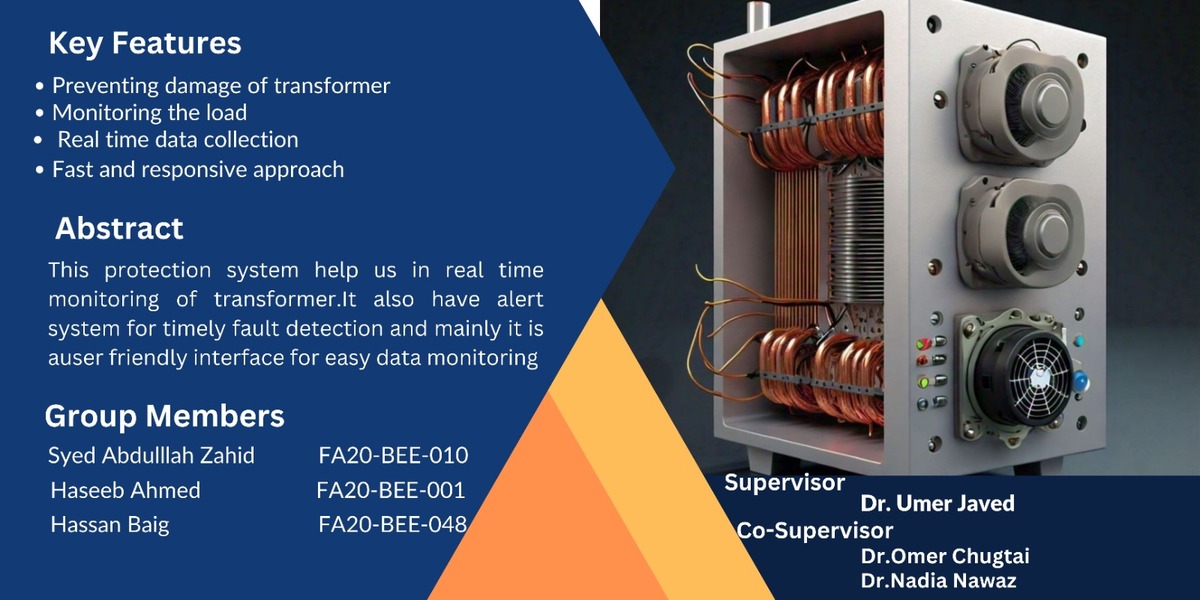
Transformer Protection And Control System
The main purpose of this project is the protection of transformer, and to improve the working of transformer.…
Supervisor: Dr. Umer Javed , Dr. Nadia Nawaz ,Dr. Omer Chugtai
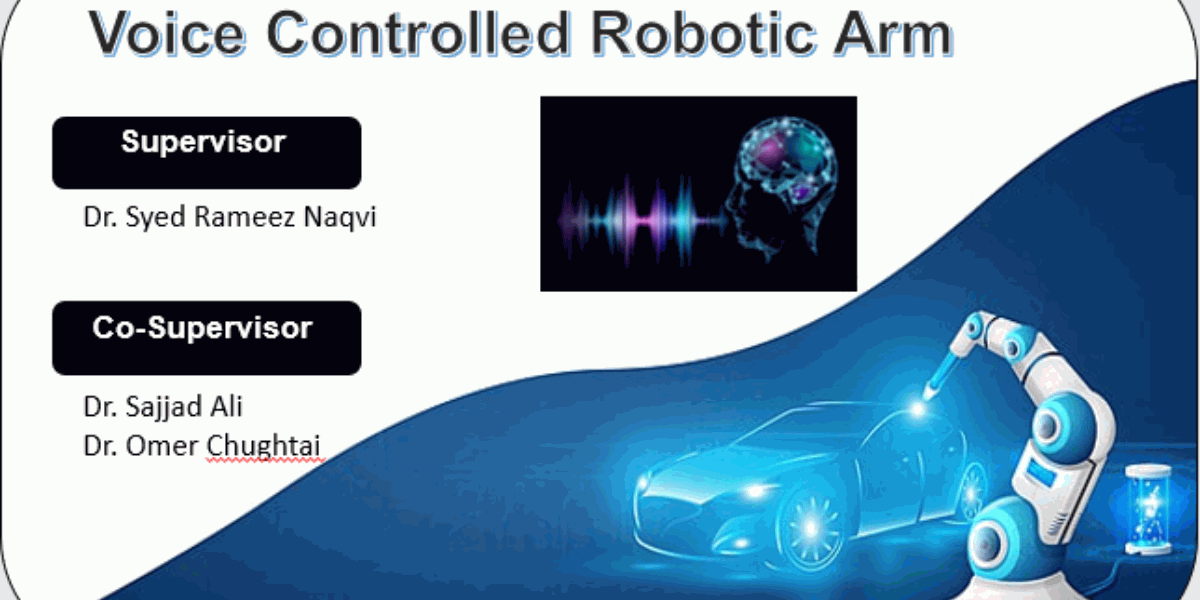
Voice Controlled Robotic Arm
1. A robotic arm is an electrical and mechanical machine that is used to perform tasks that require extreme pr…
Supervisor: Dr. Syed Rameez Naqvi

RENEWABLE ENERGY BASED WATER PURIFICATION SYSTEM
The integration of an ultrasonic sensor into reverse osmosis (RO) systems marks a significant advancement in w…
Supervisor: Bilawal Behram

Automatic Indoor Farming Module
Introducing our Automatic Indoor Farming Module! Powered by an ESP32 microcontroller, it's a smart solution fo…
Supervisor: Engr. Riaz Hussain Junejo