Smart vision Aid: A deep learning based object detection and identification device for the visually impaired
Description
Smart Vision Aid was devised to help visually impede people in spotting different notes of different currencies (currently only Pakistani currency). It utilizes deep learning algorithms to detect and recognize real-time currency notes. Initially implemented on a computer system with an ESP32 attachment, the setup gives audio feedback through MP3 files. To step up portability, the final iteration merges a Max98357 I2S 3W Class D Enhancer for feedback distribution, eliminating the necessity for a computer. The fundamental technology focuses on AI for currency identification, with the ESP32-CAM module capturing images and the Python backend executing the detection algorithm. This device strives to enable visually impaired individuals by allowing them to control their finances independently.
Objectives
Visually impaired people: Our main objective is to create a device that aids individuals who struggle with their vision to distinguish different kinds of currency. This shall ease it for them to handle their finances and become more self-sufficient in their day-to-day life. Utilize Advanced Technologies: We aim to utilize progressive technology, like a Camera, to ensure this device operates. This shall encompass employing a petite camera named an ESP32-CAM. Simplify Accessibility: It's crucial that our device is effortless for anybody to operate, particularly for individuals who may not be accustomed to technologies. We shall make it in such a way that it's straightforward to comprehend. Feedback system: Once our device identifies a certain currency, it shall respond to the user. This could be a noise that informs them of the currency type. We shall ensure this response is apparent and easy to comprehend. Cost efficient: our device’s main goal was to make it cost-efficient for people and portable so all the needy can afford it. For the Future: We shall continue contemplating how we can enhance our contraption further. This could encompass incorporating new traits or making it compatible with other contraptions to further aid sight-challenged individuals.
Socio-economic benefit
Smart Vision Aid brings many advantages to those in society and the environment, contributing to access, including, and inclusivity in many different ways! Accessibility for those visually impaired: Having a trustworthy and easy-to-understand tool for recognizing money, the Smart Vision Aid greatly boosts access for those with visual impairments. It lets them handle their finances, shop, and do economic things by themselves without needing help. This increased self-dependence creates a feeling of pride and power among the visually impaired, pushing them to actively join society! Including and empowering financially: Access to money services is very important for being included and empowered economically. The Smart Vision Aid supports this by helping visually impaired folks recognize various currencies accurately, overcoming a big obstacle to handling their money on their own. This empowerment not only betters their financial health but also adds to their social and economic inclusion. Less burden on help: By giving visually impaired individuals a tool to tell currencies by themselves, the Smart Vision Aid lowers their need for help from others in managing daily money stuff. This not only supports personal independence but also eases the load on caregivers and other support systems, letting them focus on other caring and support tasks. Backing technology innovation for access: Making and using the Smart Vision Aid shows how technology can tackle access challenges and improve the lives of those with disabilities. By using advanced tech like deep learning and IoT, the project brings out fresh solutions that join tech and access, paving the road for future advances in assistive tech and inclusive design. Enhancing social inclusion and power: Beyond tangible benefits, the Smart Vision Aid supports social inclusion and power by pushing equal chances and engagement for visually impaired folks in different parts of society. By allowing them to take part more individually in money stuff, the device helps break barriers and push a more inclusive and fairer society for all. In the end, the Smart Vision Aid does not just boost access and money inclusion for visually impaired folks, By empowering those with disabilities and pushing a more inclusive society, the project shows the principles of socially responsible and innovative actions for a better society and environment
Methodologies
Our project methodology involves various key steps to make a working and trustworthy Smart Vision Aid for visually impaired people. 1. Hardware Installation: We began by putting together the necessary hardware pieces. This consists of the ESP32-CAM module, which acts as the central processing unit, and MP3 files in the system for giving audio feedback. Furthermore, we make sure that the ESP32-CAM module is connected to a power resource and configured to connect to a Wi-Fi network. 2. Software Creation: The software creation process includes two main components: firmware for the ESP32-CAM module and Python code for currency detection and recognition. ESP32-CAM Firmware: We create firmware for the ESP32-CAM module using the Arduino IDE. This firmware is responsible for taking pictures using the built-in camera, setting up a Wi-Fi connection using preset credentials, and connecting with the Python code for currency recognition through an API. 3. Python Code for Currency Recognition: The Python code hosts a deep learning model trained to recognize and identify currencies. This model is trained on a dataset obtained from the Roboflow workspace. After getting image data from the ESP32-CAM, the Python code processes the images, recognizes the currency, and sends the outcome back to the ESP32-CAM for feedback production. 4. Currency Detection Algorithm: The core of our project lies in the currency detection algorithm, which is based on deep learning methods, specifically convolutional neural networks (CNNs). The model is trained on a diverse dataset of currency images to guarantee strong performance across various currency types, values, and conditions. We fine-tune the model to improve accuracy and efficiency. 5. Future developments: Testing and Refinement: Before final deployment, we extensively test the Smart Vision Aid in various real-world settings to guarantee its reliability and accuracy. We collect feedback from visually impaired individuals and accessibility specialists to pinpoint any user-friendliness issues or areas for enhancement. Based on this feedback, we refine the system incrementally to improve its performance and user experience. What more we would like to add Looking forward, we foresee continuous development and enhancement of the Smart Vision Aid. This is only a prototype so a lot can be improved and be accurate. Upcoming versions may include additional features such wider range of data sets, not only limited to currency, multi-language support, and integration with other assistive technologies. We are dedicated to making the device more accessible and valuable to visually impaired individuals around the world.
Outcome
In a groundbreaking fusion of cutting-edge technologies, the Smart Vision Aid project has unveiled a revolutionary solution tailored to the needs of visually impaired individuals. Combining the power of ESP32 CAM, FTDI adapter, Arduino IDE, and PyCharm, this project has not only pushed the boundaries of innovation but has also paved the way for a new era of assistive devices. At the heart of this innovation lies the ESP32 CAM's prowess in image processing and communication, seamlessly integrated with the FTDI adapter for unparalleled connectivity. Leveraging these capabilities, the project has developed a deep learning-based currency detection system, offering unparalleled accuracy and reliability. The Arduino IDE serves as the cornerstone of development, providing an efficient platform for programming and device control. Complementing this, PyCharm extends support for advanced algorithm development and optimization, ensuring the Smart Vision Aid operates at the pinnacle of efficiency and performance. However, the true hallmark of this project lies in its unwavering commitment to user experience. Through a meticulously crafted feedback system encompassing tactile buttons, voice prompts, and auditory cues, users can interact with the Smart Vision Aid intuitively and effortlessly. This not only enhances usability but also fosters inclusivity by catering to diverse user preferences and requirements. Moreover, the device's seamless integration with existing assistive technologies further amplifies its utility, making it an indispensable tool for managing finances with confidence and ease. But perhaps most commendable is the project team's dedication to collaboration and community engagement. By actively involving visually impaired individuals in the design process and soliciting feedback, the team has ensured that the Smart Vision Aid remains finely attuned to the real-world needs of its users. This collaborative ethos not only instills a sense of ownership and empowerment among users but also ensures the device's continued relevance and efficacy. In essence, the Smart Vision Aid stands not just as a technological marvel, but as a testament to the transformative power of innovation when guided by empathy and inclusivity. With its ability to promote autonomy, safety, and inclusion, it heralds a brighter, more accessible future for all.
Gallery


More from Electrical & Computer Engineering
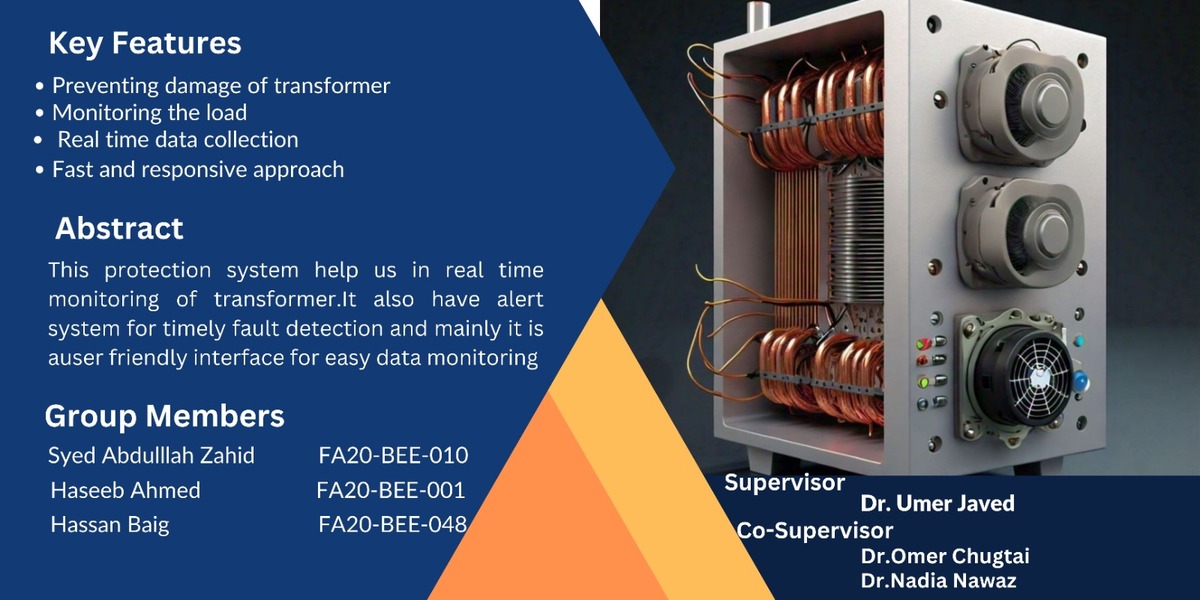
Transformer Protection And Control System
The main purpose of this project is the protection of transformer, and to improve the working of transformer.…
Supervisor: Dr. Umer Javed , Dr. Nadia Nawaz ,Dr. Omer Chugtai
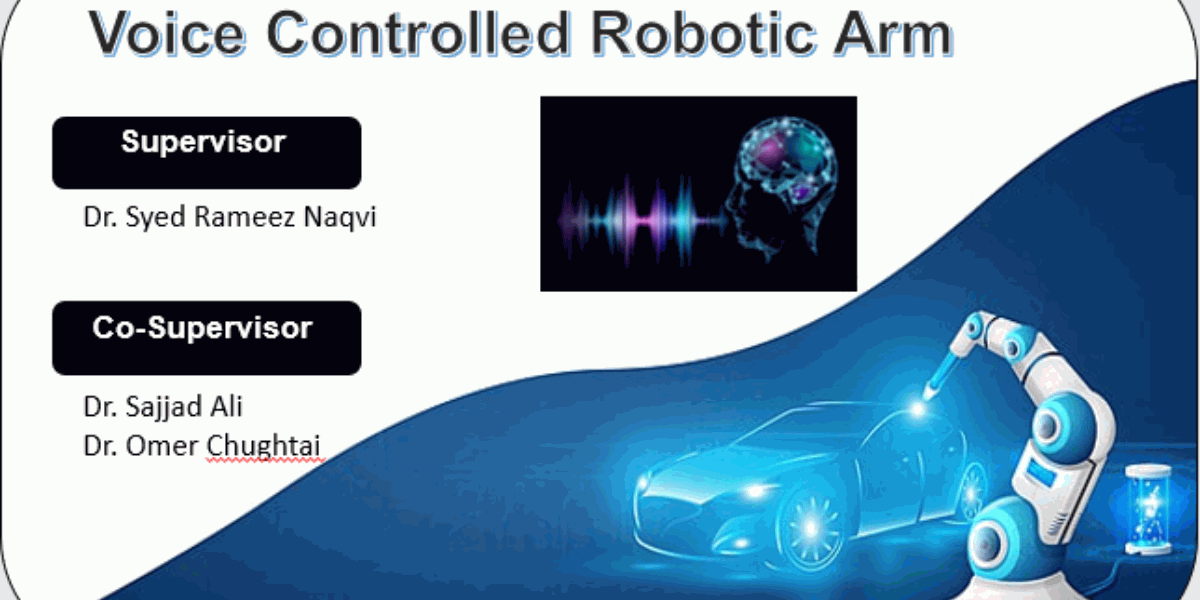
Voice Controlled Robotic Arm
1. A robotic arm is an electrical and mechanical machine that is used to perform tasks that require extreme pr…
Supervisor: Dr. Syed Rameez Naqvi

RENEWABLE ENERGY BASED WATER PURIFICATION SYSTEM
The integration of an ultrasonic sensor into reverse osmosis (RO) systems marks a significant advancement in w…
Supervisor: Bilawal Behram

Automatic Indoor Farming Module
Introducing our Automatic Indoor Farming Module! Powered by an ESP32 microcontroller, it's a smart solution fo…
Supervisor: Engr. Riaz Hussain Junejo