Development Of Geopolymer Concrete By Using Recycle Aggreagte
Description
Geopolymer concrete blends recycled aggregates with an alkali-activated binder, reducing environmental impact. It utilizes industrial by-products like fly ash or slag, cutting CO2 emissions compared to traditional concrete. Geopolymerization forms a durable matrix, enhancing structural strength and longevity. Its sustainable approach addresses resource scarcity and waste management, offering a viable alternative for eco-conscious construction practices.
Objectives
1- Develop a sustainable alternative to traditional Portland cement concrete by integrating recycled aggregates into geopolymer concrete. 2- Optimize mix designs and alkaline activation processes to achieve desired mechanical properties and durability. 3- Evaluate the environmental impact, cost-effectiveness, and performance of geopolymer concrete with recycled aggregates for real-world applications
Socio-economic benefit
1.Environmental Preservation: Geopolymer concrete reduces reliance on natural resources by utilizing recycled materials, lessening the need for quarrying and minimizing habitat destruction. 2. Waste Reduction: Incorporating recycled aggregates diverts construction waste from landfills, addressing environmental concerns and promoting a circular economy. 3. Cost Savings: With the availability of recycled materials and potential governmental incentives for sustainable construction, geopolymer concrete offers cost-effective alternatives compared to traditional concrete. 4. Job Creation: The development and implementation of geopolymer concrete technology can stimulate the growth of new industries focused on recycling and sustainable construction practices, leading to job opportunities in these sectors. 5. Community Health: By decreasing air and water pollution associated with traditional concrete production, geopolymer concrete contributes to better public health outcomes, reducing respiratory issues and contamination risks in surrounding communities.
Methodologies
1.Material Selection: Choose the right materials like aluminosilicates and recycled aggregates based on their properties. 2. Mix Design: Experiment to find the best mix of materials for making the concrete strong and durable. 3. Activation: Mix the materials with an alkaline solution to start the chemical reaction that makes the concrete harden. 4. Testing: Test the concrete to make sure it's strong enough and won't crack easily. 5. Long-Term Testing: Check how the concrete holds up over time in different conditions to make sure it lasts well into the future. 6. Environmental and Economic Check: Look at how the concrete affects the environment and whether it's cost-effective compared to traditional concrete.
Outcome
1. Enhanced Strength Properties : Demonstrating superior mechanical strength and durability of geopolymer concrete compared to traditional concrete through rigorous testing and analysis. 2. Optimized Mix Designs : Developing optimized mix designs that maximize strength while minimizing environmental impact by utilizing the right combination of recycled aggregates and alkali-activated binders. 3. Long-Term Performance Assessment : Conducting field studies or accelerated aging tests to assess the long-term performance and durability of geopolymer concrete structures, ensuring they maintain their strength over time. 4. Reduced Carbon Footprint : Quantifying the reduction in greenhouse gas emissions and energy consumption associated with geopolymer concrete production compared to conventional concrete, showcasing its environmental benefits. 5. Life Cycle Analysis : Performing life cycle assessments to evaluate the overall environmental impact of geopolymer concrete, including factors like raw material extraction, production, transportation, use phase, and end-of-life disposal, to provide a comprehensive understanding of its environmental benefits.
Gallery


More from Civil Engineering

Flood Vulnerability Assessment Using GIS Integrated with Multi-Criteria Decision: a Case S…
Flooding, one of the most common and devastating natural disasters in the world, has claimed many lives and de…
Supervisor: Dr. Summera Fahmi Khan
Experimental investigation of concrete incorporating GNMPs( Graphite nano/micro platelets)…
Research and testings are conducted to explore the impact of graphite nano micro platelets (GNMPs) and recycle…
Supervisor: Dr. Rana Faisal Tufail
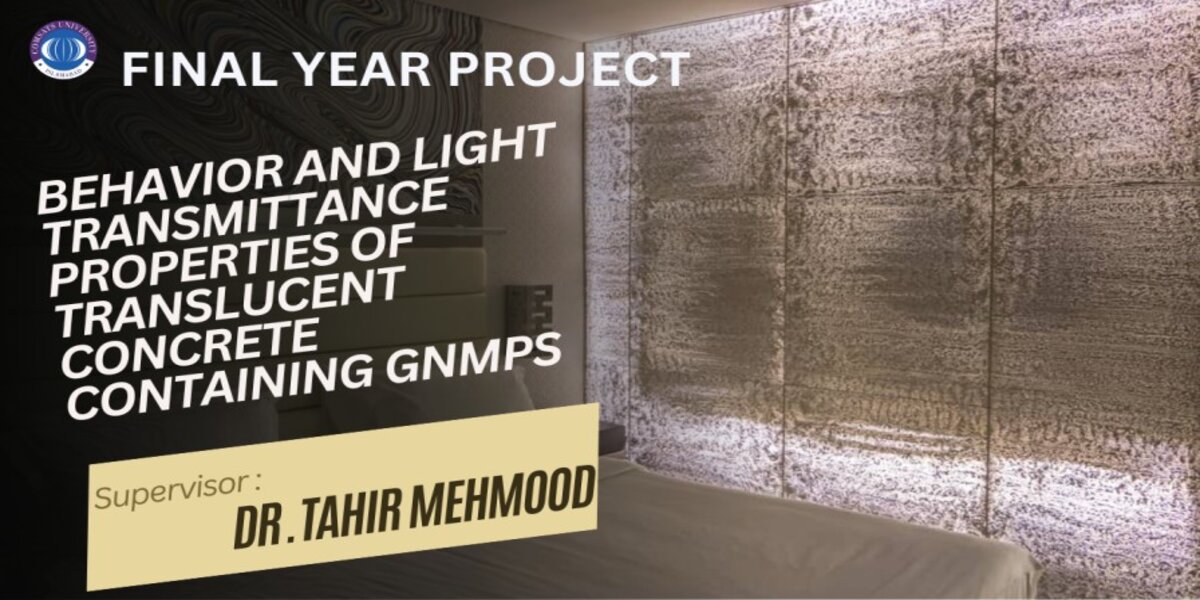
Behavior and Light Transmittance properties of Translucent Concrete containing GNMPs
The project explored improving translucent concrete by incorporating GNMPs to increase its compressive strengt…
Supervisor: Dr. Tahir Mehmood
Mechanical Performance Evaluation of Fly Ash-Based Green Reactive Powder Concrete
Reactive Powder Concrete (RPC) is a type of ultra-high-performance concrete characterized by its high compress…
Supervisor: Engr. Raja Tasaddiq