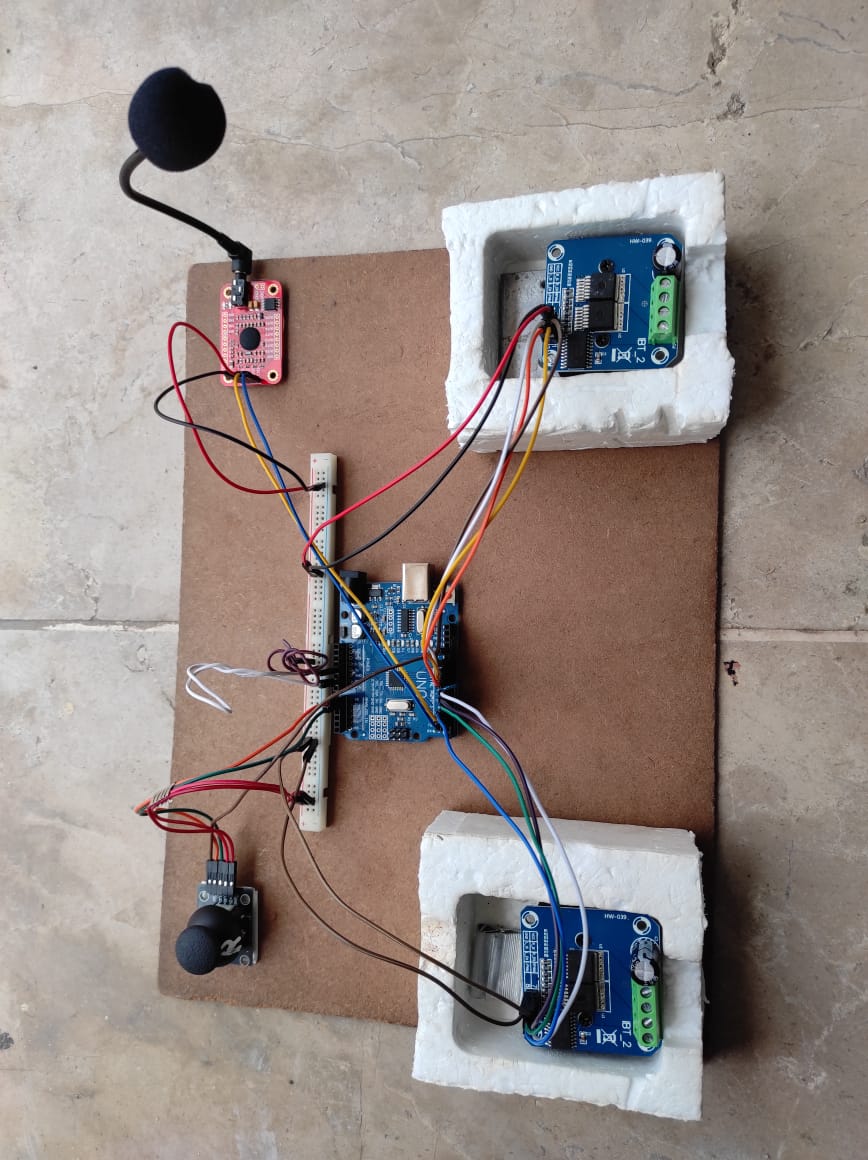
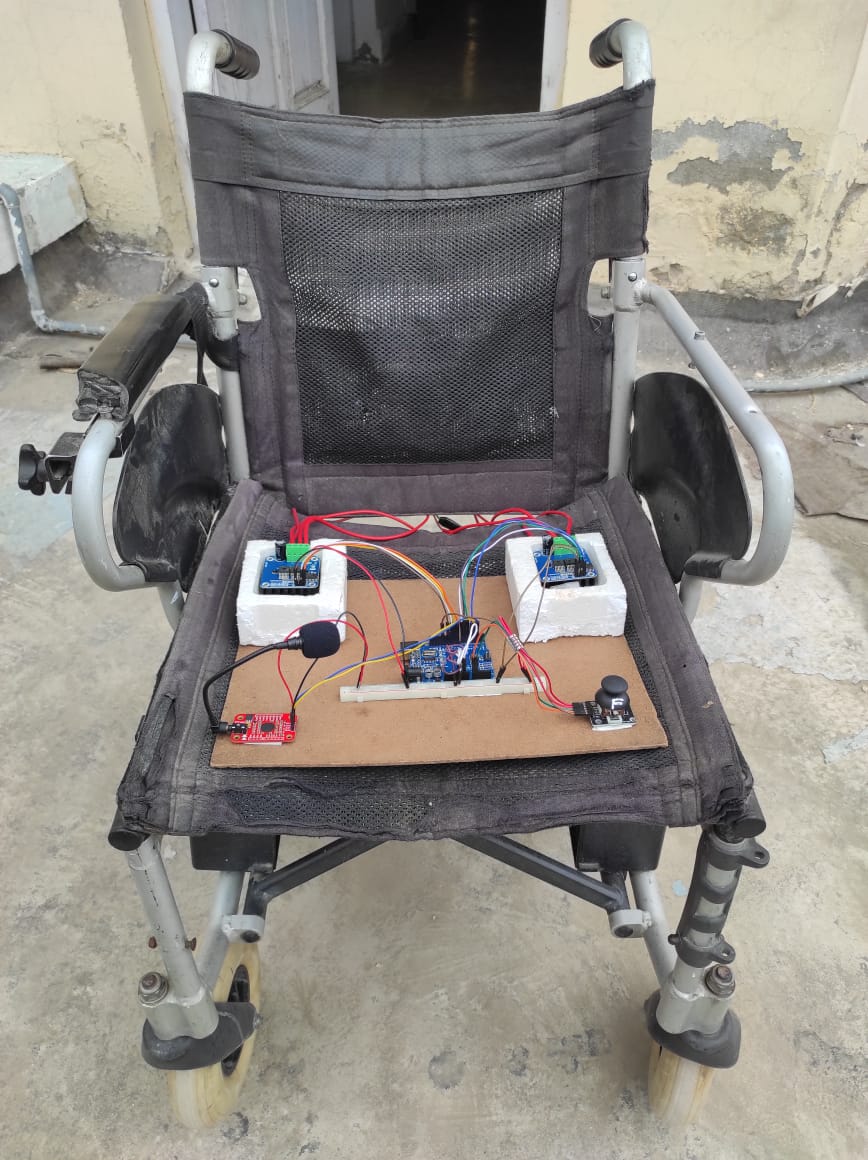
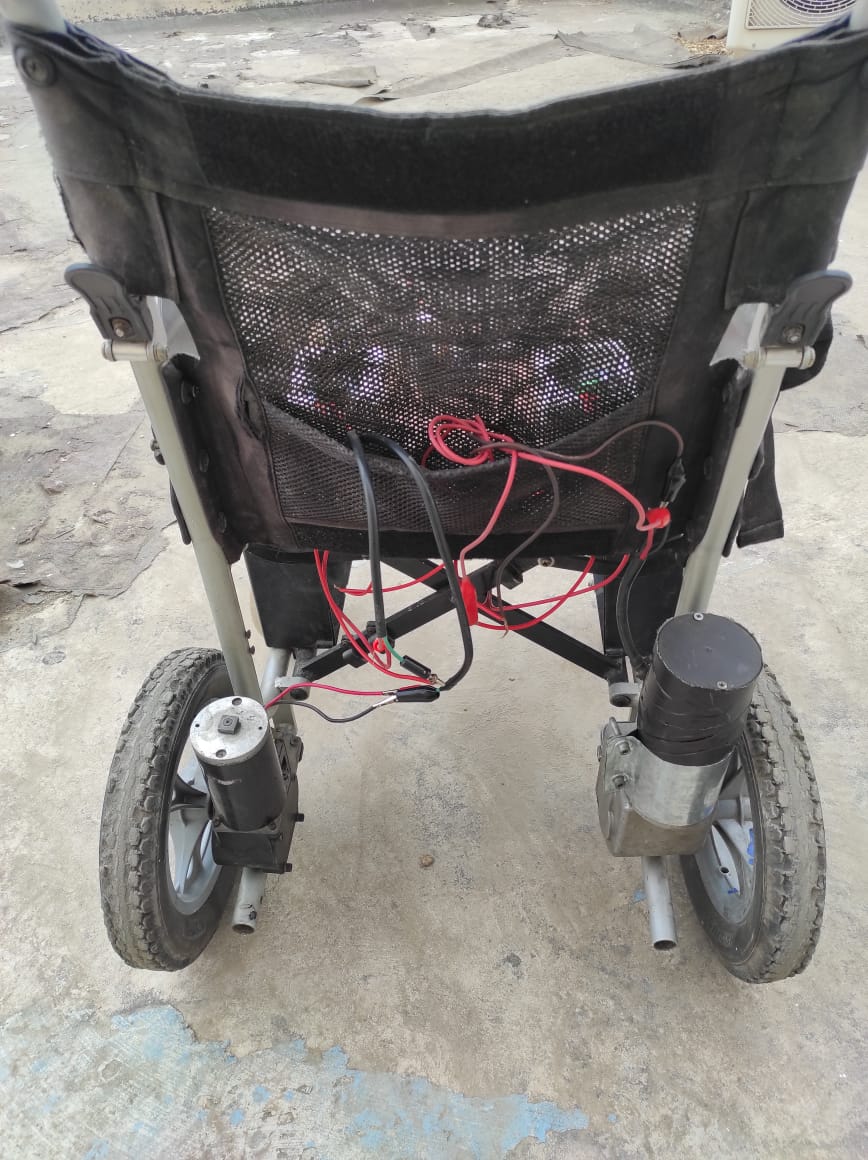
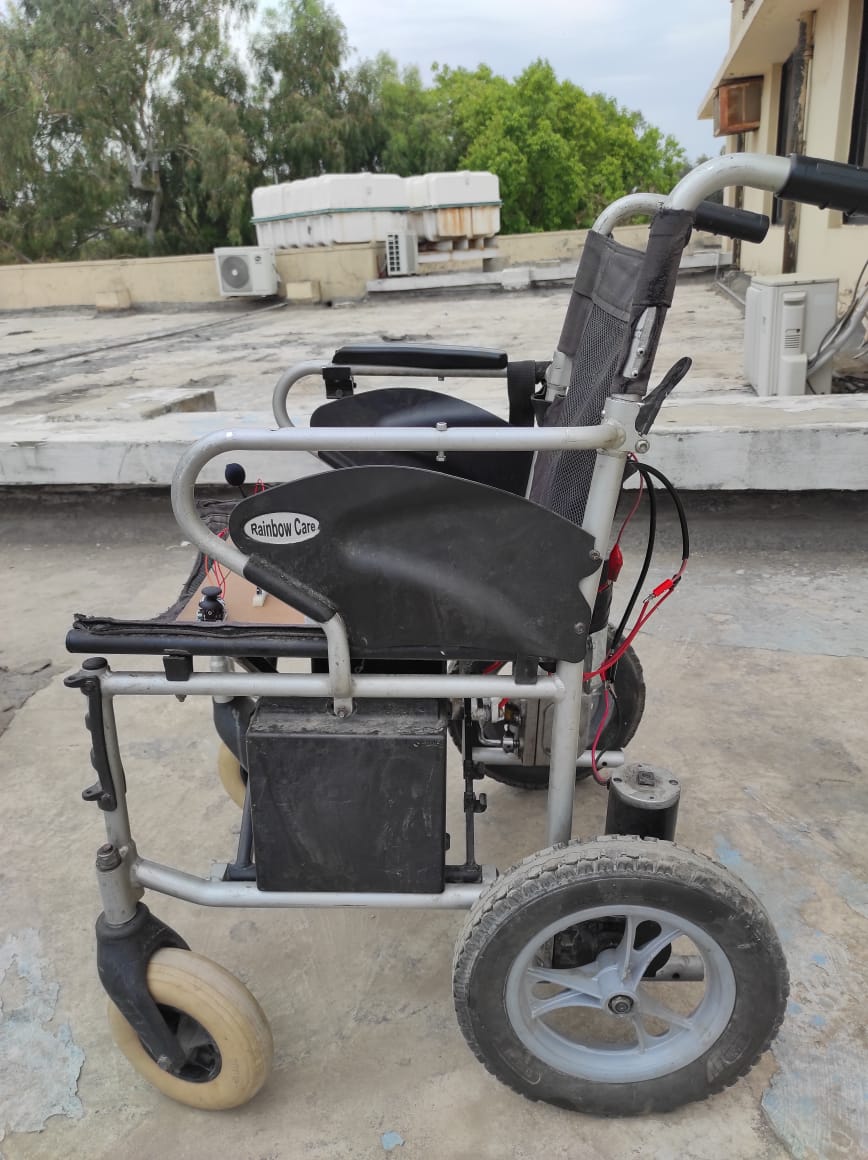
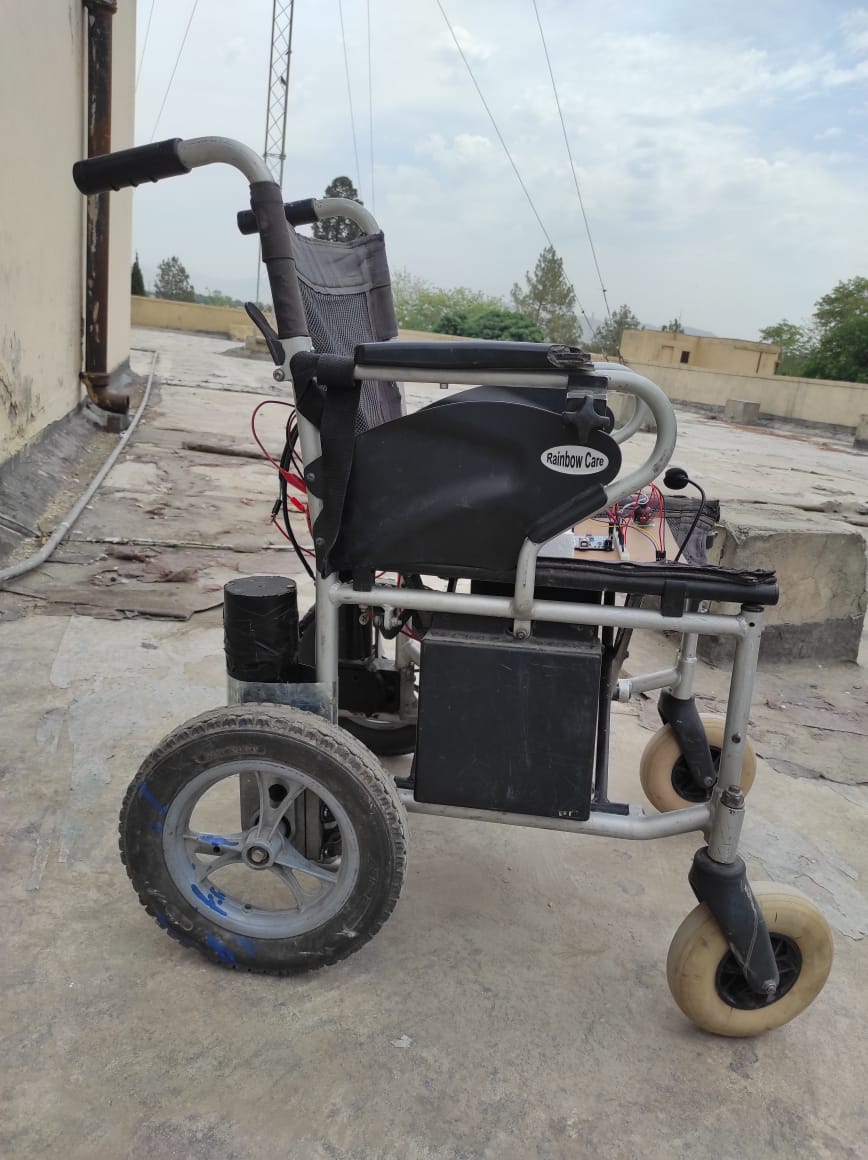
The aim of this project is to cost effective solution for electric wheelchair. The proposed design can convert conventional manual wheelchairs in motor powered electric wheelchair through plug n play basis. The complete project consist of a conventional manual wheelchair, electric motors, controller for electric motors and a power supply. Electric motors provide the movement to the electric wheelchair. The direction of movement is managed via a joystick and voice commands. The Arduino based controller manages the complete control system, which translates signals from the joystick and voice detection module into commands for the motors. To move the wheelchair with a joystick, the user just has to push the joystick in the direction desired. To move the wheelchair through voice instructions, only a single voice command is required that can also be trained for specific users if the voice of user is not very clear. The single voice command can be ”forward,” ”backward,” ”left,” and ”right”.
Objectives
The following are the project’s objectives:
• Design a working prototype of an electric wheelchair that can be controlled with both a joystick and voice commands.
• Design a control system for the joystick and voice recognition module that allow easy and precise control of the wheelchair’s movements.
• To ensure that it is more affordable than other electric wheelchairs in the market.
• Provide complete documentation of the design and construction processes.
Socio-Economic Benefit
The electric wheelchair project can provide several socio-economic benefits, which include:
Enhanced Mobility: The use of joystick and voice control technology in electric wheelchairs can greatly enhance the mobility of individuals with physical disabilities.
Improved Accessibility: Wheelchair accessibility is a critical aspect of creating inclusive environments. By incorporating joystick and voice control technology into electric wheelchairs, accessibility is improved for individuals with disabilities. They can navigate through various terrains, maneuver in tight spaces, and overcome obstacles more easily.
Employment Opportunities: The project can potentially create job opportunities in the design, manufacturing, and maintenance of joystick and voice-controlled electric wheelchairs.
Increased Productivity: When individuals with disabilities have access to efficient and user-friendly electric wheelchairs, their productivity levels can increase. By using joystick and voice control technology, they can perform tasks more effectively and efficiently, both in their personal lives and in the workplace.
Social Inclusion and Participation: The project can contribute to social inclusion by enabling individuals with disabilities to actively participate in various social activities. With improved mobility, they can engage in recreational activities, attend events, visit friends and family, and participate in community gatherings.
Methodologies
Project Methodologies include:
Requirement Analysis: The conception of the system was the initial phase of the requirement analysis. This required determining the specifications for the electric wheelchair, including the user’s accessibility and mobility requirements. The design also included the selection of appropriate hardware components, such as motors, batteries, modules and wheels, as well as the development of software to manage the system.
Software Development:
The wheelchair movement was controlled by the software system that was created. The joystick control and the voice control were the two components of this software. While the voice control software allowed the user to manage the wheelchair using voice instructions, the joystick control allowed the user to operate the electric wheelchair using a joystick.
Hardware Implementation:
Following the completion of the system design, the following stage was to implement the hardware components. The various parts had to be put together, including the motors, batteries, modules and wheels, and they had to be connected to the micro-controller that would run the system.
Testing and Evaluation:
The system needed to be tested and assessed after that. This involves testing the system’s performance in various scenarios, such as various terrains, and assessing the accuracy and 7 dependability of the system. To assess the usability and efficiency of the joystick and voice control, user testing was also carried out.
Outcome
The outcome of the project "Joystick and Voice Controlled Electric Wheelchair" is the development of a wheelchair system that can be controlled using both a joystick and voice commands. This system allows individuals with mobility impairments to navigate their wheelchair using a traditional joystick interface or by giving voice commands. The integration of voice control provides an alternative method for controlling the wheelchair, enhancing accessibility and independence for users. Overall, the project aims to improve the quality of life and mobility options for individuals with disabilities.