Objectives
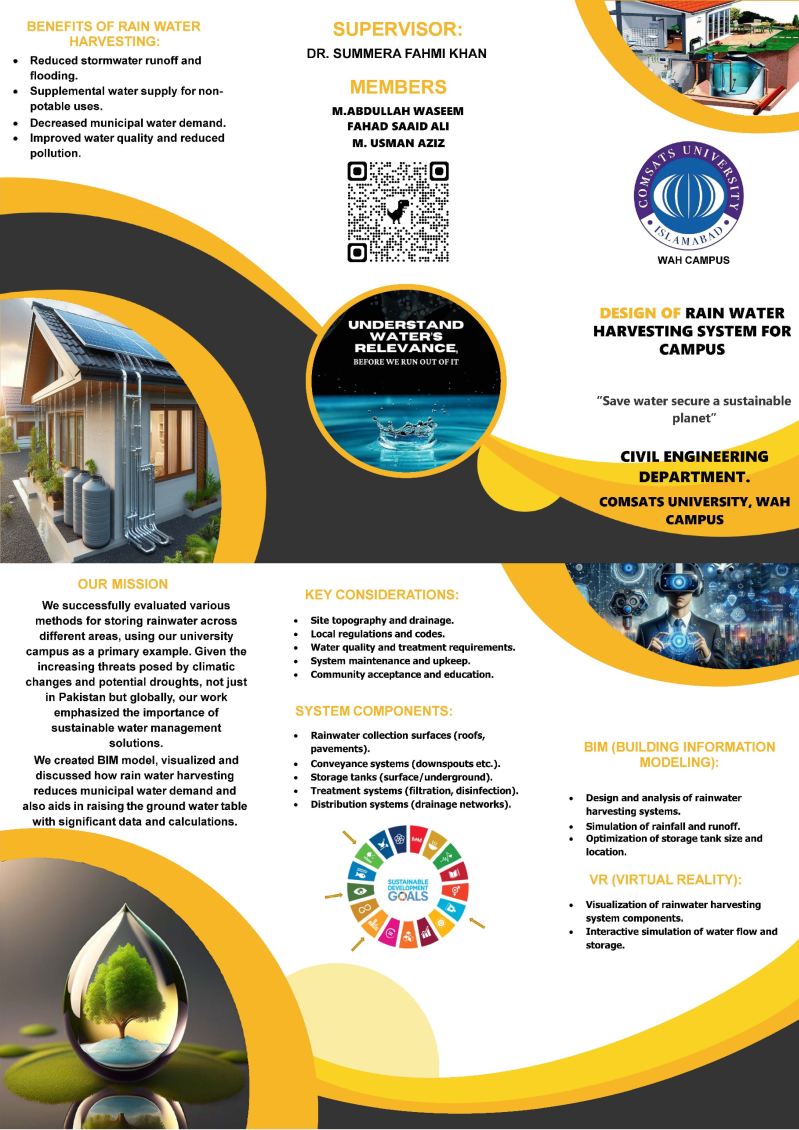
This project aims to develop an innovative Rainwater Harvesting (RWH) system for COMSATS University Islamabad, Wah Campus by integrating Building Information Modeling (BIM), Geographic Information Systems (GIS), and Augmented & Virtual Reality (AR/VR) technologies.
The goal is to create a sustainable water management solution that improves planning, visualization, and efficiency, while reducing municipal water dependency. By optimizing rainwater collection, storage, and filtration, the system mitigates urban flooding and groundwater depletion, ensuring better water quality and reduced pollution.
Additionally, the project promotes eco-friendly infrastructure, enhancing stakeholder engagement through immersive simulations. Ultimately, this initiative supports sustainable cities, climate action, and innovative infrastructure solutions, aligning with global Sustainable Development Goals (SDGs).
Socio-Economic Benefit
This project isn't just about water conservation—it’s about economic efficiency, sustainability, and improving lives while leveraging cutting-edge technologies for future-ready infrastructure.
Here are the socio-economic benefits of the rainwater harvesting project:
• Reduced Water Costs for Institutions & Communities
• Lowers dependency on municipal water supplies, cutting long-term utility expenses.
• Offers an affordable water solution for campuses, reducing operational costs.
• Mitigation of Water Scarcity & Groundwater Depletion
• Provides an alternative water source, reducing reliance on groundwater extraction.
• Helps combat contamination issues by promoting natural filtration methods.
• Improved Public Health & Sanitation
• Ensures cleaner water for non-potable uses like sanitation, irrigation, and cleaning.
• Sustainable Urban Development & Flood Management
• Controls stormwater runoff, preventing urban flooding and infrastructure damage.
• Enhances city planning with eco-friendly solutions supporting resilient communities.
• Employment & Technical Skill Development
• Increases demand for professionals skilled in GIS, BIM, AR/VR, and water management systems.
• Encourages hands-on training in emerging technologies and sustainability-driven engineering.
• Environmental Conservation & Climate Resilience
• Supports SDG goals, promoting eco-friendly infrastructure and climate-adaptive solutions.
• Reduces pressure on freshwater ecosystems, conserving aquatic biodiversity.
• Stakeholder Awareness & Community Engagement
• Uses AR/VR simulations to educate students, policymakers, and local communities on water sustainability.
• Encourages responsible water consumption through immersive, data-driven decision-making tools.
Methodologies
The methodology for this project follows a structured approach to designing an efficient Rainwater Harvesting (RWH) System for COMSATS University Islamabad, Wah Campus, incorporating GIS, BIM, and AR/VR technologies to optimize planning, visualization, and stakeholder engagement.
1. Feasibility Study:
• Conducted a literature review to analyze existing RWH systems and sustainable water management techniques.
• Performed feasibility analysis to assess the most suitable design system based on campus requirements.
• Developed a feasibility-based proposal focusing on system awareness, implementation strategies, and environmental impact.
2. Data Collection & Analysis:
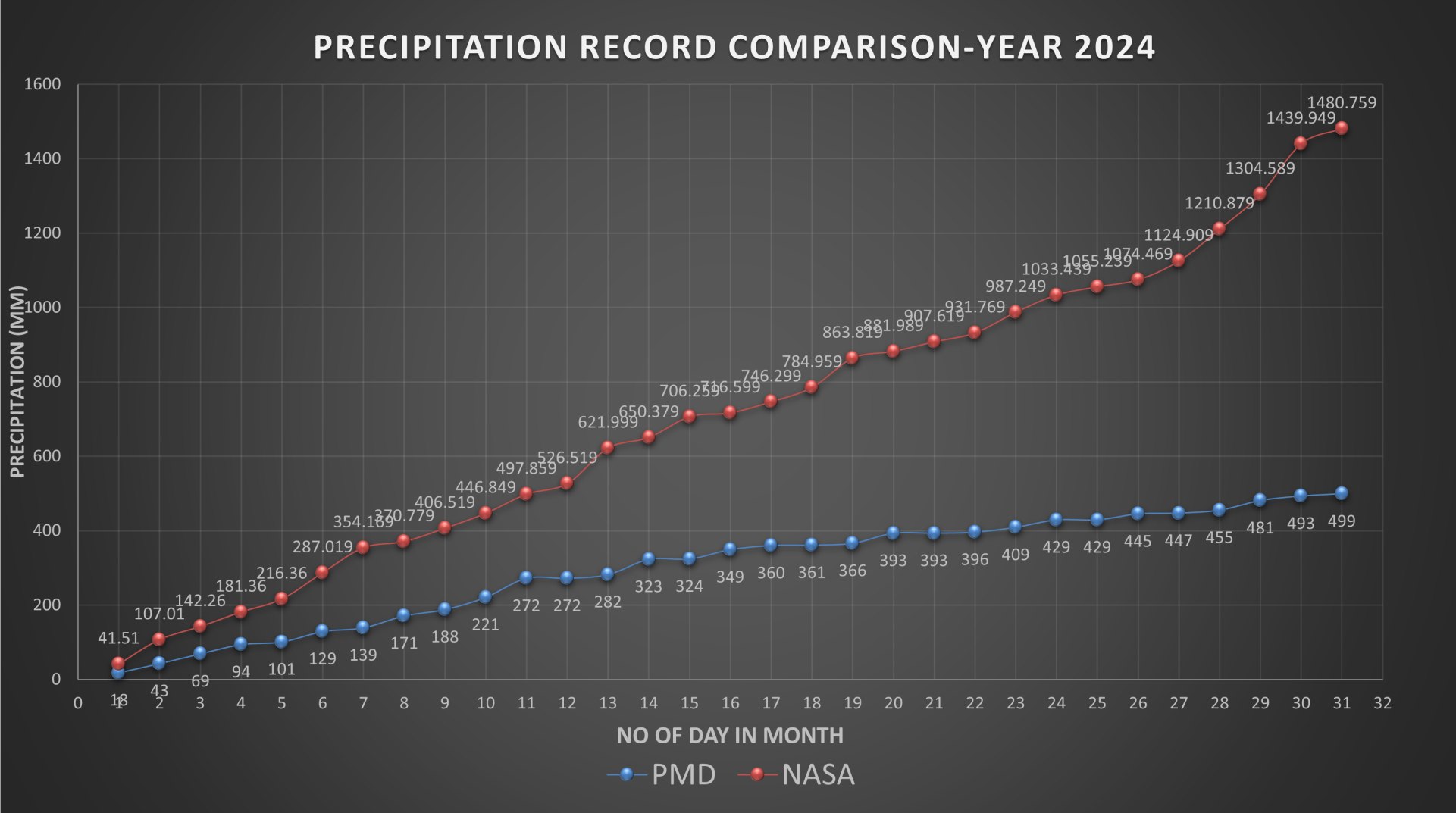
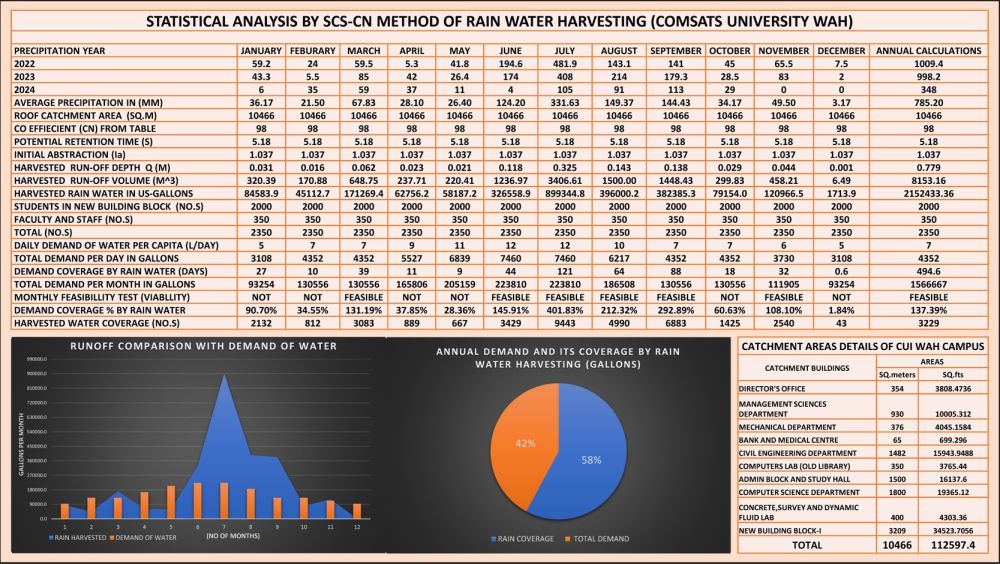
• Acquired precipitation data from NASA & Pakistan Meteorological Department (PMD) for trend analysis.
• Applied statistical analysis methods, including SCS Curve Number & Rational Method, to estimate runoff and water collection potential.
3. Topographic Assessment:
• Evaluated road slope profiles to determine optimal rainwater flow paths and collection zones.
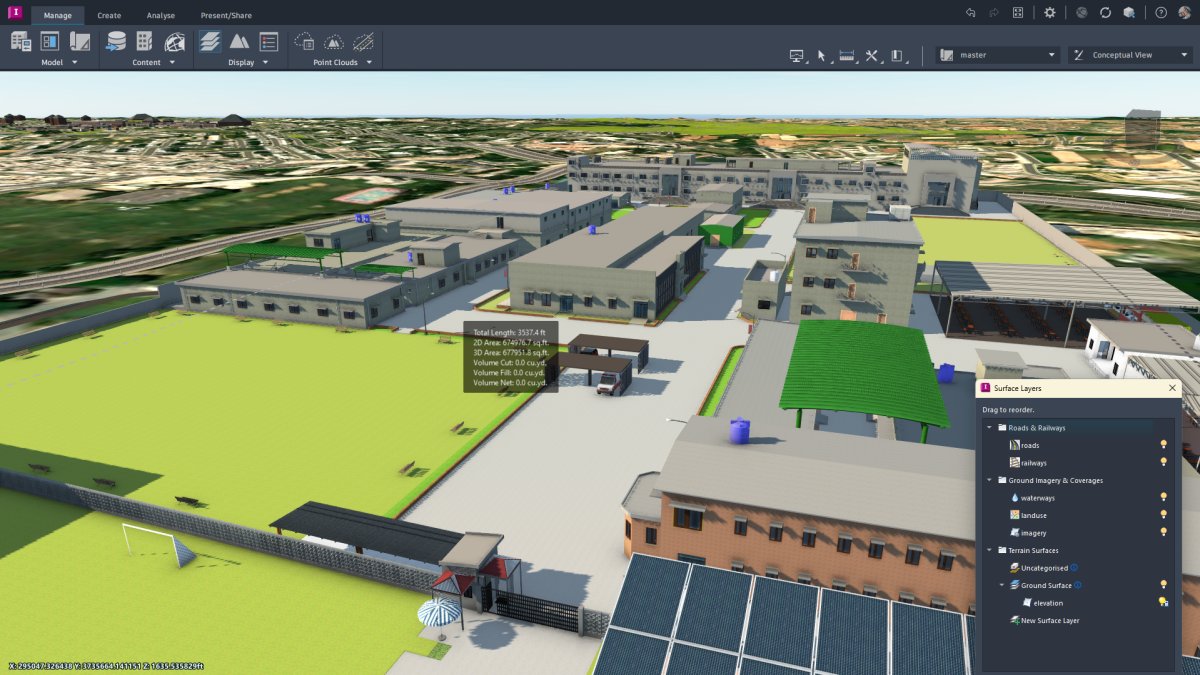
• Conducted slope and Digital Elevation Model (DEM) analysis using GIS tools for catchment area mapping.
4. Detailed Design Using BIM & AR/VR:
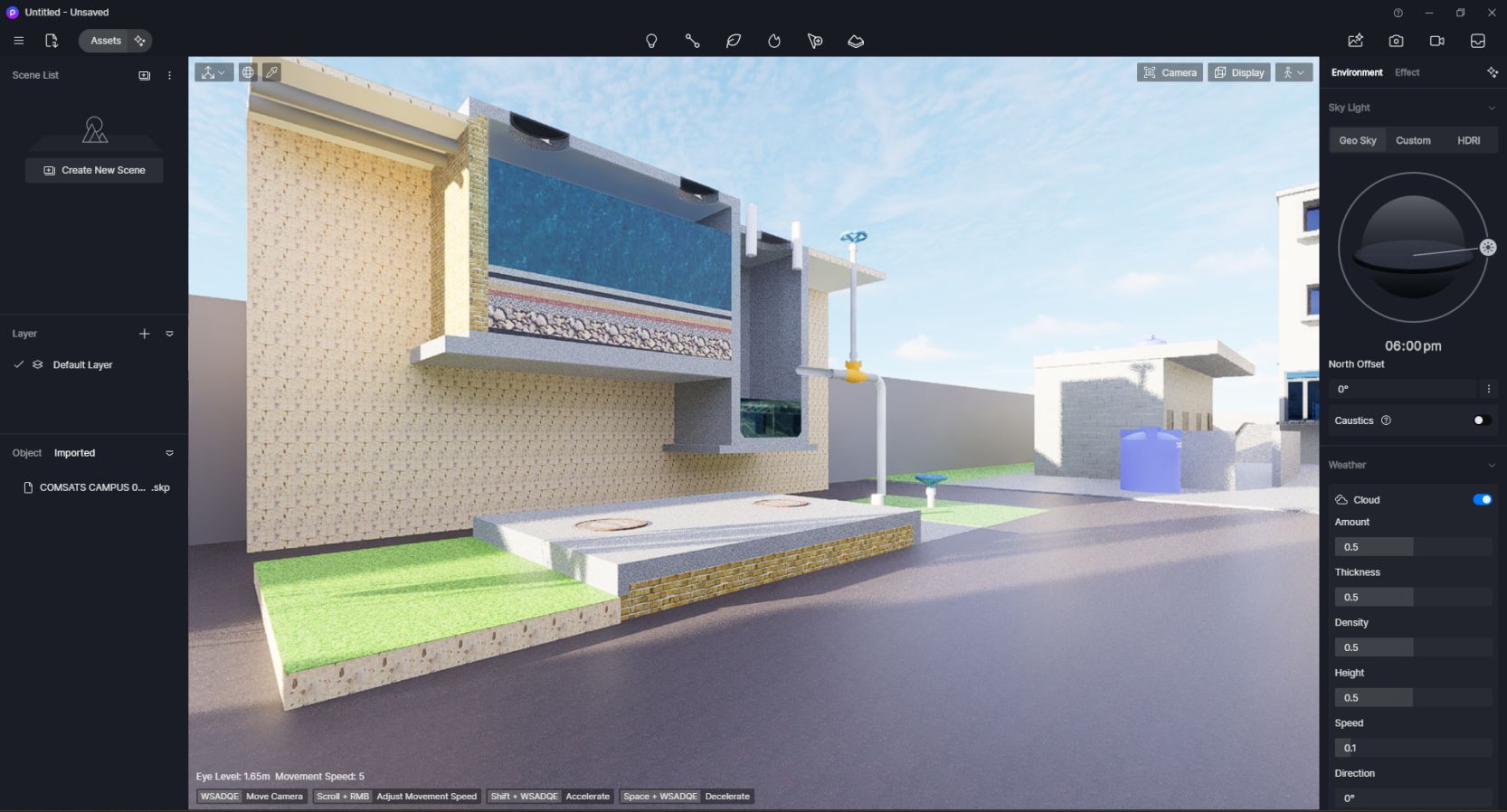
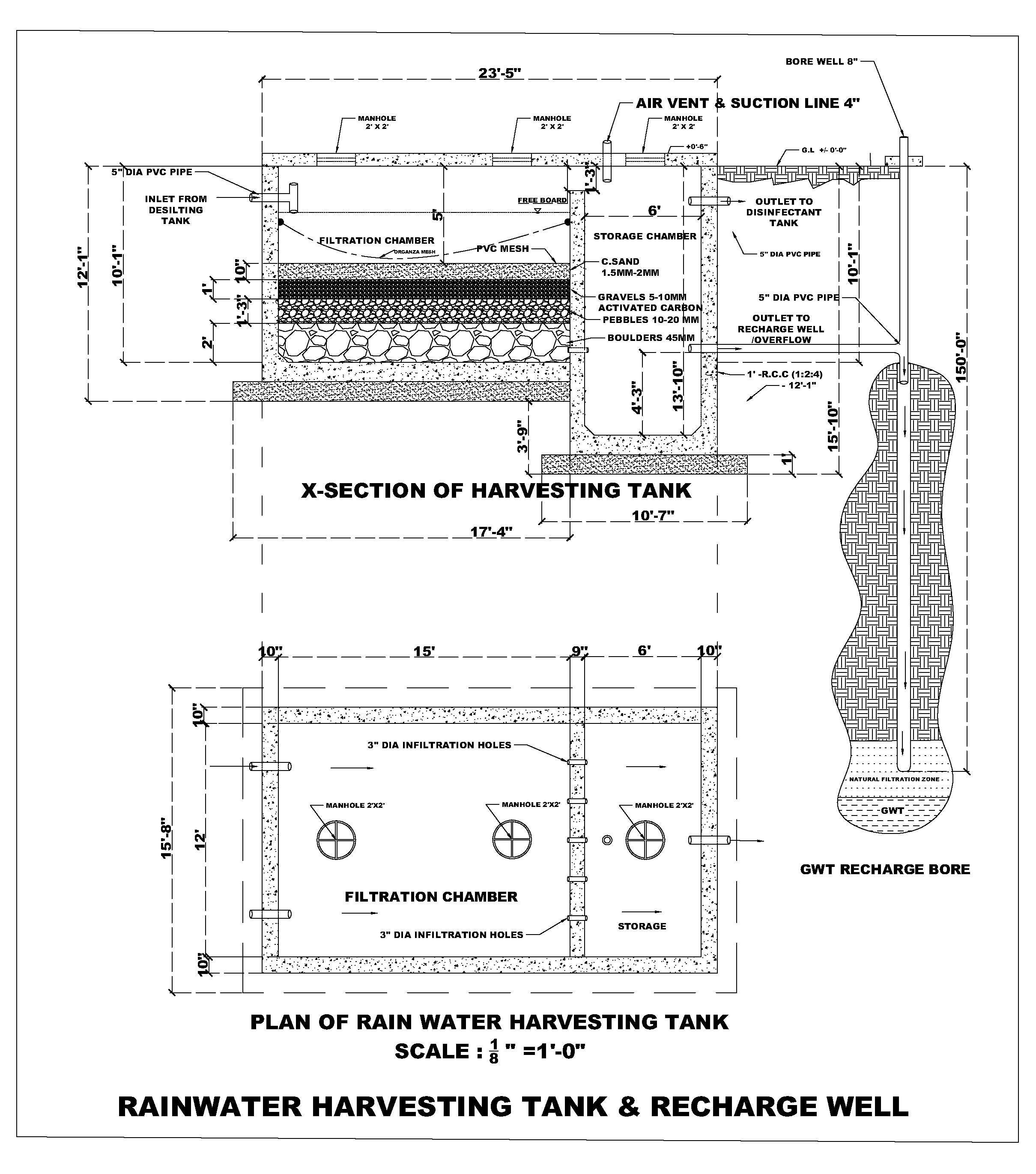
• Designed the RWH tank & recharge well with detailed structural configurations.
• Created drainage network designs to efficiently channel rainwater to storage and infiltration zones.
• Estimated costs for construction, maintenance, and scalability.
5. BIM, AR & VR Simulations:
• Developed BIM models for the campus catchment area, showcasing structural details and water flow simulations.
• Integrated AR & VR visualization tools to provide an interactive experience, allowing stakeholders to engage with the system before implementation.
6. Rainwater Infiltration & Quality Testing:
• Designed an anthracite filtration system for improving stored rainwater quality.
• Conducted water quality testing before and after filtration to assess purification effectiveness and ensure usability.
Outcome
Expected Outcomes of the Project are:
• Efficient Rainwater Harvesting System Implementation
• Establishes a functional and scalable RWH system for COMSATS University Islamabad, Wah Campus.
• Reduces reliance on municipal water supply, ensuring a sustainable alternative source.
• Improved Water Management & Conservation
• Mitigates urban flooding by optimizing rainwater collection and drainage networks.
• Minimizes groundwater depletion through strategic infiltration and recharge well integration.
• Enhanced Decision-Making & Stakeholder Engagement
• Enables policymakers and engineers to interact with AR/VR simulations, improving planning accuracy.
• Provides a real-time visualization of system efficiency, supporting informed decisions.
• Economic & Environmental Impact
• Lowers operational costs by reducing dependency on municipal water sources.
• Enhances water quality through filtration, making rainwater safer for reuse.
• Contributes to Sustainable Development Goals (SDGs), including clean water access, climate resilience, and sustainable urban infrastructure.
• Advancement in Engineering & Technology Integration
• Showcases the successful application of BIM, GIS, and AR/VR in water conservation projects.
• Serves as a blueprint for future smart water management systems in urban planning.
• Capacity Building & Knowledge Transfer
• Educates students, engineers, and stakeholders on innovative RWH techniques.
• Encourages skill development in geospatial analysis, BIM modeling, and AR/VR integration for sustainability-driven solutions.