AI Based Weather Prediction System
Description
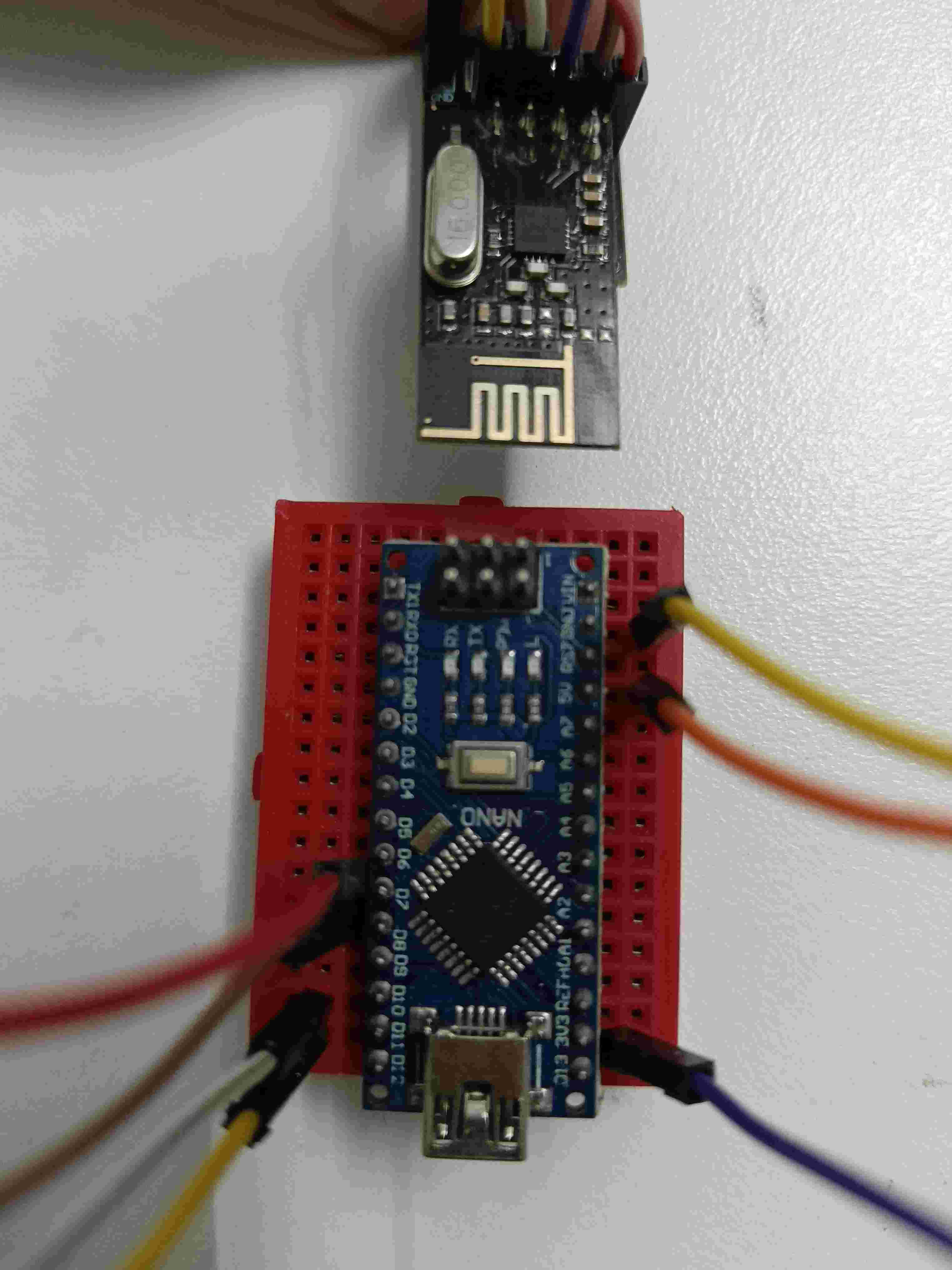
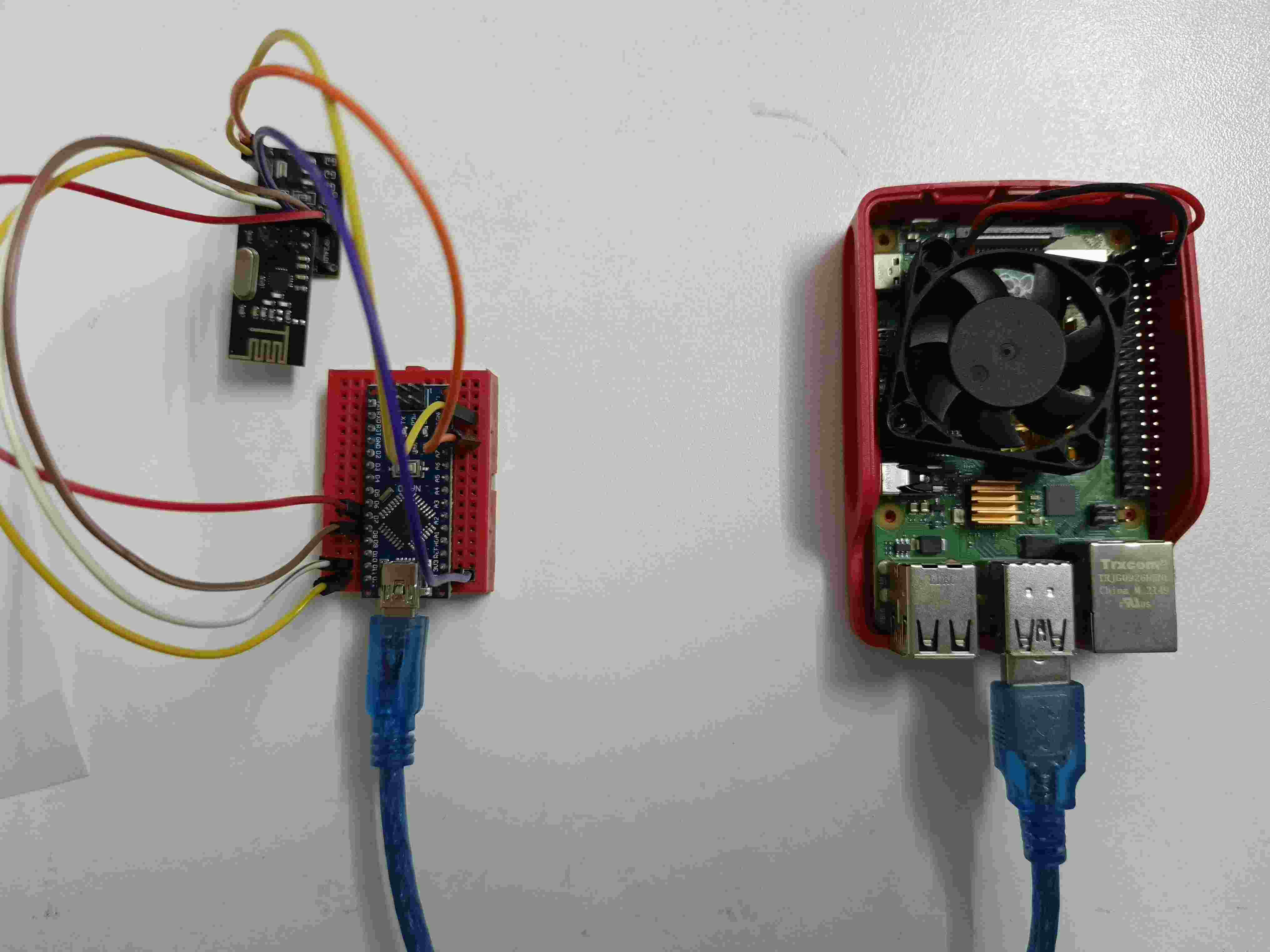
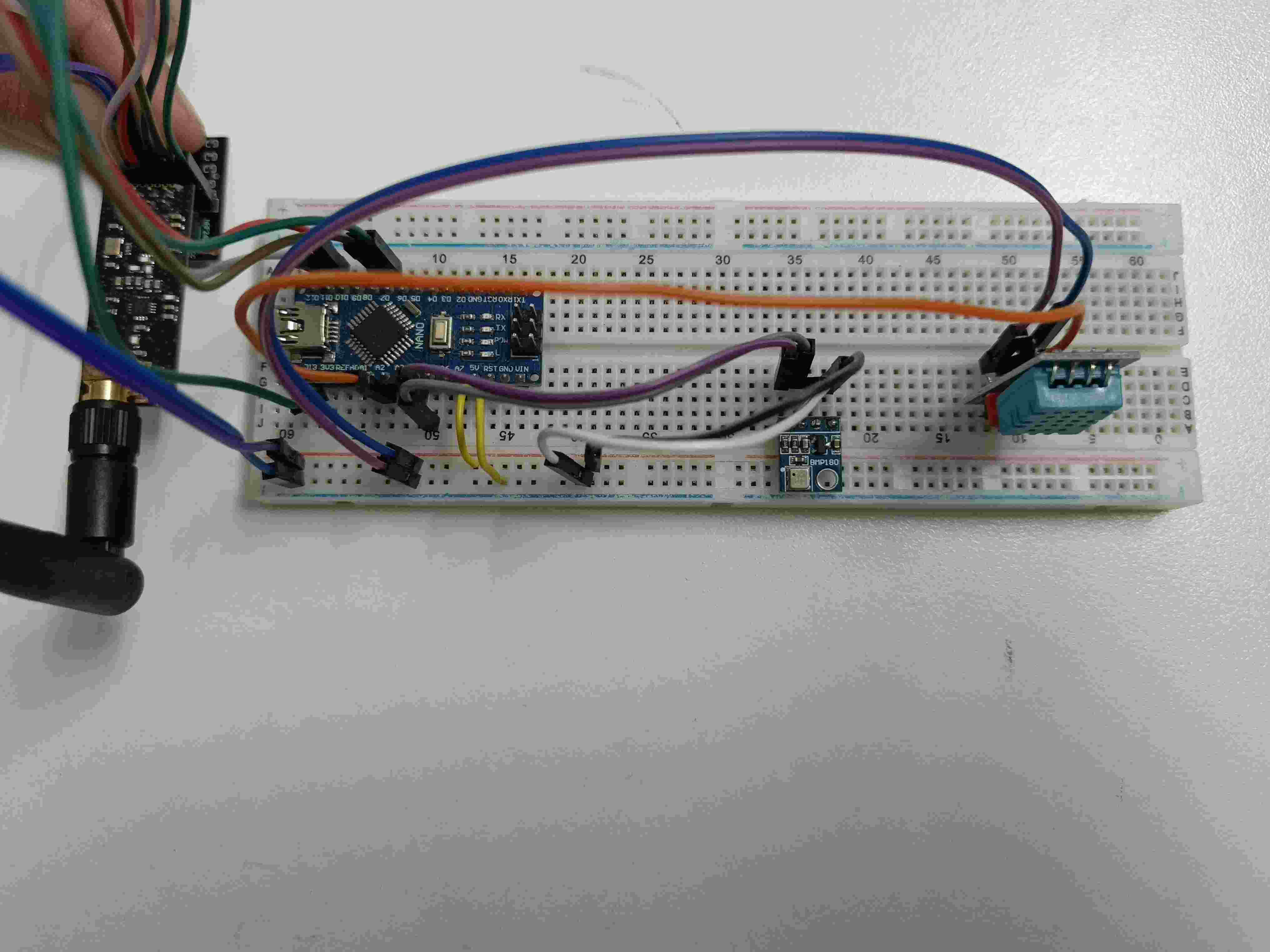
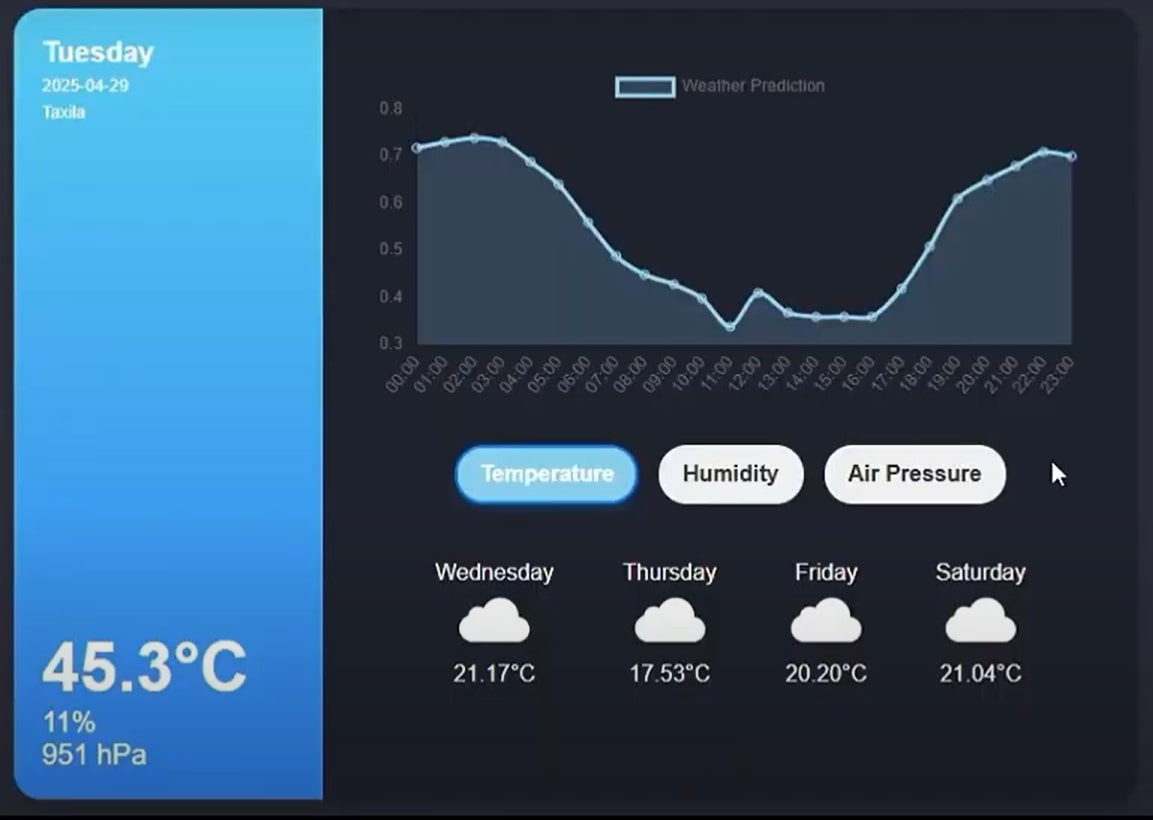
This project presents an AI-based smart weather prediction system that integrates IoT technology with machine learning to provide real-time environmental monitoring and forecasting. The system utilizes sensors such as DHT11 and BMP180 connected to an Arduino Nano to collect data on temperature, humidity, and air pressure. This data is transmitted wirelessly using NRF24L01+ modules to a Raspberry Pi, which processes and uploads the information to Firebase. A responsive web application, developed using HTML, CSS, and JavaScript, displays live weather data and predictions. Machine learning models, including regression for forecasting and classification for condition labeling, are used to enhance the accuracy of weather predictions. The system is designed to be low-cost, scalable, and accessible, making it suitable for applications in agriculture, disaster management, and day-to-day planning.
Objectives
The aim of this project is to develop an intelligent weather monitoring and forecasting system by integrating IoT technologies with artificial intelligence. While IoT handles real-time data acquisition and wireless transmission, the AI component processes this data using machine learning algorithms to generate accurate weather predictions and classifications, enhancing the reliability of localized forecasts. To build a smart weather monitoring system using IoT sensors and microcontrollers. To collect real-time environmental data (temperature, humidity, air pressure). To implement wireless data transmission using NRF24L01+ modules. To integrate a cloud-based backend using Firebase for real-time data storage. To apply machine learning regression models for predicting future weather parameters. To use classification algorithms (Random Forest) to label weather conditions (e.g., sunny, rainy). To develop a web interface for visualizing real-time and predicted weather data. To demonstrate how AI enhances forecast accuracy over traditional methods.
Socio-economic benefit
The implementation of an AI-based smart weather prediction system offers significant socio-economic advantages. By delivering accurate, real-time weather data through low-cost, scalable technology, the system empowers communities, farmers, and small businesses to make informed decisions. It enhances disaster preparedness, optimizes resource usage in agriculture, and contributes to overall public safety and productivity.
Methodologies
The methodology of this project involves a step-by-step integration of hardware components for data collection, wireless communication for data transmission, and software components for data visualization and AI-based prediction. The system combines IoT devices for real-time environmental monitoring with machine learning algorithms for accurate and intelligent weather forecasting. * Collected real-time temperature, humidity, and air pressure data using DHT11 and BMP180 sensors connected to an Arduino Nano. * Transmitted sensor data wirelessly using NRF24L01+ modules to a central Raspberry Pi. * Received and processed data on Raspberry Pi for storage and analysis. * Uploaded the real-time data to Firebase Realtime Database for cloud storage and web access. * Designed a responsive web application using HTML, CSS, JavaScript, and Chart.js for live weather monitoring. * Applied regression models (e.g., Random Forest, Linear Regression) to predict future temperature, humidity, and air pressure. * Used classification models (Random Forest Classifier) to categorize weather conditions like Sunny, Cloudy, or Rainy. * Logged historical data continuously for retraining and improving AI model accuracy over time.
Outcome
* Developed a fully functional weather station using Arduino, sensors, and NRF24L01+ modules. * Achieved reliable wireless data transmission to the Raspberry Pi for centralized processing. * Implemented real-time data upload and retrieval using Firebase Realtime Database. * Designed a user-friendly website to display live and forecasted weather data. * Successfully applied machine learning regression models for predicting temperature, humidity, and pressure. * Deployed a classification model to label weather conditions based on predicted data. * Validated system performance with acceptable accuracy in real-world testing. * Created a modular and scalable platform suitable for educational, agricultural, and environmental applications.
Gallery
More from Electrical Engineering
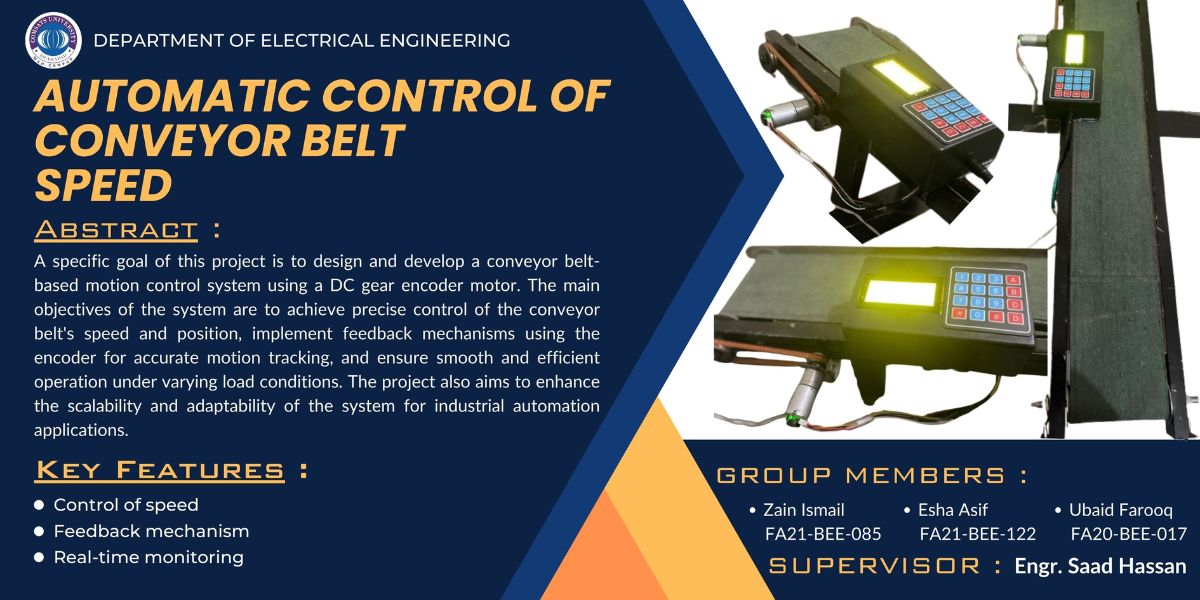
AUTOMATIC CONTROL OF CONVEYOR BELT SPEED
Automatic Control of Conveyor Belt Speed involves a control system (like a microcontroller etc) to monitor var…
Supervisor: Engr. Saad Hassan

Designing a Protection System for Ungrounded Residential HouseHold Appliances
This project focuses on the design and implementation of a cost-effective residential electrical protection sy…
Supervisor: Dr.Sadiq Ahmad

Sensors based Remote Monitoring System for Power lines
This project presents a sensor-based remote monitoring system for power lines, designed to enhance the reliabi…
Supervisor: Engr.Belawal Behram

Solar-Powered Self-Regulating Greenhouse Ecosystem
This project presents a solar-powered self-regulating greenhouse ecosystem designed to automate climate contro…
Supervisor: Dr. Muhammad Iqbal