WildWatch - Automated Habitat Protection
Description
WildWatch: Automated Habitat Protection is an AI-powered surveillance system designed to prevent human-wildlife conflicts. Using YOLOv8 object detection, it identifies wild animals (like leopards or tigers) or weapons near human settlements in real-time. The system instantly sends alerts with live location to users and authorities through an Android app, ensuring prompt action. It also stores detection data in Firebase for analysis. This project enhances community safety and contributes to wildlife conservation.
Objectives
The objective of WildWatch: Automated Habitat Protection is to reduce human-wildlife conflicts, especially in urban and semi-urban areas adjacent to forest regions. With the rapid expansion of human settlements, interactions between people and wild animals have increased, often resulting in property damage, injuries, or loss of life—both human and animal. WildWatch aims to provide a real-time, AI-driven monitoring and alert system that automatically detects wild animals and weapons via live video feeds. Upon detection, it sends instant alerts (with location and time) to users and authorities through an Android app. The system also logs this data into Firebase for future analysis. Specific objectives include: Real-time detection of wild animals (e.g., tigers, leopards) and human threats (e.g., armed intruders). Sending instant mobile alerts with location using Firebase Cloud Messaging. Storing detection history with date/time/type/location in Firebase Realtime Database. Visualizing detection trends to help authorities plan preventive measures. Providing community-level surveillance through low-cost camera integration.
Socio-economic benefit
WildWatch brings significant societal and economic benefits by acting as a preventive safety mechanism in wildlife-prone areas: Societal Benefits: Protects human lives by warning communities of nearby wild animals or threats. Supports wildlife conservation by reducing unnecessary killings due to fear. Empowers communities with real-time information and actionable alerts. Improves law enforcement response by notifying about armed intruders. Educates users on wildlife activity patterns via data visualizations. Economic Benefits: Prevents livestock/property loss, reducing financial damage in rural areas. Minimizes response time, reducing the cost of emergency operations. Reduces insurance claims and liabilities for forest and wildlife departments. Lowers operational cost by using AI automation and affordable hardware. By ensuring human and animal safety, WildWatch supports long-term economic stability in sensitive zones and strengthens coexistence frameworks.
Methodologies
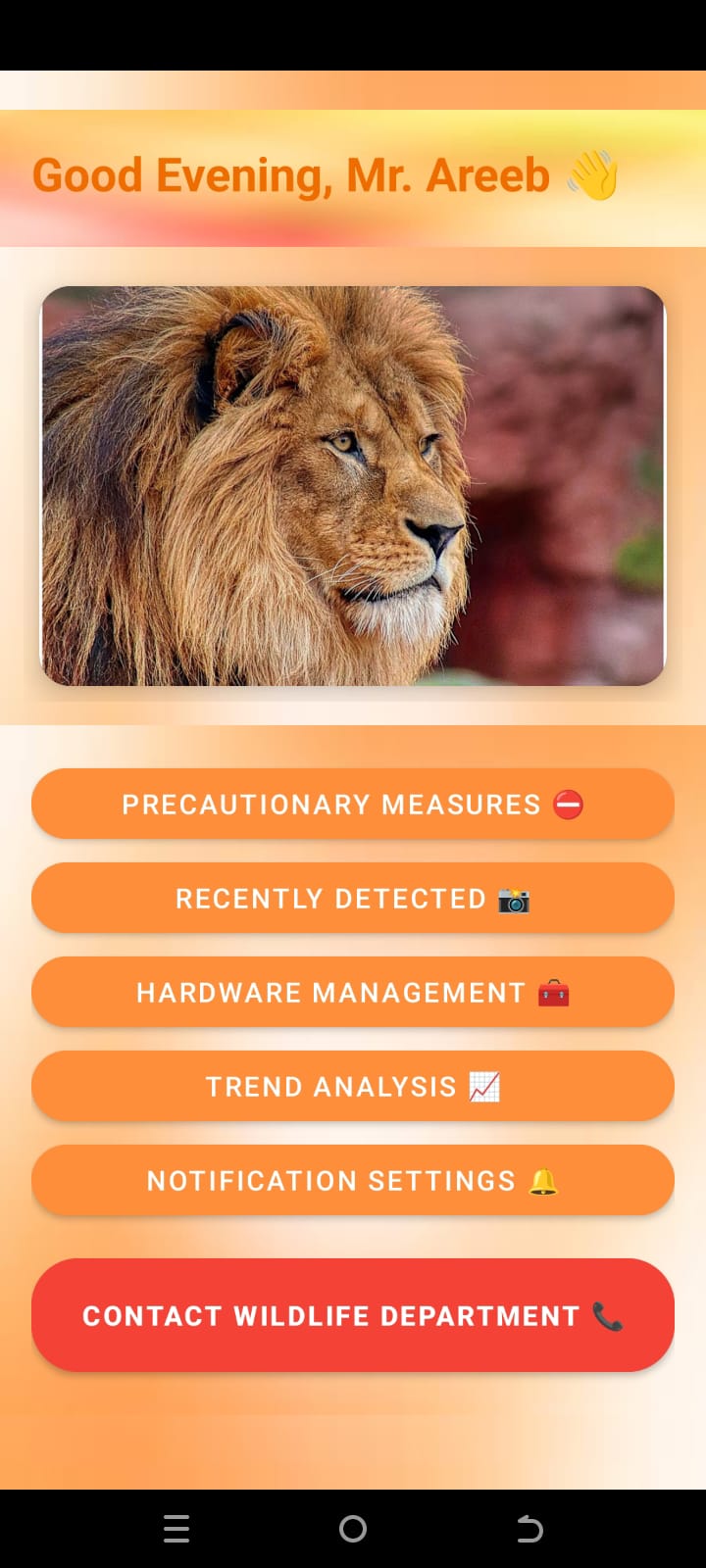
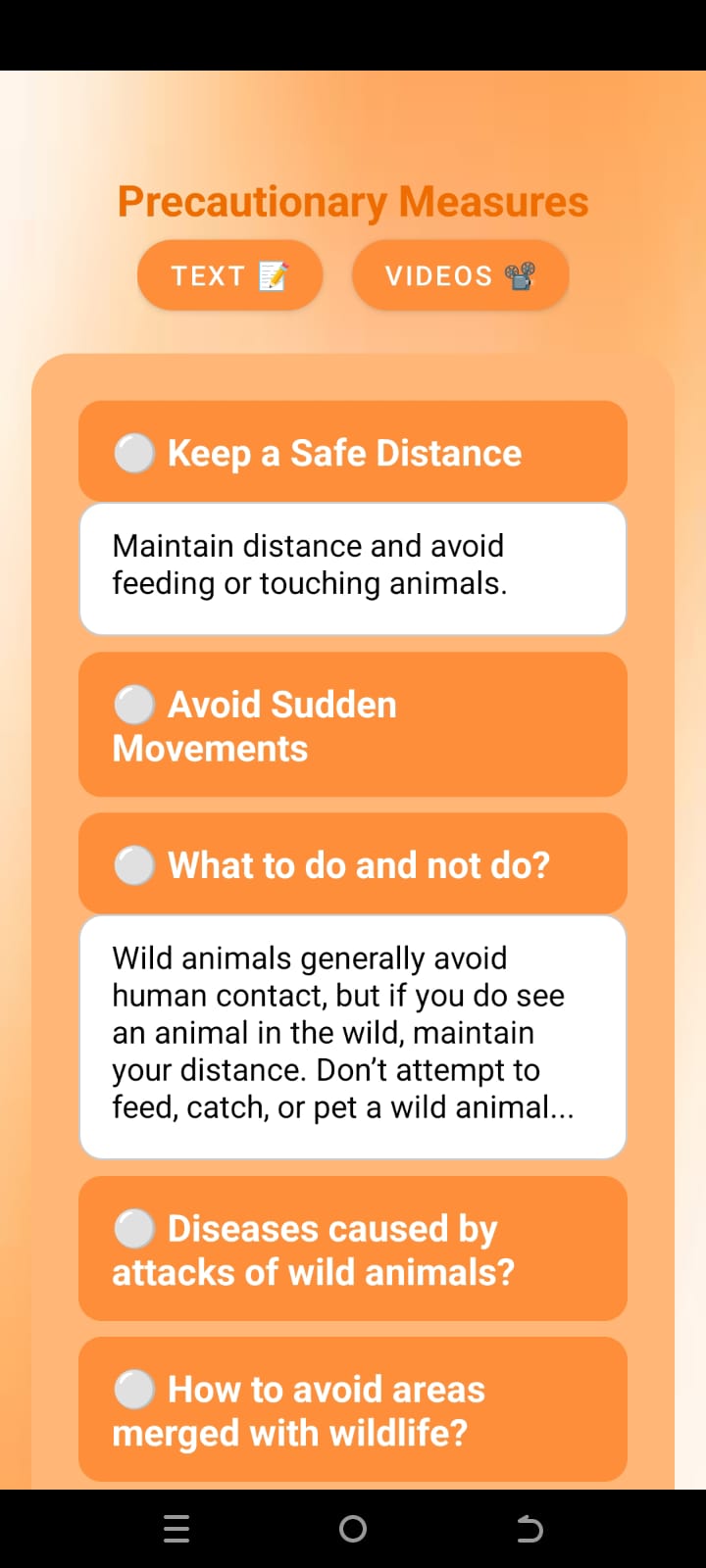
The WildWatch system is developed through the following key methodologies: Data Collection & Model Training: Gathered wildlife and weapon datasets from open sources. Used YOLOv8 for training custom object detection models. Real-time Video Processing: Integrated OpenCV to capture live streams from RTSP-enabled EZVIZ cameras. Frame-by-frame analysis using trained YOLOv8 models for animal/weapon detection. Geolocation & Notification System: Used geocoder to fetch the user’s IP-based location. Integrated Firebase Cloud Messaging (FCM) for instant alert delivery. Detection info (type, location, time) stored in Firebase Realtime Database. Android App Development: Kotlin-based app built in Android Studio. Features include notification toggle, live map display, data logs, precautionary measures with YouTube integration. Data Visualization & Analysis: Used trend analysis to display monthly/yearly detection data. Helps users and authorities understand risk patterns and hotspots. Testing & Evaluation: Real-world camera feeds tested for detection accuracy and response time. UI tested for user-friendliness and real-time responsiveness.
Outcome
WildWatch successfully delivers a functional AI-powered surveillance solution that enhances both human safety and wildlife protection. Key outcomes include: Live detection of animals and threats using high-accuracy YOLOv8 models. Automated alert system sending instant notifications with GPS data. Data storage in Firebase, enabling historical record-keeping and analysis. Interactive Android application for real-time alerts, map views, and statistics. Precautionary guide screen with educational YouTube videos and safety tips. Trend analysis module for authorities to monitor and act on detection patterns. The system was tested with real RTSP camera feeds, confirming its effectiveness in identifying tigers, leopards, and weapons under different conditions. It shows strong potential for deployment in high-risk zones, schools near forests, rural farms, and national parks. In conclusion, WildWatch demonstrates the powerful role of technology in bridging gaps between human safety, wildlife conservation, and smart surveillance, making it a scalable solution for future deployment.
Gallery


More from Computer Science

Trimix: Cut, Clip & Create
TriMix falls under the AI & Video Content Automation track. It’s a web-based application tailored for influenc…
Supervisor: Mr Sabeeh Ahmed Saeed

HorizonTech: Academic Management System for Horizon Institute of Health Sciences
HorizonTech is a web-based academic management system developed for the Horizon Institute of Health Sciences.…
Supervisor: DR. WASIF NISAR

STREAMLINE SUBMISSION AND REVISION OF FYP FOR OPEN HOUSE
FYP Quality Testing Portal is a web-based system that manages and automates the final submission and review of…
Supervisor: Sania Umer

The Hungry Hustler
The Hungry Hustler project is a smart restaurant management system designed to digitize and optimize the opera…
Supervisor: Beenish Noor