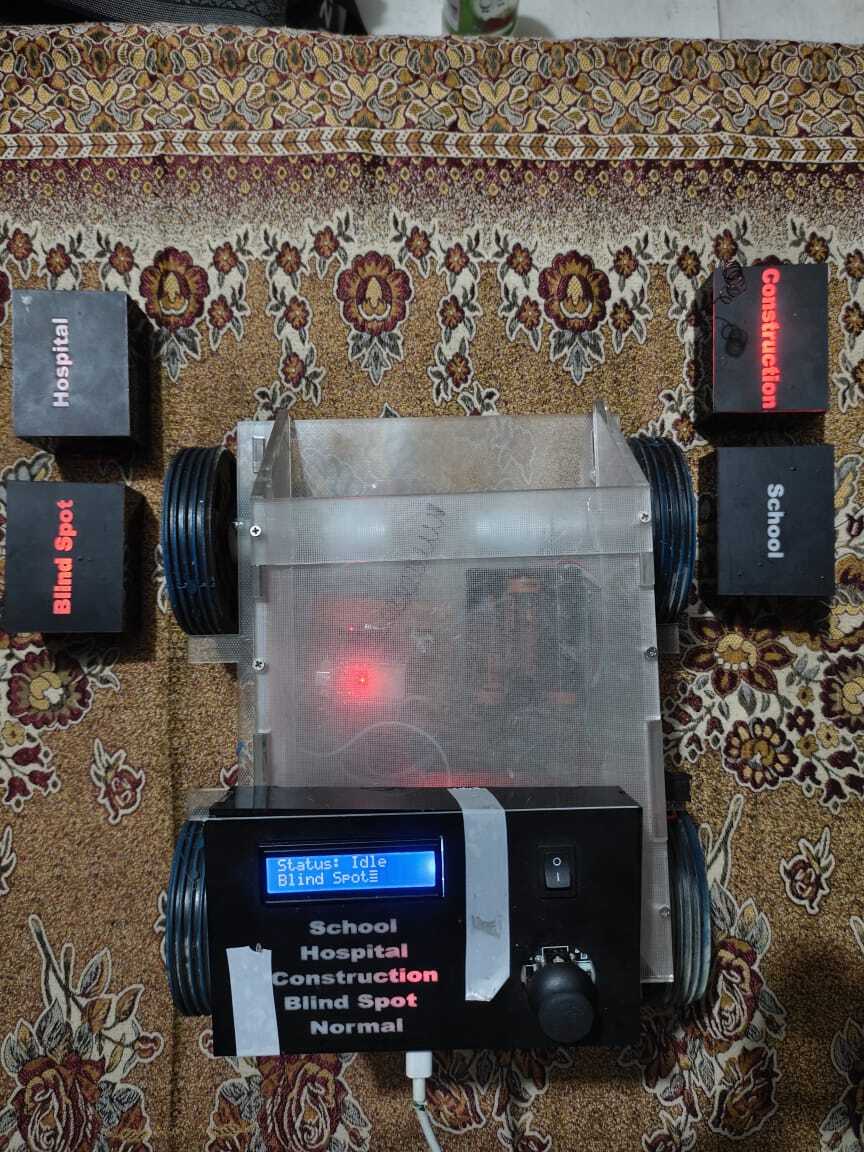
The Smart Zone Vehicle Speed Limit Control System is designed to enhance road safety in critical areas such as school zones, hospitals, and residential neighborhoods. It uses RF communication and an ESP32 microcontroller to automatically detect smart zones and regulate vehicle speed. Upon entering these zones, the system reduces speed through motor control and alerts the driver via LCD displays and buzzer warnings, ensuring compliance with speed limits and preventing accidents
Objectives
The objective of this project is to design and implement an automated vehicle speed control system that enhances road safety in critical zones such as school areas, hospitals, construction sites, and residential neighborhoods. This system leverages RF communication and microcontroller-based technology to detect smart zones in real time and automatically adjust vehicle speed, ensuring compliance with designated speed limits and minimizing the risk of accidents.
Socio-Economic Benefit
Enhanced Road Safety:
Reduces the risk of accidents in high-risk areas like school zones, hospitals, and residential neighborhoods.
Minimizes pedestrian injuries and fatalities by enforcing strict speed control.
Cost-effective Traffic Management:
Automated speed control reduces the need for manual monitoring and traffic police intervention.
Lowers government spending on traffic enforcement and accident management.
Protection of Vulnerable Zones:
Safeguards sensitive areas such as schools, hospitals, and construction sites with precise speed regulation.
Provides timely warnings to drivers, reducing the chances of sudden braking and collisions.
Improved Public Awareness:
Alerts and displays inform drivers about speed limits in real time, encouraging responsible driving behavior.
Raises community awareness about the importance of speed control in specific zones.
Support for Smart City Infrastructure:
Aligns with smart city initiatives by integrating IoT and microcontroller-based automation for traffic management.
Scalable for future integration with GPS and IoT for broader smart traffic solutions.
Methodologies
The project follows a structured and technology-driven methodology to ensure effective design, implementation, and evaluation of the Smart Zone Vehicle Speed Limit Control System. The key methodologies are as follows:
1?? Requirement Analysis and Planning:
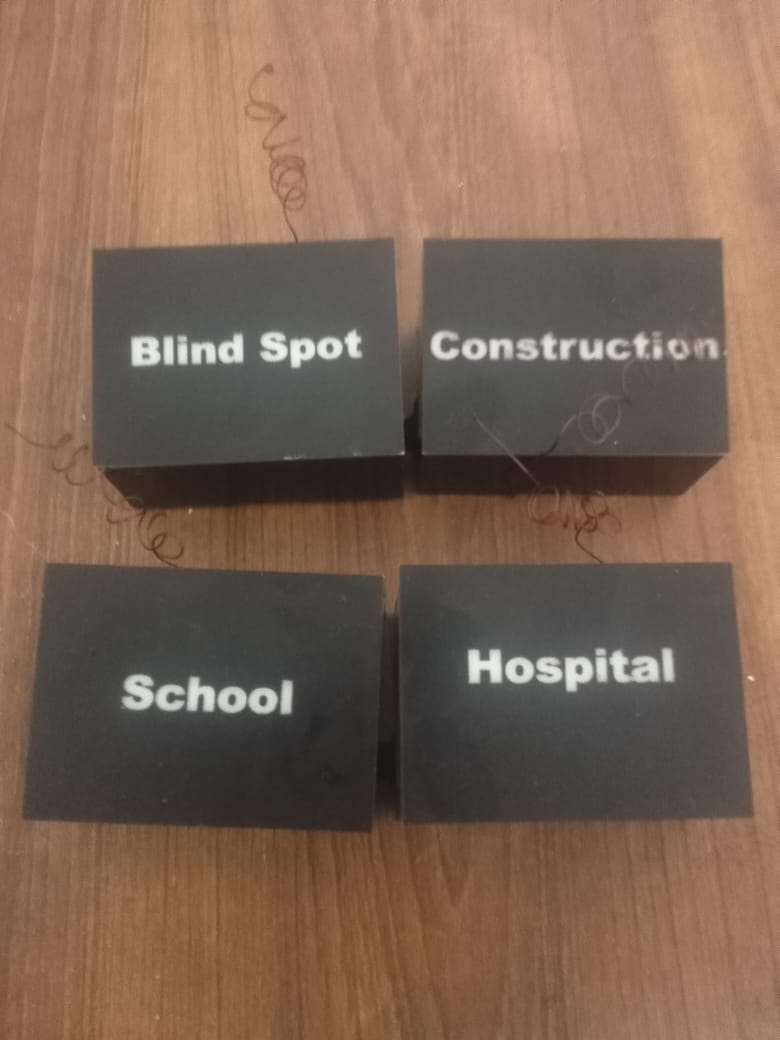
Identify critical smart zones such as school areas, hospitals, construction sites, and blind spots.
Define the speed limits for each zone and the necessary response mechanism for vehicles.
Establish the communication framework using RF 433 MHz Transmitter and Receiver.
2?? Hardware Design and Integration:
Microcontroller (ESP32): Serves as the central processing unit to manage speed control logic.
RF 433 MHz Transmitter: Placed in smart zones to send unique identification signals.
RF 433 MHz Receiver: Installed in the vehicle to detect these signals and trigger speed adjustments.
Motor Driver :Receives control signals from the microcontroller to adjust the vehicle's motor speed.
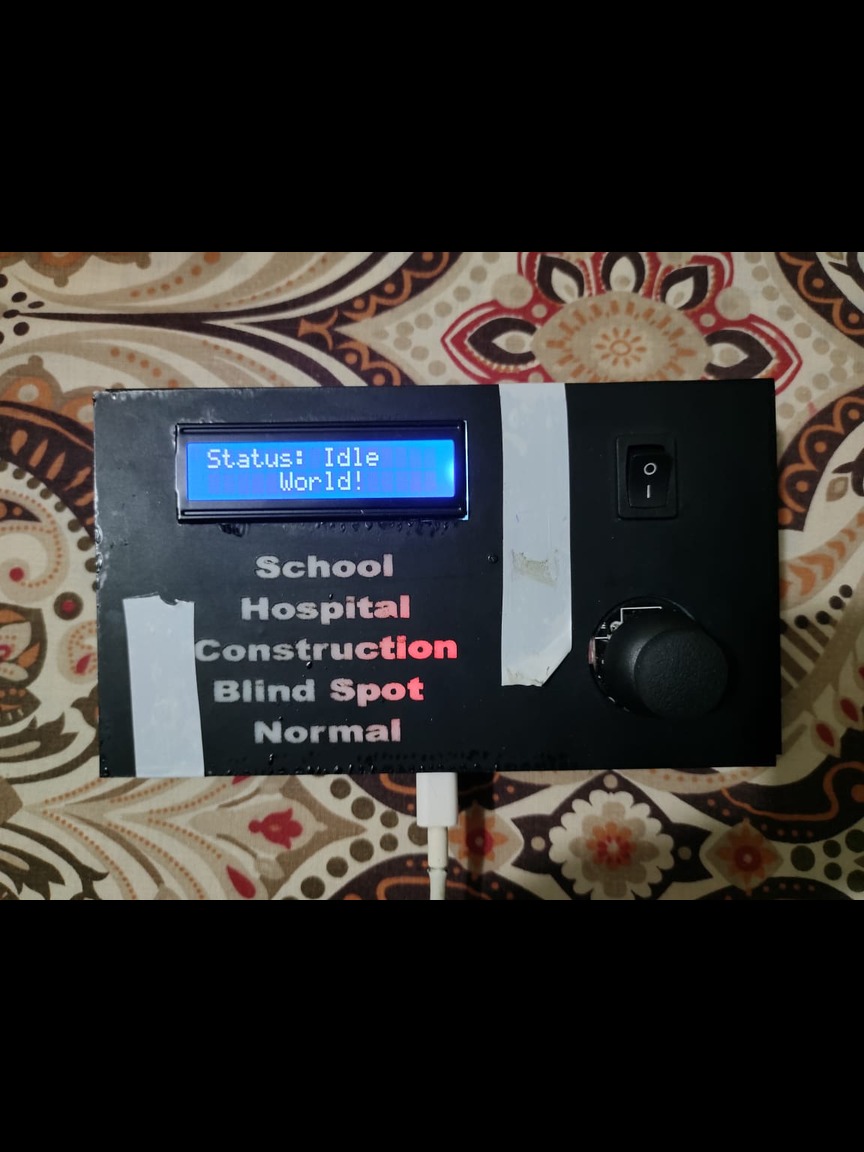
16x2 LCD Display: Shows real-time speed limits and zone information to the driver.
Buzzer/LED Warning System: Alerts the driver upon entering restricted zones.
3?? Software Development:
Develop the Embedded C/C++ code for ESP32 to handle signal processing and speed control.
Implement real-time communication between the transmitter and receiver to activate/deactivate speed control.
Integrate LCD display and warning system for driver feedback.
Outcome
The Smart Zone Vehicle Speed Limit Control System successfully demonstrates the integration of RF communication and microcontroller technology to enhance road safety in designated smart zones. Below are the key outcomes:
1. Successful Real-Time Speed Control Activation:
The system accurately detects smart zones (e.g., schools, hospitals, construction sites) using the RF 433 MHz Transmitter and Receiver.
Speed control is activated and deactivated in real-time as the vehicle enters or exits these zones.
2. Efficient Microcontroller-Based Speed Regulation:
The ESP32 microcontroller effectively processes zone signals and dynamically controls the motor speed through the L293D IC.
The system simulates real-world scenarios, demonstrating consistent speed regulation based on zone-specific speed limits.
3. Improved Driver Awareness and Feedback:
The 16x2 LCD displays real-time information about the current zone speed limit.
The buzzer/LED warning system promptly alerts drivers when entering speed-restricted areas, promoting safer driving practices.
4. Modular and Scalable System Design:
The system’s modular architecture allows for easy scalability, enabling implementation in multiple urban environments.
Future enhancements include GPS integration for broader zone coverage and IoT-based monitoring for remote speed management.
5. Socio-economic Impact:
The system offers a cost-effective and automated solution for speed limit enforcement, reducing the need for manual monitoring.
Enhanced safety in sensitive areas contributes to the well-being of pedestrians and reduces accident rates.
6. Real-world Application Feasibility:
Demonstrates that automated speed control systems are both technically and economically feasible, especially for smart city initiatives.
Can be integrated with other smart traffic management systems for comprehensive urban mobility solutions.