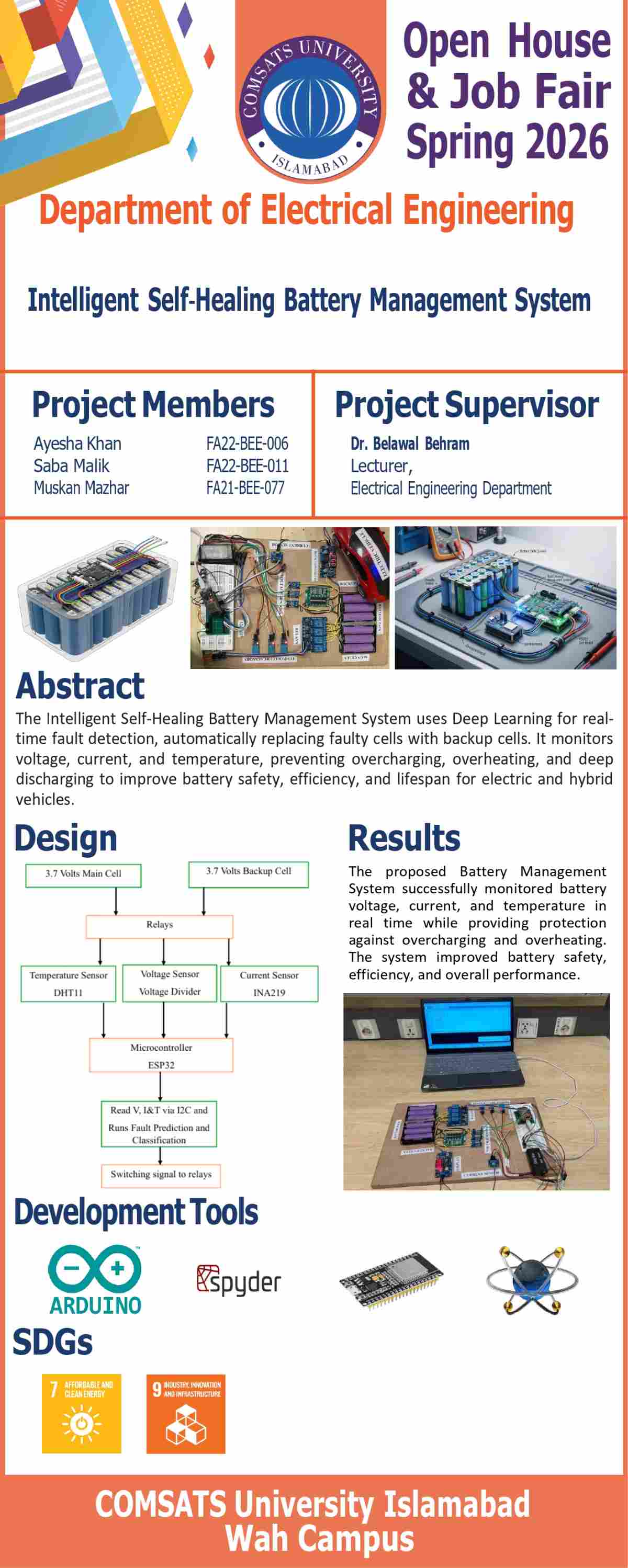
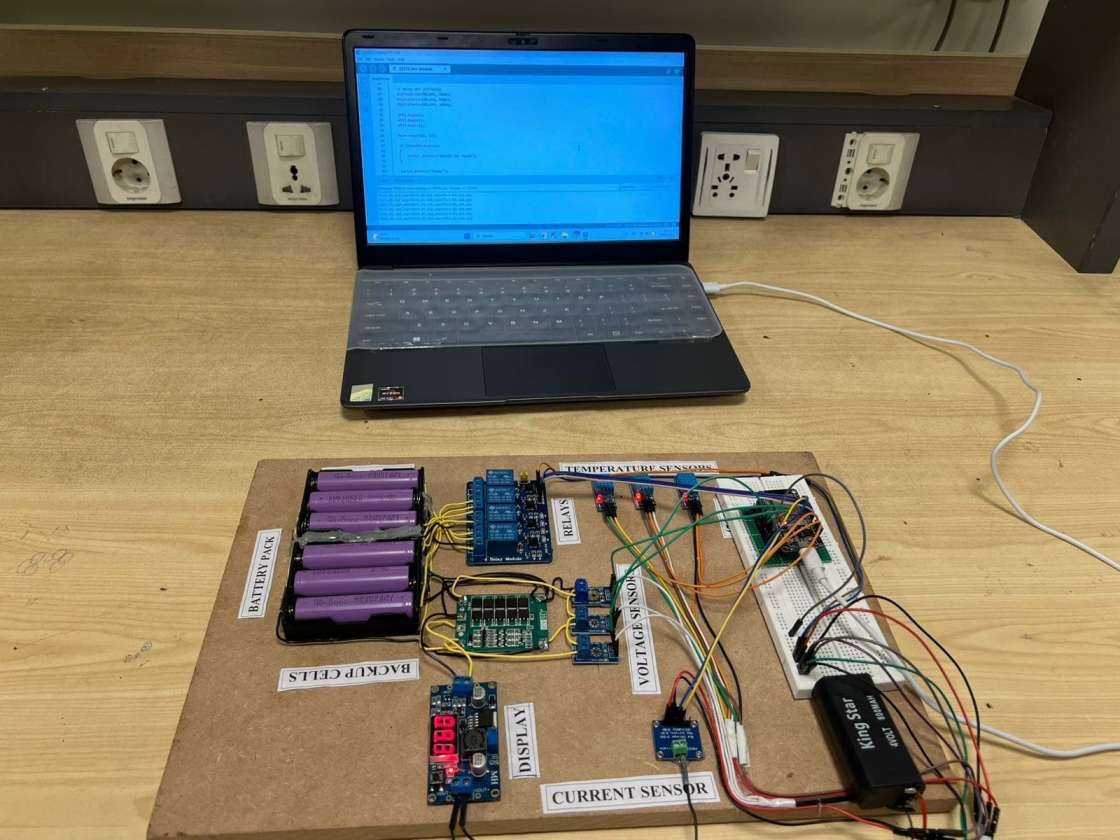
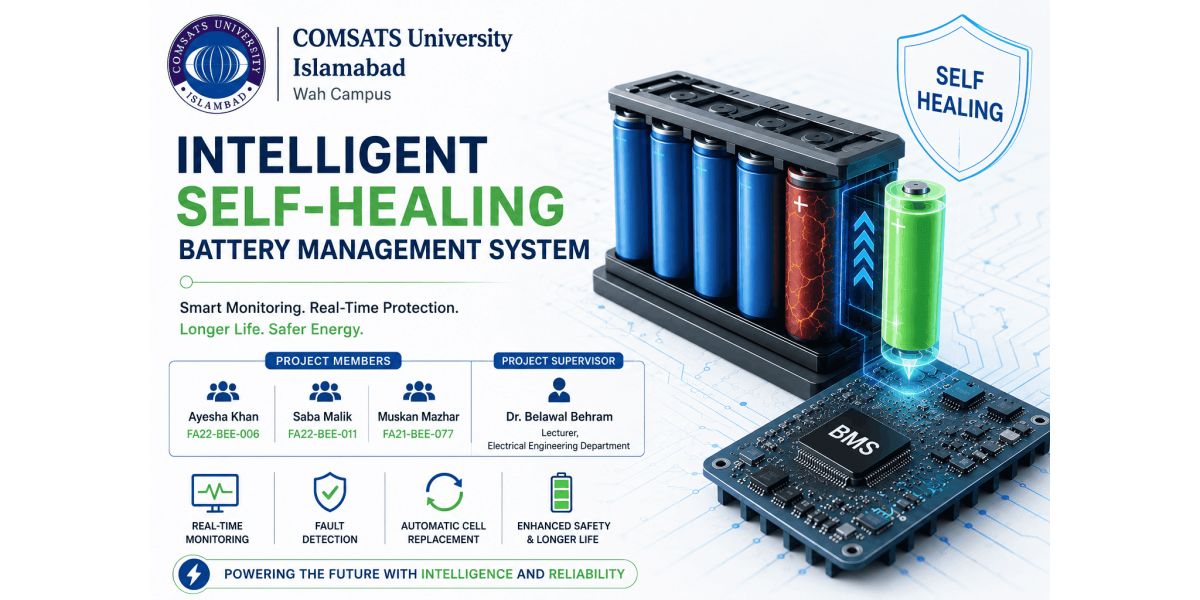
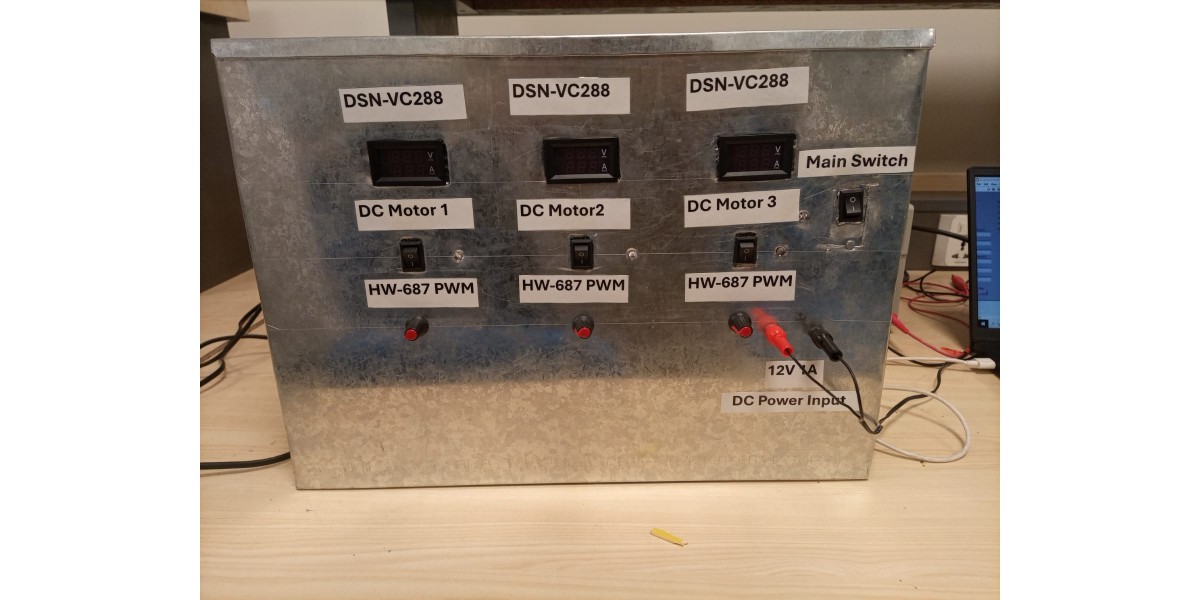
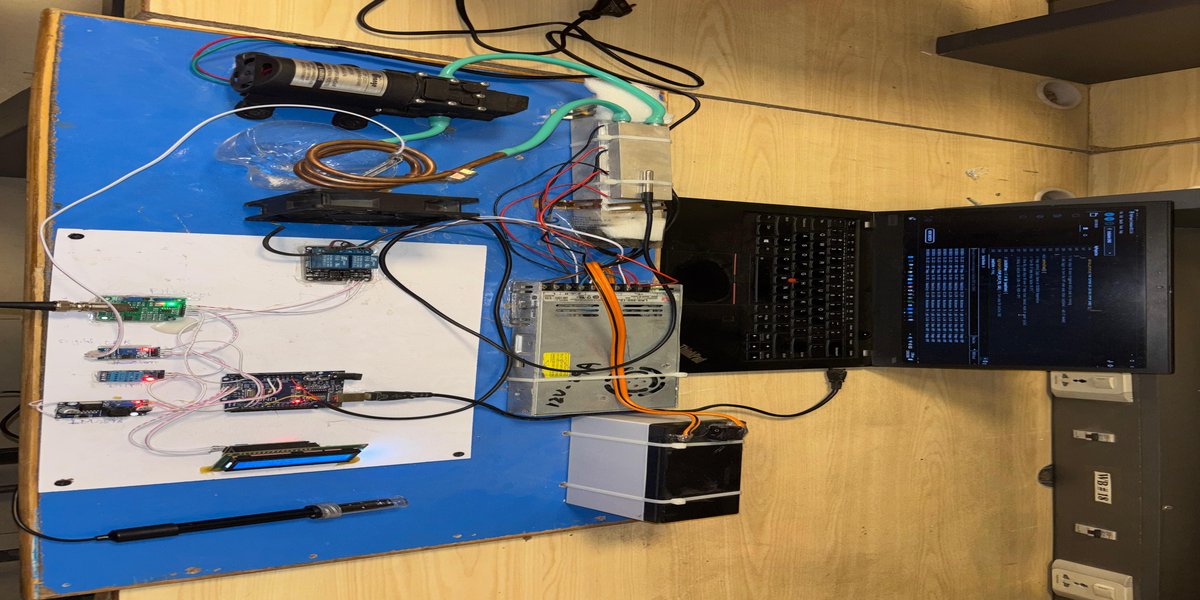
Our project is the Design of an Intelligent Self-Healing Battery Management System that ensures safe, efficient and reliable operation of battery packs. The system continuously monitors key electrical and thermal parameters such as voltage, current and temperature, while also estimating the battery’s performance state in real time.A key feature of the system is the use of an LSTM (Long Short-Term Memory) deep learning model to accurately predict State of Charge (SOC) and State of Health (SOH). This enables more precise battery monitoring compared to conventional methods, especially under dynamic load conditions.The self-healing capability allows the system to automatically detect faults or abnormal behavior, isolate affected cells and perform corrective actions such as balancing the battery pack. This ensures continuous operation, improved safety, higher efficiency and longer battery life, making it suitable for electric vehicles and renewable energy storage systems.
Objectives
Design a self-healing BMS specifically for hybrid vehicle battery architecture.
Develop a fault-tolerant system that can isolate, bypass or replace faulty cells automatically.
Integrate machine learning models for accurate fault classification, real-time SOH prediction and early fault detection.
Implement predictive maintenance to prevent sudden failures and extend battery life.
Improve overall reliability, safety and energy efficiency of the hybrid battery pack.
Socio-Economic Benefit
The proposed Intelligent Self-Healing Battery Management System provides significant socio-economic benefits in electric vehicles, renewable energy systems and smart energy applications. The system improves battery safety, operational reliability and energy efficiency through real-time monitoring, machine learning-based fault detection and automated protection mechanisms.
One of the major benefits of the project is improved battery safety. The system continuously monitors battery voltage, current and temperature and automatically isolates faulty battery cells using relay-based self-healing protection. This reduces risks of overheating, overcharging, thermal runaway and battery failure, making lithium-ion battery systems safer for practical applications. The project also helps increase battery lifespan by predicting State of Charge (SOC) and State of Health (SOH) using deep learning algorithms. Early detection of abnormal battery behavior prevents severe degradation and improves charging efficiency. Since lithium-ion batteries are expensive, extending battery life reduces replacement costs and provides economic advantages for electric vehicle and energy storage users.
Another important benefit is reduced maintenance cost. Traditional battery systems require manual inspection and periodic diagnostics, whereas the proposed intelligent BMS performs automated monitoring and fault classification. This reduces downtime, maintenance expenses, and unexpected system failures through predictive maintenance capability. The system supports the growth of electric vehicle technology by improving battery reliability and operational safety. Better battery management increases public confidence in EV systems and contributes toward sustainable transportation and reduced carbon emissions.
The proposed design is also cost-effective because it uses affordable hardware components such as ESP32 and INA219. This makes the system suitable for educational institutions, research laboratories and low-cost industrial applications. Additionally, the project promotes research and technical skill development in embedded systems, artificial intelligence, machine learning and battery technologies. The developed intelligent BMS can further be expanded for smart grids, renewable energy storage systems and industrial battery applications, contributing toward future smart energy infrastructure and sustainable technological development.
Methodologies
The proposed Intelligent Self-Healing Battery Management System was developed using a combination of embedded systems, machine learning, deep learning and real-time monitoring methodologies. The overall methodology was divided into hardware implementation, software development, data acquisition, fault classification, prediction modeling and automated protection mechanisms.
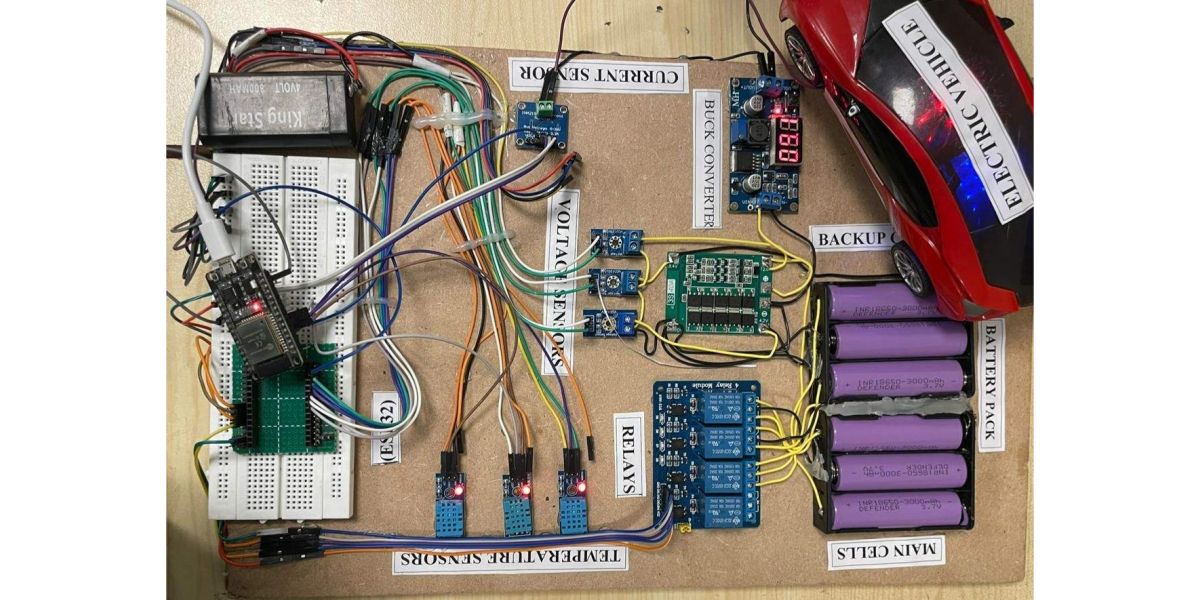
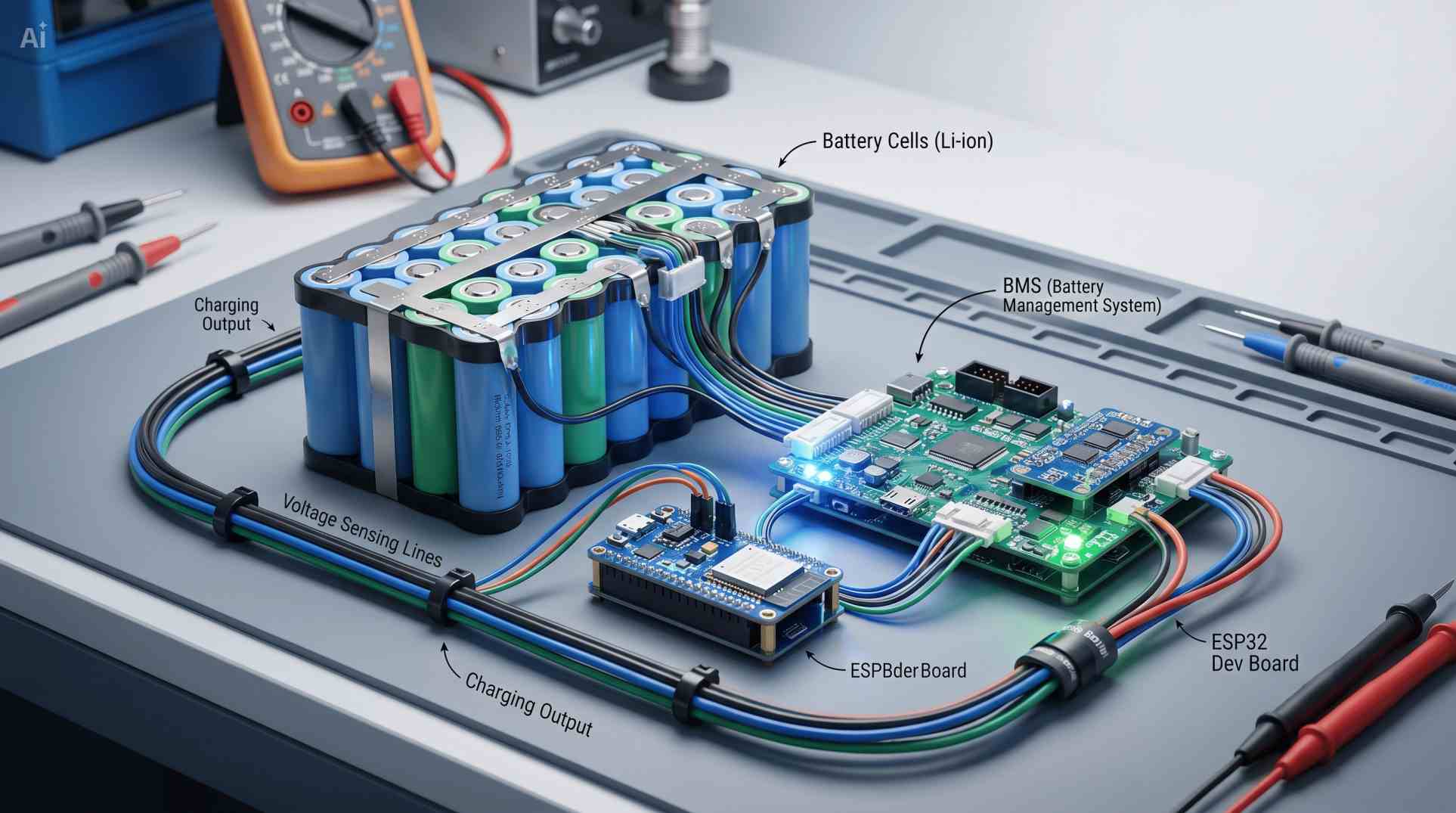
Initially, hardware sensors were interfaced with the ESP32 microcontroller to acquire real-time battery parameters including voltage, current and temperature. Voltage divider circuits were used for battery voltage sensing, while the INA219 sensor was used for current measurement. Temperature sensors continuously monitored battery thermal conditions. The ESP32 collected sensor data and transmitted it to the Python-based processing system through serial communication. Real-time monitoring methodology was implemented to ensure continuous acquisition and processing of battery data.
For intelligent fault detection, a Machine Learning methodology based on the Random Forest Classifier was implemented. The classification model was trained using battery parameters such as State of Charge (SOC), voltage and temperature. Feature scaling and SMOTE-based dataset balancing techniques were applied to improve classification accuracy and reduce class imbalance problems. For battery health prediction, a Deep Learning methodology using Bidirectional Long Short-Term Memory (Bi-LSTM) networks was implemented. Feature engineering techniques including differential features (dV, dI, dT) and rolling average calculations were used to capture temporal battery behavior. The LSTM model was trained to predict battery State of Charge (SOC) and State of Health (SOH) using sequential battery data.
A self-healing protection methodology was also implemented. When the machine learning model detected abnormal battery conditions, relay switching commands were generated automatically. The faulty battery cell was disconnected while healthy cells continued operation, improving system reliability and operational safety. Finally, system testing and performance evaluation methodologies were applied using real-time sensor data, prediction accuracy analysis, confusion matrices, loss curves and performance metrics such as RMSE and MAE to validate overall system performance.
Outcome
The developed Battery Management System (BMS) successfully integrates ESP32-based real-time sensing with machine learning and deep learning models to enable intelligent battery monitoring and control. The system continuously acquires voltage, current and temperature data from three battery cells and transmits it to a Python-based processing unit for analysis. A Random Forest classifier is used to detect faulty or abnormal battery conditions based on SoC, voltage and temperature and the output is directly used to control relay switches for immediate cell isolation, ensuring safety.
In addition, a LSTM model is implemented for predictive estimation of State of Charge (SOC) and State of Health (SOH) using time-series battery data with engineered features such as V, I and T. This enables the system to move beyond simple monitoring toward predictive battery health assessment. The integration between hardware and software through serial communication allows real-time decision-making with minimal delay. Overall, the project demonstrates a reliable and scalable AI-based BMS that improves fault detection accuracy, enhances battery safety through automatic isolation and provides accurate SOC and SOH prediction, making it suitable for advanced electric vehicle and energy storage applications.